
If you are searching for wrestling classes Lakewood CO, you are probably not looking for hype. You want real coaching, a place where beginners are welcome, and training that actually builds skill, conditioning, and confidence over time. That matters, because wrestling is one of the most demanding and rewarding styles you can train. The right room will challenge you, but it should also teach with structure.
What to look for in wrestling classes in Lakewood CO
Not every program teaches wrestling the same way. Some classes lean heavily toward competition. Others use wrestling mainly to support broader grappling skills for MMA, Brazilian Jiu-Jitsu, or self-defense. Neither approach is wrong, but they serve different students.
If you are brand new, the biggest green flag is coaching that breaks techniques down clearly. You should not be thrown into hard live rounds without understanding stance, movement, level changes, hand fighting, and basic takedown entries. Good instruction makes a tough sport approachable. It also keeps training safer.
For more experienced athletes, the standard changes. You want more than a sweaty workout. You want technical detail, positional awareness, chain wrestling, mat awareness, and a room where your training partners push you without turning every round into a reckless scrap. Serious students improve fastest in environments that balance intensity with discipline.
A strong wrestling program starts with fundamentals
Wrestling has a reputation for grind, and that reputation is earned. But the students who improve fastest are not always the strongest or most explosive. They are usually the ones who build a clean foundation first.
That means learning how to move before chasing fancy shots. A proper stance, disciplined posture, head position, penetration steps, sprawls, and the ability to recover from bad positions will carry you much further than trying to force athleticism into every exchange. In a quality class, fundamentals are not treated like beginner material you rush past. They are part of every level of development.
The room should feel serious, not hostile
A lot of adults hesitate to try wrestling because they assume it will be too intense, too advanced, or too uncomfortable for a first day. That is understandable. Wrestling is physical. It asks a lot from you.
Still, there is a difference between a demanding room and an unwelcoming one. Serious training should come with clear expectations, respect between partners, and coaches who know how to scale intensity. New students need challenge, but they also need context. The best gyms understand that long-term progress beats one hard class that leaves someone feeling lost or beaten up.
Who benefits most from wrestling classes Lakewood CO
Wrestling attracts a wider range of students than most people expect. You do not need to be a former high school athlete or an aspiring competitor to benefit from it.
Adults often start wrestling-based training because they want practical takedown ability, better conditioning, or a more complete grappling game. If you already train Brazilian Jiu-Jitsu, adding wrestling can change the way you approach every round. You become harder to control standing, more dangerous on entries, and more confident in scrambles. That kind of crossover has real value.
Teens benefit for a different reason. Wrestling teaches accountability in a very direct way. You learn quickly that position matters, effort matters, and details matter. There is no hiding in the sport. That can be humbling, but in a good academy it becomes a source of confidence rather than pressure.
For younger students, wrestling-based instruction can help with body control, balance, discipline, and resilience. The key is age-appropriate coaching. Kids do best when classes are structured, active, and focused on skill development rather than chaos.
Wrestling is excellent cross-training
One of the biggest advantages of wrestling is how well it pairs with other martial arts. Students who train BJJ, judo, or striking often discover that wrestling fills gaps they did not fully understand until they started working from the feet.
For grapplers, wrestling improves takedowns, standups, pressure, scrambling, and top control. For MMA-focused students, it helps connect striking to clinch work and takedown offense or defense. Even for people whose main goal is general fitness, wrestling offers a kind of full-body training that is hard to replicate with standard gym routines.
That said, cross-training only works if the instruction is cohesive. If a class treats wrestling as random hard drilling with no system behind it, progress can stall. The better approach is to integrate wrestling into a broader understanding of grappling and combat sports.
What a beginner should expect in class
Your first few wrestling sessions should feel challenging, but not confusing. A well-run class usually starts with a warm-up that reinforces movement patterns you will actually use. From there, the coach should introduce a limited number of techniques with enough repetition to make them stick.
You may work on stance and motion, single-leg or double-leg entries, front headlock situations, sprawls, pummeling, or basic finishes. You should also spend time understanding how to fall, how to post safely, and how to move with control when the pace picks up. These details are easy to overlook, but they matter.
Live training is where many people get nervous. That is normal. In a beginner-friendly program, resistance is introduced progressively. You might start with positional drills or light situational rounds before full live wrestling. That progression helps students build timing and confidence without feeling thrown into the deep end.
Progress in wrestling is earned, not rushed
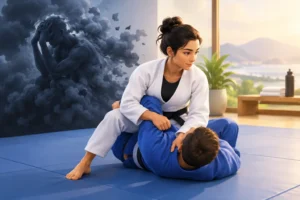
This is not a sport where improvement always feels smooth. Some days you will feel sharp. Other days you will feel like every entry gets shut down and every scramble goes the wrong way. That is part of the process.
A good academy helps students stay consistent through those ups and downs. Coaches should be able to explain not just what went wrong, but why. More importantly, they should give you the next adjustment to make. That creates momentum. Wrestling is hard enough on its own. Students do not need vague coaching layered on top of that.
Why coaching quality matters more than class size or hype
People often compare gyms based on schedules, mat space, or how intense the room looks from the outside. Those things matter, but they are not the main issue. Coaching quality shapes everything.
A strong coach can take a room with mixed experience levels and make it productive for everyone. Beginners get structure. Advanced students get technical depth. The culture stays focused. Safety stays high. Progress becomes measurable.
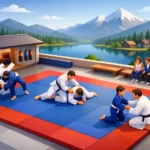
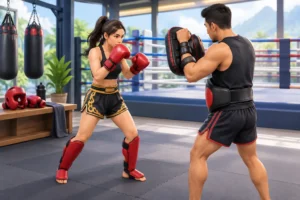
That is especially important in a multi-discipline academy. When wrestling is taught alongside Jiu-Jitsu, judo, Muay Thai, or kickboxing, students benefit most when the coaching staff understands how those disciplines support each other. Wrestling should not feel isolated. It should strengthen the rest of your training.
At Imperial BJJ Lakewood, that kind of cross-training environment is part of what gives students an edge. You are not just learning isolated techniques. You are building a more complete martial arts foundation with coaching that values discipline, growth, and technical skill.
Choosing the right academy for the long term
The best wrestling classes are not always the loudest or the most intimidating. They are the ones that keep students coming back, getting better, and feeling part of something meaningful.
If you are comparing options, pay attention to how the class is taught and how people treat each other. Notice whether beginners are coached with patience or ignored. Watch whether advanced students train with purpose or just try to overpower everyone in the room. Ask yourself if the environment feels like a place where you can grow for months and years, not just survive one session.
A good wrestling program should leave you tired, but also clearer. You should walk away understanding what you learned, what needs work, and why the training matters. That is how confidence is built. Not from empty motivation, but from real skill earned over time.
If you have been thinking about trying wrestling, there is value in starting before you feel fully ready. The right class will meet you where you are, challenge you honestly, and give you a path forward that is worth sticking with.


No comment yet, add your voice below!