
Most people asking if brazilian jiu jitsu is good for self defense are not wondering about points, medals, or flashy techniques. They want a clear answer to a real concern: if something goes wrong in a parking lot, at work, or in public, will this training actually help? The honest answer is yes – Brazilian Jiu Jitsu can be very effective for self-defense – but only if you understand what it does well, where it has limits, and how it should be trained.
Is Brazilian Jiu Jitsu Good for Self Defense in Real Life?
Yes, BJJ is good for self-defense because it teaches control under pressure. That matters more than many beginners realize. In real confrontations, people panic, posture breaks down, and fine motor skills disappear fast. Brazilian Jiu Jitsu gives you a repeatable way to stay calm, manage distance once someone grabs you, escape bad positions, and control another person without relying on size or aggression alone.
That last part is a big reason BJJ has strong self-defense value. Many physical altercations do not start with a clean punch from across the room. They start with someone crowding your space, grabbing clothing, pushing, tackling, or trying to hold you down. BJJ is built for those messy moments. It gives smaller people leverage, positioning, and timing instead of asking them to win a strength contest.
Just as important, BJJ offers options. If you need to create space and get away, it helps. If you need to hold someone down until help arrives, it helps. If the goal is to neutralize a threat without causing unnecessary damage, it helps there too. For adults thinking about legal, professional, and personal consequences, that matters.
Why BJJ Works So Well Against Untrained Aggression
The average untrained attacker is dangerous because of unpredictability, emotion, and physical commitment, not technical skill. They rush forward, grab hard, swing wide, and keep driving. A trained BJJ student is used to that kind of pressure every week. Not because class is chaotic, but because live training creates familiarity with resistance.
That live element is one of BJJ’s biggest strengths. Many martial arts teach useful movements, but not all of them regularly test those movements against someone actively trying to stop you. In BJJ, resistance is part of the process. You learn what works when your opponent is bigger, stronger, faster, or simply unwilling to cooperate. That makes your reactions more reliable when things get real.
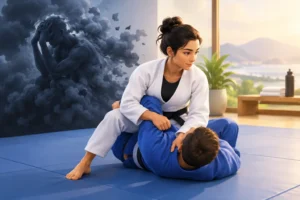
BJJ also helps with one of the most common and dangerous situations in self-defense – being taken down or pinned. If someone ends up on top of you, panic is a natural response. BJJ training replaces some of that panic with structure. You learn how to protect yourself, improve position, escape, stand up, and regain control of the situation.
Where Brazilian Jiu Jitsu Has Limits for Self Defense
Anyone telling you BJJ is all you need for every self-defense situation is overselling it. Good training should make people more confident, not less realistic.
BJJ is strongest in clinch range and on the ground. That means it shines when a confrontation becomes physical and close. But self-defense is broader than grappling. If someone is striking effectively, if there are multiple attackers, or if a weapon is involved, the situation changes fast.
The ground can also be a bad place to stay in a real altercation. In a one-on-one scenario, controlling someone on the ground may be smart. In a crowded environment, it can become risky. Concrete is not a mat. Friends of the aggressor may jump in. Objects in the area can change everything. Good self-defense training should acknowledge that your goal is not to “win” a fight in the sport sense. It is to stay safe and get home.
This is where context matters. BJJ is excellent for many self-defense scenarios, but it becomes stronger when paired with situational awareness, basic striking knowledge, and the judgment to know when to disengage. A complete approach is always better than a single-tool mindset.
Sport BJJ vs Self-Defense BJJ
This is where confusion often starts. Some people watch high-level sport matches and assume that is exactly what self-defense looks like. It is not.
Sport BJJ develops timing, conditioning, toughness, and technical sharpness. Those are valuable. But certain habits from competition do not always transfer cleanly to a real-world encounter. Pulling guard, focusing on points, or staying in positions that are safe under sport rules may not be ideal when strikes are possible or the environment is uncontrolled.
Self-defense-oriented BJJ puts more emphasis on posture, distance management, takedown awareness, standing up safely, and controlling someone while protecting yourself from punches. It also prioritizes decision-making. Can you disengage? Can you avoid escalating? Can you stay on your feet if that is the safer choice?
The best academies do not treat these as opposites. They use the athletic realism of live rolling and pair it with practical self-defense principles. That combination tends to produce students who are technical, composed, and harder to overwhelm.
Is Brazilian Jiu Jitsu Good for Self Defense for Beginners?
It can be especially good for beginners because it gives them a clear path. A lot of people put off training because they assume self-defense requires aggression or natural toughness. BJJ shows the opposite. You can start with no experience, no fight background, and no idea what you are doing. The structure of training builds skill one layer at a time.
For a beginner, some of the earliest gains are not flashy. You improve posture. You learn how not to gas out immediately under pressure. You stop freezing when someone grabs you. You get comfortable with close contact and controlled resistance. Those changes are practical, and they often happen before a student feels “advanced.”
That said, beginners should not expect instant mastery. A few weeks of training can improve awareness and composure, but self-defense ability grows through consistent practice. Repetition matters. So does quality instruction. The right coaching environment can make the learning curve much more productive.
What BJJ Teaches Beyond Techniques
The physical skills are obvious, but the mental side is just as valuable. Real self-defense starts before any technique happens.
BJJ teaches composure in uncomfortable situations. It teaches you to solve problems while tired, pressured, and off-balance. It teaches humility, because everyone gets stuck and everyone has more to learn. Over time, that creates a quieter kind of confidence. Not the performative kind. The kind that helps you avoid bad decisions, set boundaries more clearly, and stay measured when tensions rise.
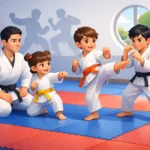
For teens and kids, this can be even more important. Good martial arts training does not encourage reckless behavior. It develops discipline, emotional control, and the confidence to carry yourself differently. Often that alone reduces the chance of being seen as an easy target.
How to Train BJJ for Real Self-Defense Value
If your goal is self-defense, how you train matters almost as much as what you train. You want an academy that takes technique seriously, includes live resistance, and teaches beginners in a way that is structured rather than chaotic.
You also want training that addresses practical scenarios instead of treating self-defense as a slogan. That means working from common positions, learning how to manage grips and pressure, practicing escapes, and understanding when controlling someone is smarter than chasing a submission.
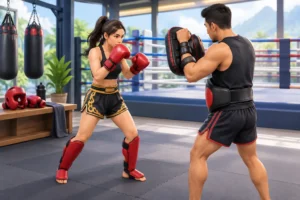
Cross-training can help too. A school that includes grappling and striking under one roof can give students a more complete picture of range, timing, and defense. That does not mean you need to become a professional fighter. It means your training reflects reality a little better.
For many people in Lakewood and the Denver metro area, the best first step is simply finding a place where you can train consistently. A supportive academy with high technical standards will do more for your self-defense than occasional hard workouts with no progression. At Imperial BJJ Lakewood, that balance matters – serious instruction, real structure, and a culture that welcomes beginners while still challenging experienced students.
So, Should You Rely on BJJ Alone?
BJJ is one of the best martial arts for self-defense, especially for controlling a larger or stronger person in close range. It gives you practical tools, pressure-tested experience, and a realistic understanding of what a physical confrontation actually feels like. That is a strong foundation.
But smart self-defense is never about a single technique or style. It starts with awareness, boundary setting, and avoidance when possible. It gets stronger when grappling is supported by sound judgment and, ideally, some striking and stand-up awareness. The goal is not to prove toughness. The goal is to protect yourself and the people around you.
If you have been considering training because you want more confidence, better composure, and skills that hold up under pressure, BJJ is a very solid place to start. Not because it makes you invincible, but because it teaches something more useful – how to stay calm, make good decisions, and handle physical pressure with technique instead of panic.


6 Comments
[…] goal is fitness, you need a gym where classes keep you engaged and coming back. If your goal is self-defense, the instruction should be practical, pressure-tested, and rooted in sound fundamentals. If you […]
[…] should challenge you, but it should also make sense from day one. Whether you are looking for real self-defense, a better way to get in shape, a structured outlet after work, or a place where your child can […]
[…] leverage, control, timing, and problem-solving under pressure. It is one of the clearest paths for practical self-defense because it teaches how to manage distance, escape bad positions, and control an opponent without […]
[…] Brazilian Jiu-Jitsu is often a strong starting point because it teaches control, leverage, positional awareness, and how to handle close-range situations. For many beginners, especially those who do not feel naturally athletic, BJJ is a reassuring first step because it rewards technique over size and explosiveness. It can also build confidence quickly, since students begin learning useful problem-solving skills early. […]
[…] you can only pick one style, BJJ is one of the smartest places to begin for many adults because it gives a smaller person practical control skills, builds calm under […]
[…] parents thinking about self-defense, BJJ offers useful lessons in distance, control, and getting back to the feet. Most youth […]