
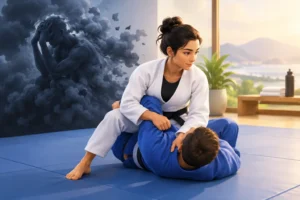
Most families are not struggling because they need another activity on the calendar. They are struggling because everyone is moving in different directions. Parents want healthier routines. Kids need structure, confidence, and better ways to handle stress. That is where family martial arts training benefits stand out. Training together gives families a shared challenge, a clear standard, and time that feels productive instead of forced.
That matters more than most people expect. A good martial arts academy is not just a place to burn energy. It is a place where parents and kids learn the same values in real time – respect, consistency, self-control, and resilience. Those lessons carry over into school, work, and home.
Why family martial arts training benefits go beyond fitness
Fitness is usually the first reason families look into martial arts, and it is a good one. Classes improve coordination, mobility, balance, endurance, and overall athleticism. For adults, that can mean better energy, stress relief, and a more sustainable way to stay active than trying to force solo workouts after a long day. For kids, it means developing body awareness and healthy movement patterns early.
But the strongest results are usually not just physical. Families who train together often notice better communication at home. Children see their parents learning, listening, and improving. Parents get to watch their kids handle setbacks, follow instruction, and grow more confident week by week. That shared experience changes the relationship.
There is also accountability built into it. If everyone in the house values training, showing up becomes part of the family culture. That can be a major shift from the usual cycle of starting and stopping activities.
A shared routine builds stronger families
One of the most practical family martial arts training benefits is routine. Families tend to do better when there is a reliable rhythm to the week. Martial arts gives that rhythm a purpose.
Instead of one child in one sport, another in a different program, and a parent trying to squeeze in a gym session somewhere else, training can happen under one roof with a shared sense of progress. That does not mean every family member needs the exact same class or the exact same goals. In fact, they usually should not. A parent may be focused on fitness and self-defense, while a child is working on focus, discipline, and confidence. The advantage is that everyone is still part of the same culture.
That culture matters. When a child hears respect taught on the mat and reinforced at home, the lesson has more weight. When a parent talks about consistency after class, it feels earned, not theoretical. Martial arts gives families a common language for effort and improvement.
Confidence that is built, not handed out
A lot of youth activities talk about confidence. Martial arts tends to build it in a more honest way. Students gain confidence because they practice difficult skills, make mistakes, and improve through repetition. They see proof that growth comes from effort.
That is valuable for children, especially those who are shy, highly energetic, or unsure of themselves in group settings. Learning how to stand with posture, speak clearly, follow through, and stay calm under pressure can change how a child shows up at school and in social situations.
Adults benefit from the same process. Many parents come in feeling out of shape, uncertain, or hesitant to try something new. Training helps them rebuild trust in their own abilities. That confidence tends to show up outside the academy too – in work, in stressful situations, and in the way they lead at home.
There is an important trade-off here, though. Confidence grows best in an environment that is structured and supportive, not one that relies on hype or intimidation. Families usually do best in programs that challenge them without making beginners feel out of place.
Discipline without the lecture
Parents often want help teaching discipline, but most kids do not respond well to constant correction. Martial arts changes that dynamic because discipline is built into the training itself.
Students line up, listen, practice, and repeat. They learn that details matter. They learn that progress comes from paying attention and putting in the work, even on days when they are distracted or tired. Over time, those habits become part of how they operate.
This is one reason martial arts can be especially useful for children who need more structure. The expectations are clear. The consequences are immediate. If focus slips, performance slips. If effort improves, results improve. That kind of feedback is simple, direct, and effective.
For parents, there is value in that too. Discipline becomes something the whole family experiences rather than something adults are always trying to enforce from the outside.
Self-defense with real-world value
Not every family starts martial arts for self-defense, but many stay for that reason. Knowing how to stay calm, create space, manage distance, and respond under pressure is useful at any age.
For kids, self-defense training often starts with awareness, posture, boundaries, and the confidence to speak up. Those tools matter just as much as physical technique. For adults, practical self-defense can bring peace of mind, especially for people who want to feel more capable without relying on guesswork.
It depends on the program, of course. Some martial arts schools focus heavily on performance, forms, or point-based competition. Those can still offer great benefits, but families looking for practical skills should pay attention to how classes are taught. Brazilian Jiu-Jitsu, Muay Thai, wrestling, judo, and well-structured youth programs can provide realistic training that develops both composure and technical ability.
Better emotional control under pressure
One of the less obvious family martial arts training benefits is emotional regulation. Training teaches students how to stay composed when something is physically and mentally demanding. They learn how to breathe, reset, and keep working.
That lesson is powerful for kids who get frustrated easily or shut down when things are hard. It is just as useful for adults carrying work stress, family stress, or the mental fatigue that comes with a packed schedule. Martial arts does not remove pressure. It teaches people how to handle it better.
Families often notice this outside class. Kids recover from setbacks faster. Parents become more patient. Everyone has a clearer picture of what steady improvement actually looks like.
Healthy screen replacement, without the struggle
Many parents are trying to reduce screen time without turning every evening into a fight. Martial arts helps because it offers something active, social, and rewarding. It is not just taking something away. It is replacing it with something better.
That replacement works best when kids feel challenged and included. A strong academy keeps classes engaging while maintaining standards. Students should leave feeling like they learned something, not like they were simply entertained.
For adults, the same principle applies. Training gives people a productive outlet that is more meaningful than another hour spent sitting still. It creates momentum. When one good habit takes hold, others often follow.
Community is part of the value
Families do not just need activities. They need the right environment. A serious martial arts academy should be disciplined, but it should also feel welcoming. That balance is what helps people stay consistent.
When families train in a supportive community, they are more likely to keep showing up through the awkward beginner stage. Kids make friends around healthy goals. Parents connect with other people who value growth, accountability, and respect. That sense of belonging can be a major part of long-term success.
In the Denver metro area, many families are looking for more than a transactional fitness option. They want a place where their children can grow, where adults can train with purpose, and where progress is taken seriously. That is one reason a multi-discipline academy can be such a strong fit. It gives beginners room to start, and it gives experienced students room to keep developing.
Is family training right for every household?
Usually, yes – but not always in the same way. Some families love taking classes side by side. Others do better with separate age-specific programs that still share the same culture and coaching philosophy. The key is not forcing everyone into one format. The key is finding a school where the whole family can grow.
It is also worth being realistic about schedules, ages, and personalities. A four-year-old needs a very different class experience than a parent training for fitness or self-defense. A teenager may want more challenge and independence. The best programs understand those differences and still create a unified standard of respect and progression.
At a well-run academy like Imperial BJJ Lakewood, that structure allows families to train with confidence while still getting instruction that matches their stage and goals.
The real value of martial arts is not that it makes life easier overnight. It is that it gives families a better way to do hard things together, and that tends to change more than just what happens on the mat.




No comment yet, add your voice below!