
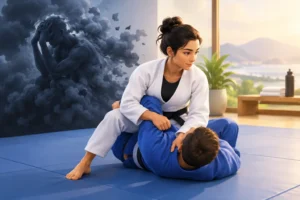
Walking into your first class can feel like the hardest part. If you are wondering how to start Brazilian Jiu Jitsu, the good news is this: you do not need to get in shape first, learn the terminology ahead of time, or prove anything before you begin. You need a solid academy, a coachable attitude, and enough patience to be a beginner for a while.
That matters because BJJ is one of the few training methods that can improve fitness, self-defense, composure, and confidence at the same time. It also has a learning curve. Starting the right way saves you from the usual mistakes – joining a gym that does not fit, training too hard too soon, or quitting before the basics begin to make sense.
How to start Brazilian Jiu Jitsu without overthinking it
Most people delay starting for the same reasons. They think they are too old, too out of shape, too nervous, or too far behind. In practice, beginner classes are built for exactly that person.
A good BJJ academy does not expect you to arrive prepared. It expects you to arrive willing. Coaches should be able to teach complete beginners how to move safely, understand position, and start learning the core ideas of leverage, control, posture, and escape. If a school makes beginners feel like they are in the way, keep looking.
The first step is simple: visit an academy and take an intro class or trial. That gives you real information fast. You will see how the room feels, how the instructors teach, and whether the culture is serious in the right way – disciplined, respectful, and supportive.
Choosing the right academy matters more than buying gear
A lot of beginners focus on what to wear or what techniques to study online. Those details matter, but not as much as where you train.
Look for an academy with structured beginner instruction. That usually means classes where fundamentals are taught in a clear sequence instead of being mixed into advanced sessions with no context. You want coaches who can explain not just what to do, but why it works and when it breaks down.
Culture matters just as much as curriculum. The best schools are demanding without being ego-driven. Higher belts should help newer students, not try to overwhelm them. Training partners should make you better, not make every round feel like a fight for survival.
Lineage and instruction quality also deserve attention. In BJJ, who teaches you and the system behind that teaching can shape your progress for years. An academy with a strong technical foundation and a proven curriculum usually gives beginners a more reliable path than a gym that relies on random hard rounds and loose coaching.
If you are in the Denver metro area, it is worth looking for a school that offers both strong fundamentals and room to grow. Some students begin for fitness or self-defense and later want to compete, cross-train, or involve their kids. Having those options under one roof can make it easier to stay consistent.
What to expect in your first class
Your first class will probably be less dramatic than you imagine. Most beginner sessions start with a warm-up, followed by technique instruction, partner drilling, and some form of live training. Depending on the academy, that live portion might be very controlled for new students.
You do not need to memorize everything. In fact, you will not. That is normal. Your job in the beginning is to learn how class works, how to move safely, and how to stay calm when things feel unfamiliar.
Expect close contact. BJJ is a grappling art, so people will be in your space. Expect to feel clumsy sometimes. Even athletic beginners can struggle because the movements are specific. Expect to tap. Tapping is not losing. It is communication, and learning to use it early is part of training intelligently.
A well-run academy will introduce resistance at the right pace. That is one of the biggest differences between productive training and burnout. You should leave tired, challenged, and eager to return – not discouraged or beat up.
What to wear and what to bring
For your first class, many academies will let you borrow a gi or wear basic athletic clothing if the session is no-gi. Ask ahead so you show up prepared.
Keep it simple. Wear clean training clothes, trim your nails, bring water, and show up a little early. Hygiene is a big part of good mat culture. So is respect for your training partners.
If you stick with BJJ, you will eventually want your own gear. Early on, though, do not assume expensive equipment will make the experience better. A clean, well-fitting uniform and the right attitude will take you much farther than premium gear.
How often should a beginner train?
The best schedule is the one you can maintain. For most beginners, two to three classes per week is enough to build momentum without wrecking recovery.
This is where a lot of motivated people make a mistake. They get excited, train five or six days in the first week, feel sore everywhere, and disappear by the second month. BJJ rewards consistency more than intensity. A sustainable routine beats a heroic start.
If you already lift, run, or train another sport, you may need to adjust for a few weeks. Grappling fatigue is different from regular gym fatigue. Your body is learning new patterns, and your grip, neck, and hips may feel it first. Listen to your coaches, recover well, and let your training build gradually.
The beginner mindset that helps you improve faster
If you want to know how to start Brazilian Jiu Jitsu and actually stick with it, mindset is half the battle.
The students who improve steadily are usually not the ones trying to win every round. They are the ones who ask questions, pay attention to details, and accept that progress comes in layers. One week you learn where your hands belong. A few weeks later you understand why posture matters. A few months later the same technique finally starts working under pressure.
Try not to measure your progress only by submissions. Early success often looks smaller than that. Maybe you escaped side control once when you could not last week. Maybe you stayed calm under pressure instead of panicking. Maybe you remembered the sequence from class. Those are real signs of growth.
Humility helps. So does patience. BJJ has a way of exposing what you do not know, but that is part of why it works. The mat gives honest feedback, and honest feedback is valuable when the goal is real development.
Common mistakes when starting BJJ
One mistake is treating every training round like competition. That usually leads to bad habits, unnecessary injuries, and slower learning. You need intensity in BJJ, but you also need control.
Another mistake is comparing yourself to people who have been training for years. They are not on your timeline. Focus on attendance, effort, and understanding the basics.
Some beginners also bounce between too many techniques too soon. It is tempting to chase flashy submissions online, but your first job is to build a base. Learn how to defend, escape, maintain position, and move with purpose. That foundation pays off in every future stage of training.
The last big mistake is quitting before the awkward stage passes. Almost everyone feels lost early on. Then something clicks. Then more things click. Confidence in BJJ is usually earned, not given, and that is part of what makes it meaningful.
Is Brazilian Jiu Jitsu good for fitness and self-defense?
Yes, but the answer depends on how you train and what you expect from it.
For fitness, BJJ develops endurance, mobility, coordination, and total-body strength in a way that feels more engaging than repetitive cardio. It also gives people a reason to stay consistent because there is always something new to learn.
For self-defense, BJJ is especially useful because it teaches distance management, control, and how to handle pressure from a resisting person. It is not magic, and it is not the whole picture. A complete martial arts education can include striking, takedowns, situational awareness, and decision-making. Still, BJJ gives beginners a strong, practical foundation in real contact and control.
That is one reason many students eventually appreciate training in a gym with multiple disciplines. You can start with Jiu Jitsu, build confidence, and expand from there when the timing is right.
How to know you found the right place to train
You should feel challenged, respected, and welcomed. The instruction should be clear. The room should be clean. The students should train hard without acting reckless. Most of all, you should be able to picture yourself coming back next week.
A strong academy feels like more than a workout. It gives you structure, accountability, and a community that expects you to grow. At Imperial BJJ Lakewood, that standard is built around technical instruction, serious training, and a culture that makes room for complete beginners and experienced athletes alike.
Starting Brazilian Jiu Jitsu does not require perfect timing. It requires a decision, a first class, and the willingness to keep showing up long enough for the process to work on you.




No comment yet, add your voice below!