
A lot of parents start looking at martial arts after a hard moment – a child who shuts down in new situations, struggles to focus, avoids sports, or has trouble standing up for themselves. That is usually when the top benefits of kids jiu jitsu become more than a nice idea. They become a practical answer.
Brazilian Jiu-Jitsu gives children something many activities do not. It teaches them how to stay calm under pressure, solve problems in real time, and keep working when something feels difficult. For some kids, that means more confidence. For others, it means better self-control, healthier habits, or a place where they finally feel capable.
What makes Jiu-Jitsu especially valuable is that progress is earned, not handed out. Children cannot fake effort on the mat. They learn by practicing, paying attention, and treating training partners with respect. That combination creates growth you can often see outside the academy too.
Why the top benefits of kids jiu jitsu last
Many youth activities help with fitness or teamwork. Jiu-Jitsu does that too, but it adds a layer of personal responsibility that tends to stick. A child learns that attitude matters, consistency matters, and small improvements add up.
Because training is hands-on and technical, kids stay mentally engaged. They are not just running laps or repeating the same motion without thinking. They are learning how to control position, escape bad spots, and apply technique with timing. That keeps classes challenging in a productive way.
There is also a built-in humility to the sport. Every child has moments where a technique does not work yet. Every child gets corrected. In a well-run academy, those moments are not embarrassing. They are part of learning. Over time, that helps kids become more coachable, more resilient, and less afraid of making mistakes.
Confidence that comes from real capability
Confidence is one of the first things parents hope for, and one of the most misunderstood. Real confidence is not loud. It is not pretending to be fearless. It is the steady feeling that says, I can handle this.
Jiu-Jitsu builds that kind of confidence because children can measure their progress clearly. They remember when they could not do a movement, then they can. They remember being unsure in partner drills, then they become composed. Belt promotions can be meaningful, but the deeper confidence usually comes from these smaller wins.
This matters for shy kids, but it also matters for children who are overly emotional or easily frustrated. As they become more competent, many start carrying themselves differently at school and in social settings. They interrupt less, panic less, and trust themselves more.
Discipline without constant lecturing
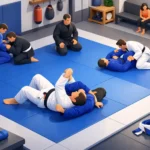
One of the top benefits of kids jiu jitsu is that discipline is built into the training process. Kids line up, listen, follow directions, take turns, and show respect to coaches and teammates. They learn quickly that class runs well when everyone does their part.
The key difference is that discipline in Jiu-Jitsu is not only verbal. It is reinforced through action. If a child loses focus during instruction, they usually feel it right away when they cannot complete the next drill. That creates a stronger lesson than another reminder from the sidelines.
For parents, this can be refreshing. Instead of hearing abstract talks about responsibility, children experience responsibility. They see how behavior affects performance, and that connection often carries into homework, chores, and other sports.
Better focus and problem-solving
Jiu-Jitsu is physical, but it is also highly mental. Children are constantly asked to pay attention to details – hand position, posture, balance, timing, pressure, and movement. They are learning how to think while doing.
That kind of focus is useful for kids who get distracted easily. Training gives them short, immediate challenges that require concentration. If they stay present, the technique works better. If they drift, they miss steps. Over time, many children develop stronger listening skills and better task focus because the feedback is so immediate.
There is also a problem-solving element that sets Jiu-Jitsu apart from many youth activities. A child may know the goal, but they still need to figure out how to get there against a resisting partner. That develops patience and adaptability. Instead of freezing when something changes, they learn to adjust.
Practical self-defense and anti-bullying value
Parents often ask about self-defense, and for good reason. Children do not need fear-based training, but they do benefit from learning how to manage physical pressure and respond with control.
Jiu-Jitsu teaches kids how to create space, improve position, and stay composed when someone is grabbing or pushing. Just as important, it teaches them not to overreact. The goal is not aggression. The goal is awareness, confidence, and control.
That matters in bullying situations. A child who trains often carries themselves with more confidence, which can make them less likely to be targeted in the first place. If a situation does become physical, they are more prepared than a child who has never dealt with resistance before.
There is an important trade-off here, though. Not every kids martial arts program teaches self-defense equally well. The quality of instruction, the culture of the academy, and how coaches talk about conflict all matter. Good training should make children calmer and more respectful, not more reckless.
Fitness that does not feel like a chore
Some kids love traditional sports. Others do not. Jiu-Jitsu can be a strong fit for children who need physical activity but are not motivated by team ball sports or repetitive workouts.
Classes improve coordination, balance, mobility, body awareness, and overall athleticism. Children move in different directions, use their core, and develop strength through natural patterns rather than isolated exercises. They also build endurance, often without realizing how hard they are working because class stays engaging.
This is one reason families stay with it. Kids are not just burning energy. They are building useful physical skills while learning something meaningful. For children who spend a lot of time on screens, that combination can be especially valuable.
Respect, teamwork, and social growth
Even though Jiu-Jitsu is an individual martial art, no child improves alone. Progress depends on training partners, coach feedback, and learning how to work with others.
That environment can help kids develop better social habits. They practice being good partners, listening when others speak, and helping teammates learn. They also spend time around children of different ages, personalities, and skill levels, which can build maturity.
For some kids, the social benefit is huge. A supportive academy gives them a second home – a place where effort is noticed and character matters. That sense of belonging can be just as important as any physical skill.
Emotional control under pressure
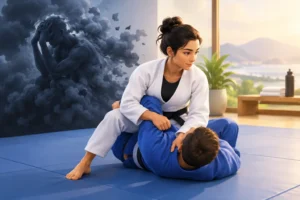
One of the most overlooked benefits of Jiu-Jitsu is emotional regulation. Training puts children in challenging situations in a safe, supervised setting. They may feel stuck, tired, or frustrated, but they learn to breathe, think, and continue.
This is not instant. Some children need time to become comfortable with contact, correction, or competition. But with patient coaching, many start handling frustration better. They recover faster from mistakes and become less reactive when something does not go their way.
That skill reaches far beyond the mat. School stress, peer conflict, and everyday disappointments become easier to manage when a child has practiced staying composed during challenge.
Are the benefits the same for every child?
Not exactly. Age, personality, coaching quality, and consistency all shape the experience. A very young child may gain structure and coordination first. An older child may gain confidence, discipline, and stronger self-defense skills. A naturally athletic kid may love the physical side right away, while a quieter child may need time before the social and emotional benefits show up.
That is why the right environment matters so much. Kids do best in programs that balance clear standards with encouragement, technical instruction with fun, and discipline with patience. Families in the Denver area often look for a school that feels serious about martial arts but still welcoming to beginners, because both pieces matter.
At Imperial BJJ Lakewood, that balance is part of what makes youth training meaningful. Children are held to a standard, but they are also supported as they grow into it.
What parents should watch for in a kids program
If you are comparing options, look beyond the surface. A good kids class should be organized, safe, and age-appropriate. Coaches should be able to manage a room, explain technique clearly, and keep children engaged without turning class into chaos.
You should also pay attention to the culture. Are students respectful? Do coaches correct with patience? Are beginners welcomed? The top benefits of kids jiu jitsu come from consistent training in a healthy environment, not just from the art itself.
When the coaching is strong and the culture is right, Jiu-Jitsu becomes more than an after-school activity. It gives children a place to grow stronger, think sharper, and carry themselves with more confidence in every part of life.
If your child needs something that builds character as much as skill, Jiu-Jitsu is worth a serious look – not because it promises quick change, but because it develops the kind of progress that lasts.


No comment yet, add your voice below!