
Walking into your first martial arts class can feel like a bigger step than the workout itself. Most beginners are not asking, “What is the toughest style?” They are asking a more useful question: what are the best martial arts for beginners if you want to get fit, learn real skills, and stick with it long enough to improve?
The honest answer is that the right choice depends on your goals, your comfort level, and the kind of coaching environment you enter. A beginner who wants practical self-defense may thrive in Brazilian Jiu-Jitsu. Someone who wants conditioning and confidence fast may feel more at home in Muay Thai or fitness kickboxing. A parent looking for structure and discipline for a child may value a program’s culture as much as its curriculum. The style matters, but the teaching matters just as much.
What makes the best martial arts for beginners?
A good beginner martial art does three things well. First, it gives you a clear path to progress, so you are not guessing what comes next. Second, it lets you train with intensity that matches your current level. Third, it builds confidence through repetition and coaching, not intimidation.
That is why there is no single universal answer. The best martial arts for beginners are usually the ones that balance effective technique with a learning curve you can realistically manage. A style can be legitimate, demanding, and proven, but still be a poor fit if the class structure is chaotic or the culture is unwelcoming.
For most people, the best first step is choosing a program where beginners are expected, coached carefully, and brought into the community instead of being thrown into the deep end.
Brazilian Jiu-Jitsu is one of the strongest starting points
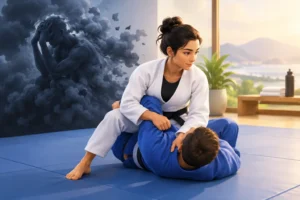
Brazilian Jiu-Jitsu, or BJJ, is often one of the best choices for adults starting martial arts from scratch. The reason is simple. It allows a smaller person to learn control, leverage, positioning, and submissions without relying on size or striking power.
For beginners, BJJ has a practical advantage. You can train live against a resisting partner at a pace that is still manageable. That means you get realistic feedback without needing to absorb punches. You learn what works, what does not, and how to stay calm under pressure. Over time, that changes more than your technique. It changes your confidence.
There are trade-offs. BJJ can feel technical at first, and the positions are unfamiliar for most new students. Some people also need a few classes to get comfortable with the close-contact nature of grappling. But in a well-run academy, those early hurdles are temporary. Good instruction makes the complexity feel organized instead of overwhelming.
If your goals include self-defense, problem-solving, steady fitness gains, and long-term development, BJJ deserves to be near the top of your list.
Muay Thai is excellent for fitness and striking fundamentals
If you want a martial art that gets you moving fast, Muay Thai is a strong option. It teaches punches, kicks, knees, elbows, footwork, balance, and timing. For beginners, that means you build coordination and conditioning almost immediately.
One reason Muay Thai works well for newer students is that the basics are direct. You can learn a stance, a jab, a cross, a kick, and simple defensive movements quickly enough to feel progress in your first few weeks. It is physically demanding, but that challenge is part of the appeal.
The trade-off is that striking can feel more intimidating than grappling for some people. Even controlled partner drills may be outside a beginner’s comfort zone at first. A quality gym solves that by scaling contact, teaching defense responsibly, and making sure new students are not pushed too far too soon.
For adults who want self-defense, confidence, and a serious workout, Muay Thai is one of the best martial arts for beginners with a striking focus.
Judo is a great fit if you want balance, timing, and real-world control
Judo does not always get mentioned first, but it should. It teaches throws, takedowns, balance disruption, grip fighting, and ground control. That makes it highly practical and deeply technical.
For beginners, judo offers a valuable foundation in body awareness. You learn how to move another person, how to stay stable, and how to fall safely. That last part matters more than people realize. Breakfall training alone can be useful in everyday life.
Judo’s challenge is that throwing mechanics can take time to understand. It also requires comfort with impact, even though safe training methods reduce risk. If you like structure, detail, and the idea of developing strong fundamentals, judo is a smart starting point.
Wrestling builds toughness and athleticism fast
Wrestling is one of the most effective grappling arts in the world, and it can be an outstanding base for beginners who want intensity and physical development. It teaches takedowns, control, pressure, scrambling, and relentless work ethic.
A beginner in wrestling will notice improved conditioning very quickly. It also builds mental resilience because the pace is high and the feedback is immediate. You know when your stance is off. You know when your timing is late. That honesty can be frustrating, but it is also why progress feels earned.
The downside is that wrestling can be demanding for brand-new students who are not used to hard training. It is often less submission-focused than BJJ and less beginner-friendly in some settings. But in a supportive academy with structured coaching, wrestling fundamentals can give you exceptional control, athletic movement, and confidence under pressure.
Fitness kickboxing is ideal if you want a lower barrier to entry
Not everyone wants to start with sparring, takedowns, or submission grappling. Some people want to build consistency first. That is where fitness kickboxing shines.
For beginners, fitness kickboxing offers a practical mix of movement, striking basics, cardio, and stress relief. You learn stance, basic punches, simple kicks, and combinations in a format that feels approachable. The atmosphere is often less intimidating than traditional fight training, which helps many people get through the hardest part of any new routine: showing up again next week.
The trade-off is that fitness kickboxing is not always the same as full combat-sport instruction. Depending on the program, it may focus more on conditioning than live application. That does not make it a bad choice. It just means you should be honest about your goals. If your first goal is confidence, weight loss, and momentum, it can be exactly the right place to begin.
Karate and taekwondo can be strong beginner options too
Traditional martial arts still offer a lot of value, especially for children, teens, and adults who want structure and discipline. Karate and taekwondo typically emphasize forms, striking fundamentals, timing, and respect for training etiquette.
For some beginners, that structure is a major advantage. Clear rank systems, defined techniques, and consistent class rituals create a sense of progress that keeps students engaged. These arts can also improve flexibility, balance, and focus.
The important distinction is school quality. Traditional martial arts can be excellent when they are taught with real standards and practical intent. They can also vary widely from school to school. For beginners, the instructor and culture matter at least as much as the style on the sign.
How to choose the right first class
The best beginner martial art is usually the one you will train consistently. That means you should think beyond the style itself.
Start with your main goal. If you want self-defense without striking, BJJ or judo may be the right fit. If you want to hit pads, get in shape, and build confidence standing up, Muay Thai or kickboxing may be better. If you want explosive athletic development and takedown skill, wrestling deserves serious attention.
Then consider the training environment. Are beginners guided carefully? Are coaches attentive? Does the room feel disciplined and respectful? You should feel challenged, not dismissed. A serious academy does not need to be cold. In fact, the best ones combine high standards with strong support.
This is where a multi-discipline academy can help. Instead of guessing from the outside, you can experience different classes and see what matches your goals, personality, and comfort level. For many people in Lakewood and the Denver metro area, that removes a lot of friction from getting started.
The real beginner mistake is waiting for the perfect choice
People spend weeks comparing styles when they would be better served by taking one well-taught class. No article can replace that experience. You might think you want striking and end up loving grappling. You might assume BJJ looks too technical and then realize it is the first thing that has fully held your attention in years.
At Imperial BJJ Lakewood, that is why beginner-friendly instruction matters so much. A strong curriculum, experienced coaches, and a community that takes growth seriously can make the first step feel a lot less intimidating.
You do not need to arrive in shape, tough, or knowledgeable. You need a place that can meet you where you are and show you what consistent training can do. The best martial art for beginners is the one that gets you through the door, keeps you learning, and gives you a reason to come back.




No comment yet, add your voice below!