
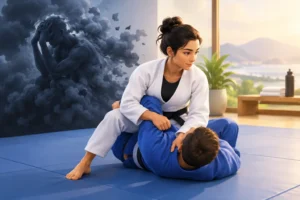
A shy child does not need to become the loudest kid in the room to become more confident. Often, they need a place where expectations are clear, progress is earned, and adults do not pressure them to perform before they feel ready. So, are martial arts good for shy kids? For many children, the answer is yes – when the program is structured well and the coaching is patient.
Martial arts can give shy kids something powerful: proof that they can handle hard things. That proof may start quietly. It might be making eye contact during a greeting, joining a partner drill, speaking loudly enough to answer a coach, or returning to class after a difficult first day. Those are meaningful wins, especially for a child who tends to hold back in new social settings.
Why martial arts can work for shy children
Shyness is not a character flaw to fix. Some children need more time to observe, warm up, and trust a new environment. A quality martial arts class respects that while still giving the child a clear path forward.
Unlike many team sports, martial arts offers a more predictable structure. Kids line up, learn a skill, practice it in a controlled drill, and receive direct feedback. They know what comes next. That routine can lower the anxiety that comes with unstructured social situations or the fear of letting down an entire team.
Progress is also personal. A child does not need to be the fastest runner or score the most points to feel successful. They can improve their stance, remember a sequence, learn a safe breakfall, or use a new Brazilian Jiu-Jitsu escape. Each skill becomes evidence of growth.
Confidence comes from competence
Parents sometimes hope an activity will make a shy child instantly outgoing. That is not the real goal, and it should not be. Healthy confidence is not about being louder. It is about knowing, “I can try this, even when I feel nervous.”
Martial arts gives children frequent chances to build that belief through action. They practice a technique repeatedly, make mistakes in a low-stakes setting, receive coaching, and try again. Over time, the child who once stood at the edge of the mat may volunteer for a demonstration or help a newer student understand a drill. The change is usually gradual, but it is genuine because it is built on skill rather than empty praise.
A respectful social setting matters
Many shy kids want friends but struggle with the first step. Martial arts offers a natural reason to interact. Partners work together on drills. Students take turns. They encourage one another after a round. There is less pressure to make conversation than there is at a birthday party or on a playground because everyone has a shared job to do.
The culture of the academy matters here. Good instruction teaches respect for coaches, teammates, and personal boundaries. Kids learn how to be a good partner: listen, use control, follow safety rules, and help others practice. Those habits can make social connection feel more manageable for a reserved child.
Are martial arts good for shy kids who dislike competition?
Yes, but the program should match the child. Martial arts can include competition, sparring, and performance opportunities, yet those are not required for a child to benefit. A well-run youth program gives students room to train recreationally while still challenging themselves.
For some shy children, competition becomes a confidence builder later on. They may enjoy testing their skills once they have developed trust in the coaches and familiarity with their teammates. For others, the best result is simply participating consistently, getting stronger, and learning to speak up when they need help. Both outcomes have value.
Parents should be cautious about using martial arts as a forced cure for shyness. If a child is pushed into intense sparring, singled out for attention, or shamed for being quiet, the experience can backfire. The right challenge stretches a child without overwhelming them.
What to look for in a youth martial arts program
The first class tells parents a great deal. Watch how the coach responds when a new child hangs back. Is the child welcomed without being put on the spot? Does the instructor explain expectations clearly? Are older or more experienced students taught to work safely with beginners?
A strong program balances structure with encouragement. Coaches should correct technique without embarrassing students and recognize effort as well as performance. They should also understand that confidence looks different from one child to another. One child may thrive by leading the warmup. Another may show major growth by calmly joining a partner drill after weeks of hesitation.
Look for age-appropriate instruction, especially for children ages 4 to 13. Younger students need movement, simple directions, and positive repetition. Older children can handle more technical detail, responsibility, and controlled resistance. In both cases, safety and respectful behavior should be non-negotiable.
It also helps when an academy has a consistent curriculum. Children who are nervous about new activities often feel more secure when they can recognize the class routine and understand how their skills connect from week to week. Belt progress can be motivating, but it should represent real learning, attendance, and character – not just a reward for showing up.
How parents can help a shy child get started
The first few classes may feel uncomfortable. That does not necessarily mean martial arts is a poor fit. New rooms, unfamiliar adults, uniforms, noise, and physical proximity can all feel like a lot at once. Give your child time to settle in while paying attention to whether the discomfort begins to ease.
Before class, set a small goal that is within reach. Rather than saying, “Make friends today,” try, “Let’s learn your coach’s name,” or, “Let’s stay through the warmup.” Specific goals reduce pressure and give your child a clear win to carry home.
Avoid speaking for your child every time a coach asks a question. It is fine to support them at first, but allow a pause. A quiet child may need a few extra seconds to answer. When they do speak, recognize the courage it took without making a huge production of it.
Consistency helps more than occasional bursts of enthusiasm. Attending regularly lets names, routines, and skills become familiar. Missing every other week can reset the adjustment period and make the social side feel harder than it needs to be.
When martial arts may not be the right fit
Not every martial arts style, class format, or academy will suit every child. A child with significant sensory sensitivities may need a quieter class time or a smaller group. A child who is dealing with severe anxiety, bullying trauma, or a sudden change in behavior may also benefit from additional support from a qualified health professional alongside extracurricular activities.
It is okay to try more than one program. Brazilian Jiu-Jitsu may appeal to a child who likes problem-solving and close-range grappling. Kickboxing or Muay Thai may suit a child who enjoys rhythmic movement and striking pads. Judo and wrestling can be excellent for body awareness and balance. The best choice is the one where your child feels safe, engaged, and appropriately challenged.
At Imperial BJJ Lakewood, youth students train in a disciplined, welcoming environment where beginners are taught step by step and supported by a community that values respect as much as skill. A trial class can be a useful way to see how your child responds to the coaching style, class structure, and teammates before making a longer commitment.
A shy child does not need to arrive confident to begin martial arts. They only need a place where showing up counts, small progress is noticed, and courage is practiced one class at a time.




2 Comments
[…] can be especially meaningful for kids who are shy, easily discouraged, or struggling to find their place in a team sport. Martial arts provides individual accountability […]
[…] children do better with more personal direction. They may be hesitant in large groups, frustrated when they do not get much time with the ball, or uncomfortable when their performance […]