
A child who is being picked on usually does not need a bigger speech. They need better posture, a calmer voice, clearer boundaries, and the confidence to stay composed when pressure shows up. A strong anti bullying martial arts program is not about teaching kids to fight at school. It is about giving them the tools to carry themselves differently, respond intelligently, and feel supported while they grow.
That difference matters. Parents are often looking for something practical – not a slogan, not a one-day workshop, and not empty reassurance. They want a program that helps their child become harder to target without becoming aggressive. Done well, martial arts can absolutely do that.
What an anti bullying martial arts program should actually teach
The best programs start by defining the goal correctly. Bullying is not solved by telling children to “hit back.” It is addressed by building awareness, self-control, confidence, and the ability to set boundaries under stress. Physical skill has a place, but it should sit inside a larger framework of discipline and respect.
A quality anti bullying martial arts program teaches kids how to stand, speak, and move with confidence. It also teaches them when to disengage, when to get help, and how to manage the fear that often freezes children in difficult moments. Those are real-life skills, and they transfer beyond the mat.
This is where structured martial arts training stands apart from casual motivational advice. Confidence is not something children can simply be told to have. It is built through repetition. When a student practices technique, learns to stay calm in drills, and sees progress over time, confidence becomes earned. That kind of confidence tends to show up in the hallways, the classroom, and on the playground.
Why martial arts helps kids who feel targeted
Bullies often look for easy reactions. They test for insecurity, hesitation, and emotional volatility. Kids who appear unsure of themselves can become repeat targets, even when they are smart, kind, and capable.
Martial arts changes that equation in subtle but powerful ways. First, training improves body language. A child who stands upright, makes eye contact, and speaks clearly often appears far less vulnerable. Second, training reduces panic. When kids experience pressure in a controlled environment, they learn they can handle discomfort without shutting down. Third, training gives them a peer group and coaches who reinforce standards of respect and accountability.
There is also an emotional piece that parents should not overlook. Children who struggle with bullying often begin to internalize it. They may feel embarrassed, isolated, or ashamed. Being part of a martial arts academy can interrupt that pattern. They are no longer defined by what happened at school. They become students, teammates, and young athletes working toward real progress.
That shift in identity can be just as important as any self-defense technique.
Confidence without aggression
One of the biggest concerns parents have is understandable: will martial arts make my child more aggressive? In a serious academy, the answer should be no.
Good instruction channels energy rather than inflaming it. Kids learn that skill comes with responsibility. They practice control before intensity. They are expected to listen, show respect, and stay disciplined with training partners. In other words, they learn how to manage power, not misuse it.
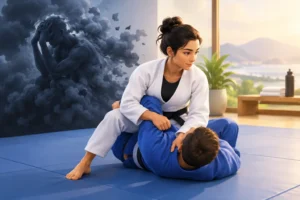
This is one reason Brazilian Jiu-Jitsu is often such a strong fit for youth development. It allows students to build real self-defense ability through leverage, positioning, and control rather than relying on size or wild reactions. That matters for smaller children, quiet children, and kids who are not naturally assertive. They begin to understand that effective defense is not about being the loudest person in the room.
Still, it depends on the school. Not every martial arts program is automatically anti-bullying in practice. If the culture rewards ego, humiliation, or intimidation, the lesson gets distorted. Parents should look for a training environment where discipline and character are treated as part of the curriculum, not just marketing language.
What parents should look for in a youth program
If your goal is confidence and anti-bullying support, the structure of the program matters as much as the style being taught. A good academy should have clear coaching standards, age-appropriate classes, and instructors who know how to balance accountability with encouragement.
Look closely at how coaches talk to kids. Are they building discipline without tearing children down? Are shy students included? Are stronger personalities being guided well? A real youth program is not just a smaller version of an adult class. It should be designed around child development, attention span, emotional regulation, and gradual skill building.
It also helps to look for a school that teaches more than techniques in isolation. Students should learn situational awareness, verbal boundary setting, and when to involve an adult. Physical training matters, but children also need to understand that the smartest response is often the one that avoids escalation.
Parents in Lakewood and the greater Denver area often want a place that feels serious but still welcoming. That balance is important. Kids grow faster in environments where standards are high and support is consistent. When families find that mix, training becomes more than an activity. It becomes part of how a child learns to handle challenge.
How progress shows up outside the academy
Parents usually notice the changes before kids can explain them. A child who once avoided eye contact starts speaking more clearly. A student who used to crumble under pressure begins recovering faster after a hard day. Small social improvements start to stack up.
These changes are not always dramatic, and that is worth saying clearly. Martial arts is not a magic switch. If a child is dealing with serious bullying, school intervention and family support still matter. Training works best as part of a bigger support system, not as a substitute for one.
But the benefits are real. Kids often become more resilient because they are regularly doing hard things in a safe setting. They learn to lose rounds, make mistakes, adjust, and keep going. That process builds composure. It teaches them that discomfort is not the same as danger and that setbacks do not define them.
For some children, that is the first time they experience personal growth in a concrete way. They do not just hear that they are capable. They start to believe it because they can feel it.
The value of structure, routine, and belonging
An overlooked part of any anti bullying martial arts program is consistency. Children build confidence through repeated exposure to challenge, correction, and success. One class can be exciting. A real program creates change because it gives students a routine.
That routine matters especially for kids who feel unsettled socially. Predictable expectations, respectful coaching, and a stable team environment can help them rebuild trust in themselves. They know what is expected. They know effort matters. They know they are part of something.
This sense of belonging can be powerful for families too. A strong academy becomes a second home – a place where growth is noticed, discipline is reinforced, and kids are surrounded by people who want them to succeed. At Imperial BJJ Lakewood, that standard is taken seriously because technical instruction and personal development are meant to go together.
Not every child will respond the same way or on the same timeline. Some become confident quickly. Others need months of patient repetition before the shift becomes visible. That is normal. The goal is not to force a personality change. The goal is to help each child become steadier, more capable, and less easily shaken.
Anti bullying martial arts program results that last
The strongest result of training is not that a child learns how to win a fight. It is that they stop carrying themselves like someone waiting to be intimidated. They learn to breathe, think, speak, and act with more control. That changes how they feel, and it often changes how others respond to them.
Over time, those lessons grow with the child. A young student who learns boundaries and composure at eight may rely on those same traits in middle school, high school, sports, and eventually adult life. That is why parents who choose martial arts for anti-bullying reasons often stay for much more. They see better focus, stronger discipline, improved fitness, and a healthier sense of confidence.
If you are considering martial arts for your child, look beyond promises and ask what the program is truly building. The right academy will not sell fear or fantasy. It will offer structure, real skill, and a community that helps kids stand taller in every part of life.
The best outcome is not raising a child who wants confrontation. It is raising one who no longer feels defined by it.





3 Comments
[…] parents, this age can also be a practical answer to concerns about confidence or bullying. A well-run program should never promise that martial arts will solve every social challenge. It […]
[…] children who have been bullied, that environment can be especially powerful. They are not treated as a problem to fix. They are […]
[…] to stop grabbing a toy, or stepping away from overly rough play. For older children, it can include handling teasing, group pressure, unwanted messages, or friends who do not respect a […]