
A child walks off the mat proud of the first technique they learned. A parent finishes class tired, clearer-headed, and surprised by how much they enjoyed being a beginner again. That is the real value of family martial arts: it gives every member of the household a place to work hard, learn humility, and grow together.
For busy families, shared activities often turn into another scheduling problem. Martial arts can be different. Rather than sitting on the sidelines while your child trains, or trying to squeeze in a workout alone, parents and kids can become part of the same academy community. They may train in age-appropriate classes, practice simple movements at home, and encourage each other through the awkward early stages that every student experiences.
Family Martial Arts Is More Than an After-School Activity
A quality martial arts program teaches physical skills, but the lessons do not stop when class ends. Children learn how to listen, follow through, manage frustration, and treat training partners with respect. Adults build conditioning, practical self-defense awareness, and the discipline to keep commitments even when motivation is low.
When those lessons happen within a family, they become easier to reinforce. A parent does not have to explain why consistency matters from the outside. They understand it because they train too. A child sees that adults can struggle, make mistakes, accept coaching, and improve through effort. That example carries more weight than a lecture on responsibility.
The shared language matters as well. Whether a family trains Brazilian Jiu-Jitsu, kickboxing, Muay Thai, wrestling, or Judo, they begin to talk about balance, posture, patience, and control. Those are martial arts concepts, but they are also useful habits for school, work, sports, and everyday conflict.
What Children Gain From Training Alongside a Martial Arts Family
Youth martial arts should never be about turning children into aggressive fighters. The right environment teaches the opposite: self-control, awareness, and the confidence to handle difficult moments without looking for a fight.
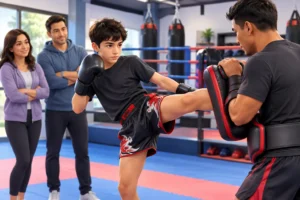
For children ages 4 to 13, structured classes create a healthy place to use energy while developing coordination and athletic ability. They learn to take turns, work with partners, and respond to instruction. As they progress, the belt system gives them clear goals that reward steady effort rather than natural talent alone.
This can be especially meaningful for kids who are shy, easily discouraged, or struggling to find their place in a team sport. Martial arts provides individual accountability within a group setting. Each student has personal skills to improve, yet nobody advances without the help of coaches and training partners.
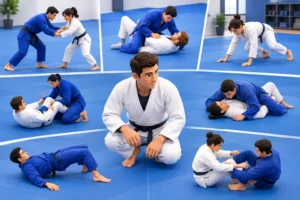
Martial arts also supports practical anti-bullying skills. Children learn body awareness, verbal composure, and how to create space or seek help. Grappling arts can teach them how to stay calm when someone grabs or pushes them, while the academy culture should make one point clear: skill is for protection, not intimidation.
What Parents Gain From Stepping on the Mat
Parents often enroll their children first and assume martial arts is mainly for kids. Then they watch a class, notice the welcoming beginner program, and realize they need a consistent outlet too.
Adult training offers a workout with a purpose. Brazilian Jiu-Jitsu develops problem-solving under pressure, mobility, strength, and composure. Fitness kickboxing and Muay Thai provide demanding striking workouts that build conditioning, coordination, and confidence. Judo and wrestling sharpen balance, movement, and grappling instincts. No single discipline is perfect for every goal, which is why a multi-discipline academy can be valuable for families with different interests.
There is a trade-off, of course. Training requires patience. The first weeks may feel physically demanding, and parents who have not exercised regularly may need time to adapt. A good academy meets beginners where they are, emphasizes safe progression, and makes coaching available without lowering standards.
The payoff is more than fitness. Parents who train often find a reliable way to manage stress and reconnect with their own goals. They also gain a community of people who value effort, respect, and accountability – qualities that are hard to find in a transactional gym setting.
Shared Training Does Not Mean Everyone Takes the Same Class
The best family martial arts experience is not necessarily a family class where every age and ability level does identical drills. Young children need movement, structure, and instruction designed for their development. Teens may need more challenge, self-defense context, and peer connection. Adults need coaching that accounts for their fitness level and training goals.
What matters is that the academy creates a shared culture. A parent may attend an adult BJJ class while their child trains in a youth program before or after. Families can arrive together, celebrate promotions together, and talk about the effort behind a new skill without forcing every person into the same format.
How Martial Arts Strengthens Family Habits at Home
The most useful lessons from the mat are simple enough to practice in daily life. A family that trains regularly can use the same habits when homework gets difficult, a sibling argument starts, or a busy week tests everyone’s patience.
First, martial arts makes effort visible. Progress comes from showing up repeatedly, drilling fundamentals, and accepting correction. Kids learn that improvement is rarely instant. Parents are reminded that consistency matters more than perfection.
Second, training gives families a healthier way to talk about setbacks. In Brazilian Jiu-Jitsu, every student gets put in uncomfortable positions and has to learn how to respond calmly. In striking, coordination improves through repetition, not through one perfect class. That perspective helps children understand that a poor grade, a lost game, or a frustrating day is information – not a final judgment.
Finally, martial arts builds respect through direct experience. Students cannot learn safely without trusting partners, following rules, and controlling their emotions. Those expectations become part of the family’s everyday standard: be coachable, take responsibility, and look after the people around you.
Choosing the Right Academy for Your Family
Not every martial arts school offers the same experience. Before committing, look beyond the class schedule and promotional claims. Visit the academy, observe how instructors speak to children, and pay attention to whether beginners receive real guidance.
Strong youth instruction balances discipline with encouragement. Children should be challenged, but they should not be embarrassed for being new or making mistakes. Adult classes should have a clear path for beginners while still offering technical depth for experienced students and competitors.
It also helps to choose an academy with credible coaching and a defined curriculum. At Imperial BJJ Lakewood, the Demian Maia Jiu Jitsu Brasileiro affiliation reflects a commitment to technical Brazilian Jiu-Jitsu instruction, while programs in striking and grappling give families room to find the disciplines that fit their goals.
Schedule is practical, too. An exceptional program will not help if it creates a weekly scramble that your family cannot sustain. Ask whether class times work around school, work, and other activities. The ideal routine is one you can maintain long enough to see meaningful progress.
Start With a Low-Pressure First Step
Families do not need prior martial arts experience, special athletic ability, or a closet full of gear to begin. They need a willingness to learn and an academy that makes the first class feel structured, safe, and welcoming.
A trial week is a useful way to see whether the culture fits. Watch how your child responds to instruction. Notice whether the coaches know names, correct students respectfully, and keep classes moving with purpose. Pay attention to how you feel afterward, too. A good workout is valuable, but feeling supported enough to return is what creates lasting change.
The strongest family routines are not built on pressure. They are built one class at a time, with small wins, honest effort, and the quiet confidence that comes from knowing your family can grow through challenges together.



No comment yet, add your voice below!