
Walking into your first class can feel like the hardest part. You may be worried about being out of shape, not knowing the etiquette, or ending up paired with someone far more experienced. This adult martial arts starter guide is built to replace that uncertainty with a practical first-month plan. You do not need a background in sports, a perfect fitness level, or a fighter’s mindset to begin. You need a willingness to learn, show up, and give yourself time.
Start With the Reason You Want to Train
Martial arts can improve fitness, teach practical self-defense, create structure after work, and introduce you to a community that expects more from you in a good way. Your main reason matters because it helps you choose the right starting point and stay committed when the early learning curve feels uncomfortable.
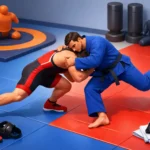
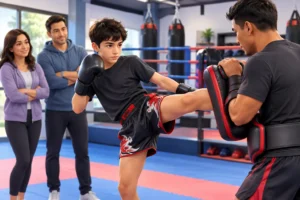
If you want a full-body workout that feels more engaging than a treadmill, kickboxing or Muay Thai may be the right fit. If you are drawn to problem-solving, control, and self-defense at close range, Brazilian Jiu-Jitsu, Judo, or wrestling may speak to you more. Many adults eventually cross-train. Starting with one discipline, however, gives you room to learn its basic movements and culture without trying to absorb everything at once.
Be honest about what you want, but do not overthink the choice. The best program is usually the one you enjoy enough to attend consistently. A class that challenges you while making you feel welcome will carry you farther than the theoretically perfect style that you never make time for.
How to Choose an Adult Martial Arts Program
A good academy should feel organized before class even begins. New students need clear instructions, coaches who can teach fundamentals without talking over their heads, and training partners who understand that beginners are learning how to move safely.
Look for a program with a defined beginner path. You should know where to stand, how to warm up, what equipment you need, and what the goal of the class is. Structure is not about making training rigid. It gives you a foundation, so you can relax and focus on learning.
Coaching quality matters more than flashy marketing. Watch whether instructors demonstrate details, correct students respectfully, and offer options for different body types or fitness levels. The strongest rooms are serious about technique and safety without treating a newcomer like an interruption.
Community is equally important. Martial arts is a contact activity, which means trust develops through repeated training. A healthy gym has experienced students who help newer people learn the pace, respect boundaries, and keep their egos in check. You should leave tired and challenged, not embarrassed or pressured to prove yourself.
For adults in Lakewood and the Denver metro area, a trial period is useful because it lets you experience the coaching, schedule, and training culture firsthand. Imperial BJJ Lakewood offers a 7-day free trial so prospective students can take that first step with less pressure and see which classes fit their goals.
What to Expect on Your First Day
Arrive 10 to 15 minutes early. This gives you time to meet the coach, complete any necessary paperwork, and learn the basic rules of the room. Tell the instructor that you are brand new. That is not a weakness. It allows them to pair you appropriately and point out the few details that matter most.
Wear clean athletic clothing unless the academy asks you to wear a uniform. For striking classes, you may eventually need gloves, hand wraps, and shin guards. For Brazilian Jiu-Jitsu, a gi is commonly used, while no-gi classes are typically trained in a fitted rash guard and athletic shorts without pockets. Do not rush to buy every piece of equipment before your first class. Ask what is required and what can wait.
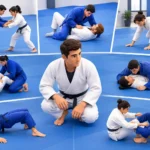
Expect a warm-up, a technical lesson, partner drills, and sometimes controlled live training. “Controlled” is the key word. Beginners should not be thrown into hard sparring or asked to match an advanced athlete’s intensity. In a well-run academy, you build contact and resistance progressively.
You will probably forget steps. You may feel uncoordinated. Both are normal. Martial arts asks your body to move in unfamiliar ways while your mind processes distance, timing, balance, and another person’s movement. Nobody expects you to understand it all on day one.
Learn the Safety Signals Early
Every discipline has ways to communicate when you need to pause. In grappling, tapping means stop immediately. You can tap your partner, the mat, or verbally say “tap.” In striking, you should communicate clearly if the pace is too hard, an injury is bothering you, or you need a round out.
Training partners are not opponents to conquer. They are part of your progress. Protecting each other is what allows everyone to train again tomorrow.
Build a First-Month Routine You Can Keep
Most new adults do better beginning with two classes per week. One class can make every session feel like a restart, while five or six classes can overload a body that is not used to the demands. Two sessions create repetition and recovery. If you feel good after a few weeks, add a third class.
Put training on your calendar like a meeting you value. The motivation to go will not feel equally strong every day, especially after a long workday or a poor night of sleep. Consistency is built by reducing decisions. Know which days you train, pack your clothes before you leave home, and let the routine do some of the work.
Recovery deserves the same discipline as class attendance. Drink water, eat enough protein and whole foods, and aim for reliable sleep. You do not need to redesign your entire life in week one. Small improvements make a meaningful difference when your body is adapting to new movement and effort.
Expect soreness in places you did not know could be sore, particularly your grip, hips, neck, shoulders, and core. General muscle soreness is normal. Sharp pain, lingering joint pain, dizziness, or numbness is not something to push through. Tell your coach, reduce intensity, and seek medical guidance when needed. Smart training is not quitting. It is how you protect your ability to train for years.
Let Go of the Beginner Mistakes That Slow Progress
The first mistake is comparing yourself to people who have been training for months or years. An experienced student may look effortless because they have repeated the same basics thousands of times. Your job is not to catch them in a week. Your job is to improve your own starting point.
The second mistake is treating every round like a test. Whether you are drilling a kick, learning a takedown, or rolling in Jiu-Jitsu, speed and force can hide technical errors. Start with control. Ask questions. Repeat the movement correctly before you try to do it faster.
The third mistake is disappearing after one awkward class. Nearly every long-term martial artist remembers feeling overwhelmed at first. The difference is that they came back. Familiarity changes the experience quickly: names become recognizable, terminology starts to make sense, and the warm-up no longer feels like a foreign language.
Measure Progress Beyond Belts and Calories
Fitness changes may be one reason you begin, but martial arts progress is broader. Notice when you recover faster between rounds, remember a sequence without prompting, stay calmer under pressure, or introduce yourself to a new training partner without hesitation. Those are real wins.
Belts and promotions can be meaningful milestones, especially in traditional grappling programs, but they are not weekly scorecards. The more durable goal is to become dependable: a student who trains safely, listens well, supports teammates, and keeps returning.
Make the Room Part of Your Support System
Adults often join martial arts for personal reasons, then stay because of the people around them. Training gives you a place where effort is visible. Your teammates notice when you improve, when you are having a difficult day, and when you have shown the discipline to keep going.
You do not need to become the loudest person in class to belong. Learn names, thank your partners, keep good hygiene, and be willing to help someone who starts after you. Respect is practiced in these small moments as much as it is practiced in technique.
Your first class is not a verdict on your ability. It is simply the moment you choose to begin. Show up curious, train with patience, and let each session build the confidence that only honest work can create.

No comment yet, add your voice below!