
A search for karate near me usually starts with a practical goal: get stronger, help your child build confidence, learn self-defense, or find a routine that feels more meaningful than another workout class. The best result is not always the school closest to your home. It is the place where qualified coaching, a safe culture, and a program that matches your goals come together.
For families and adults across Lakewood and the Denver metro area, that distinction matters. Martial arts training should challenge you, but it should also give you a clear path forward from your first class to your next milestone.
What “Karate Near Me” Should Really Mean
Karate is often used as a catch-all term for martial arts, especially when parents are searching for a program for their children. Traditional karate generally emphasizes striking, forms, stances, timing, and discipline. Those are valuable skills, but they are not the only route to confident, capable martial arts training.
A great local academy may offer karate, Brazilian Jiu-Jitsu, Muay Thai, wrestling, judo, kickboxing, or a combination of disciplines. The right choice depends on what you want from training. Someone looking for controlled striking and traditional forms may prefer karate. Someone focused on practical self-defense may benefit from training that includes both striking and grappling. A child who needs confidence and structure may thrive in a youth program that teaches coordination, boundaries, and respect through age-appropriate martial arts instruction.
The name on the door matters less than the quality of the coaching and the experience students have on the mat.
Look Beyond the First Search Result
Distance is a real factor. A school that is easy to reach from Lakewood, Denver, Golden, Arvada, Westminster, or Littleton makes it easier to train consistently. But a five-minute commute is not much of an advantage if the classes are disorganized, the instructors do not know students by name, or the schedule does not work for your family.
Before choosing a martial arts academy, pay attention to the program itself. Is there a clear beginner pathway? Are new students taught fundamentals before being thrown into advanced drills? Do instructors explain why a movement works, not just ask students to copy it? Good instruction builds confidence through repetition, correction, and steady progress.
For adults, ask whether the academy can meet you where you are. A former athlete and a complete beginner should both feel challenged without being overwhelmed. For parents, ask how classes are grouped by age and maturity. Four-year-olds need a different experience than 12-year-olds, even when both are learning discipline and coordination.
A Strong Martial Arts School Feels Safe and Serious
The best training environments do not need to act intimidating to be serious. Safety, structure, and respect are signs of a well-run academy.
Watch how instructors manage the room. They should be attentive, clear, and able to correct technique without humiliating anyone. Students should practice with control, particularly during sparring, grappling, or partner drills. Beginners need partners who understand that helping someone learn is part of becoming a better martial artist.
Cleanliness matters too. Martial arts are close-contact activities, so mats, equipment, and uniforms should be cared for consistently. A professional academy also has clear expectations around attendance, behavior, hygiene, and safety. These details may not sound exciting, but they protect the culture that keeps students training long enough to see meaningful results.
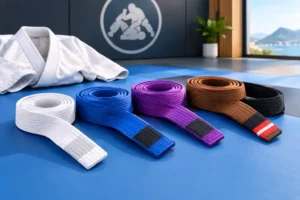
A serious school will also be honest about progress. Real confidence does not come from receiving a belt quickly or hearing empty praise. It comes from learning a difficult skill, practicing through frustration, and realizing you can do more than you could last month.
Choose the Discipline That Supports Your Goal
There is no single best martial art for every person. The better question is what you want training to add to your life.
If your priority is fitness, striking-based classes such as Muay Thai or kickboxing can offer demanding conditioning, improved coordination, and an outlet for stress. If you are drawn to problem-solving, body control, and self-defense at close range, Brazilian Jiu-Jitsu, judo, and wrestling develop leverage, positioning, and composure under pressure.
Cross-training can be especially valuable because real situations do not always stay at one distance. Striking teaches movement and range management. Grappling teaches control when space closes. Training both can make martial artists more adaptable while keeping their weekly routine fresh.
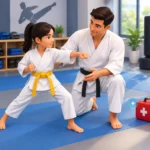
For kids, the goal should be broader than learning techniques. The right youth martial arts program teaches them to listen, follow through, work with teammates, and handle setbacks without quitting. It can also provide practical anti-bullying skills by helping children use their voice, maintain boundaries, and understand when to seek help from adults.
Questions to Ask During a Trial Class
A trial class is more than a chance to see the facility. It is your opportunity to find out whether the school is a fit. You do not need a long checklist, but a few direct questions can reveal a lot.
Ask how beginners are introduced to the program and what a typical first month looks like. Ask whether there are separate classes for newcomers, children, teens, and experienced students. If you are considering training for self-defense, ask how the curriculum develops awareness, control, and realistic decision-making rather than relying only on flashy techniques.
Parents should also ask how instructors communicate with children who are nervous, distracted, or still learning to regulate their emotions. The answer should involve patient structure, not simply telling a child to toughen up. Martial arts can be demanding, but a quality youth program knows how to build resilience without breaking a child’s enthusiasm.
Finally, notice how you feel after class. Were you welcomed? Did the instructor give you useful direction? Could you imagine showing up again next week? A strong academy creates accountability, but it also gives students a reason to belong.
Why Community Changes the Training Experience
Technique is essential, but community is what helps people stay consistent. Training alongside people who know your goals creates a level of accountability that solo workouts rarely offer. You have teammates who notice when you improve, coaches who help you work through plateaus, and a shared standard of respect that extends beyond class.
That is especially important for beginners. Walking into a martial arts school for the first time can feel uncomfortable, whether you are 8 or 48. A welcoming environment does not lower the standard. It makes it possible to meet that standard. The right coaches will expect effort, teach with patience, and help you earn progress one class at a time.
At Imperial BJJ Lakewood, students can train across Brazilian Jiu-Jitsu, Muay Thai, fitness kickboxing, judo and wrestling, and youth martial arts in one disciplined community. That variety gives families and adults room to find the program that motivates them while building skills that carry over from one class to the next.
Start With One Class, Not a Lifetime Decision
You do not need to know exactly which martial art is perfect before you begin. Start by visiting a school, meeting the coaches, and taking a class designed for beginners. Pay attention to the instruction, the energy in the room, and whether the program supports the goal that brought you there.
The best local martial arts training is not about looking tough after one session. It is about returning, learning, and becoming more capable with every class. Give yourself the chance to step onto the mat and see what consistent effort can build.



No comment yet, add your voice below!