
A search for 10 planet usually leads to one question: what makes 10th Planet Jiu-Jitsu different from the Brazilian Jiu-Jitsu most people recognize? The short answer is that it is a no-gi grappling system known for creative guards, constant pressure, and a willingness to adapt techniques for modern competition.
That identity has earned 10th Planet a devoted following among athletes who enjoy grappling without the traditional kimono. But the best academy or training style is not simply the one with the most recognizable name. It is the one that matches your goals, gives you quality coaching, and keeps you showing up long enough to improve.
What Is 10 Planet Jiu-Jitsu?
10th Planet Jiu-Jitsu was founded by Eddie Bravo and built as a no-gi-only approach to Brazilian Jiu-Jitsu. Traditional BJJ often uses the gi to create grips, controls, sweeps, and submissions. In a 10th Planet room, students train in rash guards and grappling shorts, relying instead on body position, underhooks, head control, wrist control, leg positioning, and strong movement.
The system is especially known for its half guard variations, the lockdown, rubber guard, twister attacks, and a detailed vocabulary for positions that may look unfamiliar to newcomers. Rather than treating those names as gimmicks, a good coach uses them to help students understand where they are, what controls matter, and what options are available.
Its appeal is easy to understand. No-gi grappling can feel fast, athletic, and directly connected to MMA or submission grappling competition. For many students, it is also practical because the clothing is simple and the pace of training is exciting.
How 10 Planet Training Feels on the Mat
A 10 Planet Jiu-Jitsu class generally places a major emphasis on movement and interconnected systems. Students may learn how a failed sweep becomes a leg entanglement, how a half guard position leads to the lockdown, or how an opponent’s posture creates an opening for a submission.
This can be a great fit for people who enjoy problem-solving under pressure. The system encourages students to develop comfort in unconventional positions rather than panic when a match becomes messy. That adaptability is valuable in any grappling environment.
The trade-off is that beginners still need fundamentals. Escapes, posture, base, balance, takedowns, guard retention, and positional control remain the foundation of effective Jiu-Jitsu. Creative attacks work best when they are built on reliable mechanics. A student who chases advanced submissions before learning how to control position can become frustrated quickly.
For that reason, the quality of instruction matters more than a style label. A disciplined program should make beginners feel welcome while maintaining standards around safety, technique, and respectful training.
The Role of the Rubber Guard
Rubber guard is one of the positions most associated with 10th Planet. From the bottom, the athlete uses their legs to control an opponent’s posture and keep them close, opening pathways to submissions and sweeps.
It can be an effective system for flexible, mobile athletes who understand how to use it safely. It is not mandatory for everyone, though. Body type, hip mobility, injury history, and personal preference all matter. A smart coach will offer principles and alternatives instead of forcing every student into the same shape.
That is a useful lesson for any martial arts program: techniques are tools, not tests of identity. The goal is to develop skills that work for your body and your goals.
10 Planet vs. Traditional Brazilian Jiu-Jitsu
The difference between 10 Planet and traditional BJJ is often overstated. Both come from the same grappling family and share essential skills: controlling distance, escaping bad positions, applying leverage, and using submissions responsibly.
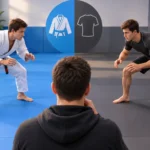
The biggest distinction is the gi. Traditional BJJ schools usually train both gi and no-gi, while 10th Planet academies focus exclusively on no-gi. Gi training teaches students to deal with friction, fabric grips, and slower positional exchanges. No-gi demands stronger control of the body itself because opponents can slip away more easily.
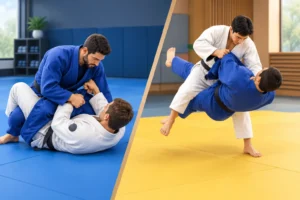
Neither approach is automatically better. If you plan to compete in gi Jiu-Jitsu, gi classes are necessary. If your main interests are MMA, wrestling-based grappling, or no-gi tournaments, a no-gi focus may be more directly aligned with your goals. Many well-rounded athletes train both, using each format to sharpen different parts of their game.
Traditional BJJ also varies widely by academy. Some schools are highly competition-focused. Others prioritize self-defense, fitness, or a family-friendly culture. The same is true of no-gi programs. Ask what the class structure looks like, how new students are introduced to sparring, and whether the coaches can explain why a technique works.
Who May Enjoy This Style Most?
10 Planet may be a strong fit for athletes who want to specialize in no-gi grappling, enjoy fast scrambles, or want techniques that transfer well to submission grappling and MMA. It can also appeal to students who find the gi uncomfortable or prefer a more modern competition-oriented environment.
Still, no one needs prior wrestling experience, elite flexibility, or a competition goal to start. A quality beginner program teaches students how to fall safely, work with partners, tap early, and build conditioning at a sustainable pace. Confidence comes from consistent practice, not from being the toughest person in the room on day one.
Parents considering martial arts for a child should look beyond a specific grappling style. The right youth program should teach listening, respect, emotional control, physical coordination, and appropriate boundaries. A child benefits most from coaches who can make training structured and engaging while keeping safety at the center.
Choosing the Right Jiu-Jitsu Academy
Whether you are researching 10 Planet or another BJJ lineage, visit with a clear sense of what you want from training. Do you need a fitness outlet after work? Are you preparing for competition? Do you want practical self-defense skills? Are you looking for a positive place for your child to build confidence?
Then pay attention to the room itself. Are new students given real guidance? Do experienced members train responsibly with beginners? Is the coaching clear and organized? Does the academy offer enough class times for you to train consistently?
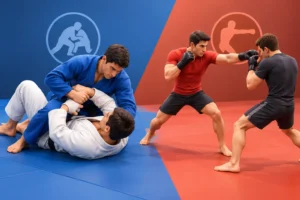
At Imperial BJJ Lakewood, students can build a complete martial arts foundation through Brazilian Jiu-Jitsu, striking, wrestling, and judo-based training under one roof. The academy’s Demian Maia Jiu Jitsu Brasileiro affiliation reflects a technical, detail-driven approach, while the community is designed to support everyone from first-day beginners to serious competitors.
A style can spark your interest, but culture determines whether training becomes part of your life. Choose a place where you are challenged, coached, and treated like a teammate. The best first class is not the one that proves how much you already know. It is the one that makes you want to return and earn the next lesson.


No comment yet, add your voice below!