
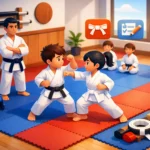
One child walks into class glued to a parent’s side. A few months later, that same child is standing taller, listening better, and handling challenges with more composure. That is why so many families look at kids martial arts not just as an activity, but as a tool for growth.
The right program does much more than keep children moving after school. It gives them structure, healthy expectations, and a place to practice discipline in real time. For parents, that matters. You are not just choosing a sport. You are choosing coaches, culture, and the kind of lessons your child will absorb every week.
Why kids martial arts stand out
A lot of youth activities build fitness or teamwork. Martial arts do that too, but they also ask children to manage themselves. They learn when to speak, when to listen, how to stay calm under pressure, and how to keep trying when something feels hard.
That combination is powerful because childhood is full of moments that test confidence. A child may struggle with focus in school, hesitate in new social settings, or shut down when things do not come easily. A strong martial arts program gives them repeated, manageable challenges. They practice a skill, make mistakes, get coached, and improve. Over time, that process becomes familiar. So does the idea that effort matters.
There is also a practical side. Good instruction helps children understand boundaries, awareness, and basic self-defense concepts in an age-appropriate way. This should never be taught with aggression or ego. The goal is composure, not conflict.
What a good kids martial arts program actually teaches
Parents often start with the obvious benefits like exercise and coordination, but the deeper value usually shows up outside the academy. Children who train consistently often improve their posture, attention span, and willingness to follow directions. They also get more comfortable being corrected, which is a life skill many activities do not teach as directly.
A quality program usually develops four areas at once.
First, there is physical development. Children improve balance, agility, body control, and general athleticism. This is especially useful for kids who are still learning how to move confidently in their own bodies.
Second, there is emotional development. Training gives children a controlled environment to deal with frustration. They learn that being challenged is normal and that progress takes repetition.
Third, there is social growth. They work with partners, take turns, show respect, and become part of a team. Even in individual martial arts, nobody improves alone.
Fourth, there is character. Respect, responsibility, and self-control are not side messages in a good academy. They are part of the class structure.
Not all youth programs are the same
This is where parents need to look closely. Kids martial arts is a broad category, and the quality can vary a lot from one school to the next.
Some programs are little more than organized movement with uniforms. Others are so intense that beginners, especially younger children, feel overwhelmed. The right fit depends on your child’s age, temperament, and goals. A shy five-year-old needs a different coaching approach than a confident twelve-year-old who wants serious skill development.
That does not mean you should choose the softest or the toughest option. It means you should look for a program with standards, structure, and coaches who know how to teach children progressively. Kids need challenge, but they also need support. If a class lacks discipline, children do not grow. If it lacks encouragement, many will quit before they have a chance to.
How to evaluate a kids martial arts academy
Start by watching a class. You can learn a lot in ten minutes.
Look at how the instructors manage the room. Are they clear, calm, and in control? Do students know when to line up, when to drill, and when to listen? A well-run class should feel active but not chaotic.
Then watch how instructors correct students. Strong coaching is specific and respectful. It does not rely on yelling, shaming, or vague praise. Kids should be pushed to improve, but they should also feel safe making mistakes.
Pay attention to the culture among the students too. Are older or more experienced kids setting a good example? Are newer students welcomed? Martial arts should build confidence, not create a pecking order.
It is also worth asking how the curriculum is structured. Is there a clear path for beginners? Are skills taught in a logical sequence? Good programs do not just fill time. They build fundamentals over time.
Which style is best for children?
Parents often ask this first, but style matters a little less than coaching quality. Still, different disciplines do emphasize different things.
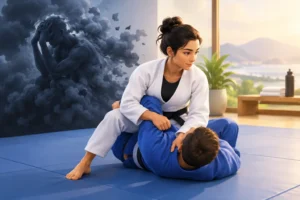
Brazilian Jiu-Jitsu is especially effective for children because it teaches control, leverage, and problem-solving without relying on size or strength. It can be a strong fit for kids who need confidence, body awareness, or practical self-defense skills. Because it focuses on grappling, children also learn how to stay calm in close-contact situations instead of panicking.
Judo and wrestling also build balance, coordination, toughness, and discipline. These styles can be excellent for athletic development and physical confidence.
Striking arts like Muay Thai or kickboxing can improve focus, timing, and coordination, but for younger children they should be taught with careful supervision and age-appropriate expectations. Technical training, not intensity, should lead the class.
For many families, the best environment is one that offers a thoughtful path through multiple disciplines as a child matures. That gives kids room to grow while keeping the training fresh and challenging.
Signs your child is ready
Children do not need to be naturally aggressive, highly coordinated, or already athletic to start. In fact, many of the kids who benefit most are the ones who need structure, confidence, or a stronger outlet for their energy.
A child may be ready if they need help with focus, struggle with confidence, seem hesitant in group settings, or simply need a healthy challenge. Some children join because they love movement. Others join because they need a place to develop resilience.
Readiness is less about talent and more about the program meeting them at the right level. A strong youth academy knows how to bring in beginners and help them feel successful early while still holding clear standards.
What parents should expect in the first few weeks
The beginning can be uneven, and that is normal. Some kids jump right in. Others watch quietly for a class or two before they fully engage. The first few weeks are usually about adjusting to the routine, learning class etiquette, and building comfort with the coaches and other students.
Parents sometimes expect instant transformation, but the real value comes from consistency. Small changes often show up first. Your child may start answering more confidently, following directions more quickly, or showing more patience when frustrated. Those early shifts matter.
It also helps when parents support the process without hovering over it. Encourage effort. Ask what they learned. Praise consistency, not just performance. Children do better when they feel that training is a place to grow, not another place where they are being judged.
Why structure and community matter
A good martial arts academy should feel welcoming, but it should not feel casual in the wrong way. Children thrive when expectations are clear. Bowing onto the mat, showing respect to coaches, taking turns with partners, and finishing what they start all reinforce habits that carry into daily life.
At the same time, community matters. Families stay in martial arts when the environment feels supportive. Kids train harder when they feel known. Parents trust the process more when they can see that the academy cares about development, not just attendance.
That is one reason many families in Lakewood and the greater Denver area look for a school that combines technical credibility with a strong sense of belonging. Serious instruction and a supportive culture should go together.
The real goal of kids martial arts
Belts, medals, and athletic progress can all be meaningful, but they are not the main reason parents stay. The real goal is helping children become more capable versions of themselves.
That looks different from child to child. For one, it may be speaking up with confidence. For another, it may be learning to stay composed when things get difficult. For another, it may simply be finding a place where discipline, respect, and effort are part of the routine.
When a martial arts program is taught the right way, children do not just learn techniques. They learn how to carry themselves. And that lesson tends to last a lot longer than any single season of sports.



No comment yet, add your voice below!