
The first time most people compare judo vs wrestling, they usually focus on one question – which one is better? That sounds simple, but it misses the real issue. The better question is which one fits your goals, your body, and the kind of grappler you want to become.
Both arts build toughness, balance, timing, and real takedown skill. Both teach you how to control another person under pressure. But they do it with different rules, different strategies, and a different feel in training. If you are choosing your first grappling style, or looking to add another layer to your game, understanding those differences matters.
Judo vs Wrestling: The Core Difference
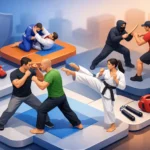
At a glance, judo and wrestling both involve clinching, off-balancing, takedowns, and control. That is why beginners often group them together. Once you spend time on the mat, the distinction becomes obvious.
Judo is built around throws, trips, reaps, foot sweeps, and upper-body control, traditionally with a jacket or gi. The art rewards timing, posture, grip fighting, and using your opponent’s movement against them. A clean throw can end a match instantly under judo rules, so precision matters as much as force.
Wrestling, especially folkstyle and freestyle, tends to emphasize relentless pressure, level changes, penetration steps, body locks, single legs, double legs, mat returns, and top control. It often feels faster, more direct, and more pace-driven. Instead of chasing one perfect throw, wrestlers usually chain attacks together until they break position and finish.
That does not mean judo is passive or wrestling is crude. High-level judo is explosive and demanding. High-level wrestling is deeply technical. The difference is in how each system organizes that technique.
How Training Feels Day to Day
If you train judo, expect a lot of time spent on stance, grip fighting, kuzushi or off-balancing, entries, and breakfalls. Learning how to fall safely is a major part of the process, and for good reason. Judo throws can be powerful, so good ukemi is not optional. It is part of the foundation.
If you train wrestling, expect a strong conditioning element from the beginning. Stance and motion, sprawls, shots, hand fighting, pummeling, and scrambles show up early and often. Wrestling practices are known for their pace, and that reputation is earned.
For some people, that makes wrestling feel more athletic right away. For others, judo feels more structured and technical at the start. Neither experience is better across the board. It depends on what motivates you. Some students love the chess match of grip exchanges and throw setups. Others want the constant movement and pressure of wrestling rounds.
Judo vs Wrestling for Self-Defense
This is where context matters.
Judo has obvious self-defense value because it teaches balance disruption, body control, and the ability to throw someone hard from a clinch. If someone grabs you, rushes into you, or ties up in close range, judo gives you answers. It also teaches composure in standing grappling exchanges, which many beginners do not have.
Wrestling also has strong self-defense carryover. Good wrestlers understand base, pressure, takedowns, control, and how to dictate where a fight happens. A wrestler who can stay on their feet, defend shots, and put someone on the ground has a real advantage.
The trade-off is that self-defense is not the same as sport performance. Some wrestling habits, like dropping to the knees at the wrong time, can create risk outside a controlled setting. Some judo habits rely on gi grips that may not be available in every situation. That does not make either art ineffective. It simply means the best self-defense training comes from understanding how to adapt sport skills to real-world conditions.
For that reason, many serious grapplers benefit from exposure to both.
Which Style Is Better for BJJ?
For Brazilian Jiu-Jitsu students, the judo vs wrestling conversation is especially useful because both arts can dramatically improve your stand-up game.
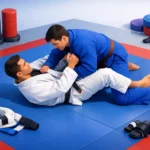
Judo tends to blend naturally with gi BJJ. The gripping systems overlap, and many judo throws fit well with gi-based clinching. Foot sweeps, trips, hip throws, and upper-body takedowns can help you stay efficient instead of relying only on guard pulling. Judo also sharpens posture and balance in ways that carry directly into BJJ exchanges.
Wrestling often has a more immediate impact in no-gi BJJ. Shots, front headlock attacks, snap-downs, body locks, and scrambling skills are central to modern no-gi competition. Wrestling also teaches urgency. A lot of BJJ students become more dangerous once they develop the ability to pressure forward, finish takedowns, and keep attacking through transitions.
That said, this is not a clean split. Judo helps no-gi athletes. Wrestling helps gi players. The strongest grapplers usually do not limit themselves to one lane. They learn how to combine the posture and timing of judo with the pace and chain attacks of wrestling.
Judo vs Wrestling for Beginners
Beginners often worry about choosing wrong. In reality, the wrong choice is usually the one you do not stick with.
Judo may appeal to you if you like technical detail, controlled setups, and the idea of mastering throws with timing instead of brute effort. It can be especially rewarding for people who enjoy problem-solving and want to understand leverage in a very precise way.
Wrestling may appeal to you if you like a hard pace, direct attacks, and physical pressure. If you enjoy conditioning, competition, and the challenge of breaking through resistance with persistence and mechanics, wrestling often feels natural.
Body type can influence preference, but it is not destiny. Taller athletes may enjoy certain trips and throws. Lower, explosive athletes may love leg attacks and scrambles. Still, good coaching matters more than stereotypes. A skilled coach can help almost anyone become effective in either style.
Injury Risk and Physical Demands
Every grappling sport has injury risk. Honest coaching should say that clearly.
Judo places heavy demands on posture, grip endurance, and impact tolerance. Repeated throwing and being thrown can be tough, especially if your falling skills are underdeveloped or your recovery habits are poor. The upside is that quality judo instruction makes body awareness and safe mechanics a priority from the start.
Wrestling can be hard on the neck, shoulders, knees, and lower back because of the pace, level changes, sprawls, and constant pressure. It is a demanding sport that rewards conditioning and resilience. For many adults, the challenge is not whether wrestling works. It is whether they can recover well enough to train it consistently.
This is why the training environment matters. Good programs scale intensity, teach fundamentals correctly, and help beginners build up rather than get overwhelmed.
What Competitors and Hobbyists Should Know
If you want to compete, wrestling often gives you an edge in pace, scrambles, and positional determination. Judo often gives you an edge in clinch confidence, off-balancing, and efficient takedown mechanics. Competitors usually gain a lot by cross-training because opponents rarely move in only one style.
If you are a hobbyist, the decision is more personal. You may care more about fitness, self-defense, confidence, stress relief, or simply enjoying training after work. In that case, the best choice is the one that keeps you consistent. Progress comes from repetition, not from picking the style that sounds toughest online.
For families and younger students, either art can be excellent when taught in a structured, supportive environment. Both reward discipline, humility, coordination, and accountability. What matters most is coaching that builds confidence without lowering standards.
Should You Choose Judo, Wrestling, or Both?
If your goal is better gi stand-up, cleaner throws, and stronger clinch control, judo is a smart path. If your goal is explosive takedowns, top pressure, and no-gi pace, wrestling may be the better starting point.
But for many people, the real answer is both.
That is one reason multi-discipline training is so valuable. You do not have to treat these arts like rival teams. You can use them together. Judo teaches you how to create the opening. Wrestling teaches you how to keep attacking when the first attempt does not work. Judo sharpens timing. Wrestling builds pressure. Combined with BJJ, they create a much more complete grappler.
At Imperial BJJ Lakewood, that kind of cross-training mindset makes sense for beginners and experienced athletes alike. You get more than isolated techniques. You build a game that works under resistance.
If you are still deciding between judo vs wrestling, do not get stuck trying to make the perfect choice from the outside. Step on the mat, feel the pace, learn the positions, and see what challenges you in the right way. The style that helps you grow is usually the one worth starting now.



1 Comment
[…] Judo and BJJ share a common history, but their competitive demands have moved in different directions. Judo rewards decisive throws, strong upright posture, and fast transitions to pins or submissions. BJJ gives athletes more time on the ground and creates different incentives around guard work, leg attacks, and control. […]