
A child does not need to be big, naturally athletic, or already confident to begin learning judo. When parents ask, “what age starts judo,” the most useful answer is usually around age 4 or 5 – but the right starting point depends more on the child, the program, and the coaching environment than on a single birthday.
Judo teaches children how to fall safely, move with control, work with a partner, and follow directions under pressure. For teens and adults, it offers a technical path into grappling that builds fitness, composure, and real-world body awareness. The best time to start is when the student can join a structured class safely and is ready to learn, not when they meet an arbitrary standard.
What Age Starts Judo for Children?
Many youth judo programs welcome children beginning at ages 4 to 6. At this stage, classes should look different from an adult training session. Young students are not there to memorize a long list of throws or train at competition intensity. They are learning movement, balance, coordination, listening skills, and respect for training partners.
A quality beginner class for this age group uses short activities, clear routines, and closely supervised partner work. Children may practice breakfalls, grips, simple takedown mechanics, standing balance games, and controlled ground positions. The goal is to make the foundational skills feel natural while helping them become comfortable in a group setting.
Some 4-year-olds are ready to participate with focus and enthusiasm. Others may benefit from waiting six months or a year. Neither outcome says anything negative about a child’s potential. Development is uneven, especially in the preschool and early elementary years.
Signs a child may be ready
Readiness is less about strength than behavior and comfort. A young child is often ready for judo when they can separate from a parent for the length of class, follow simple instructions, take turns with other children, and handle gentle physical contact without becoming overwhelmed.
They do not need perfect attention or flawless behavior. Martial arts classes are often where children develop those skills. But a child who is consistently unable to stay with the group, becomes distressed by all partner contact, or has difficulty respecting basic safety boundaries may need more time before a grappling program feels productive.
Ages 6 to 9: A Strong Window for Fundamentals
By elementary school, many children are ready for more structured judo training. They can better understand why safe falling matters, how to control a partner rather than force a technique, and why rules protect everyone in the room.
This is an excellent age to build habits that serve a child for years: standing with balance, moving their feet before attempting a throw, staying calm when they lose position, and treating teammates with respect. Judo is physical, but its deeper lessons are about composure and responsibility.
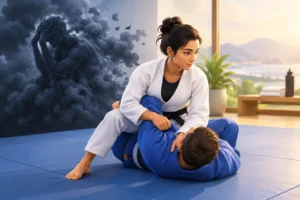
For parents, this age can also be a practical answer to concerns about confidence or bullying. A well-run program should never promise that martial arts will solve every social challenge. It can, however, give children a stronger voice, better posture, healthier boundaries, and confidence that comes from practicing difficult skills consistently.
The trade-off is that progress rarely looks dramatic from week to week. A child may spend several classes working on a breakfall, a grip, or a single movement pattern. That patient repetition is not wasted time. It is how safer, more confident athletes are developed.
Can Teens Start Judo Later?
Absolutely. Teenagers can begin judo with no previous martial arts experience. In fact, starting as a teen can bring advantages: many students have greater body awareness, longer attention spans, and a clearer personal reason for training.
A teen might start judo for conditioning, self-defense awareness, wrestling improvement, confidence, or a break from traditional team sports. They may also be drawn to the challenge of learning how to control distance, posture, and balance against a resisting partner.
The first few weeks can feel awkward, particularly for teens who are not used to close-contact sports. That is normal. A welcoming academy introduces partner training progressively, pairs beginners thoughtfully, and makes it clear that asking questions is part of training. No one should feel pressured to “prove” toughness on day one.
For teens interested in Brazilian Jiu-Jitsu, wrestling, or mixed martial arts, judo also develops useful standing skills. Learning to break balance, defend takedowns, and land safely can add depth to any grappling background. Still, technical progress matters more than rushing into hard rounds or advanced throws.
Is There an Age Limit for Starting Judo as an Adult?
There is no upper age limit for starting judo. Adults in their 20s, 30s, 40s, 50s, and beyond can benefit from grappling training when classes are coached intelligently and scaled to the individual.
An adult beginner does not need a history in sports. They do need a willingness to be patient with the learning process. Judo asks the body to coordinate footwork, posture, grips, timing, and falling mechanics at once. Most newcomers feel challenged early on, even if they are already fit.
The right class should meet that challenge with structure. Beginners should learn safe breakfalls before practicing throws at speed. They should work with controlled partners and have permission to adjust intensity. A good coach will help a new student distinguish between normal training soreness and pain that deserves attention.
Adults with prior injuries, joint concerns, or long breaks from exercise should be upfront before class. That does not automatically mean judo is off the table. It simply means the coach needs to understand the starting point and offer sensible modifications. Training consistently at an appropriate pace beats trying to catch up in one hard session.
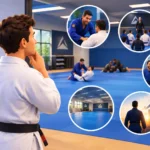
How to Choose the Right First Judo Class
The starting age matters, but the quality of instruction matters more. Judo is a contact sport, so technical coaching and gym culture are not optional details. They shape whether a child or adult builds confidence safely.
Look for a program where instructors actively supervise partner drills, teach falling before high-impact throwing, and create clear expectations around respect. Beginners should receive real instruction, not be left to imitate advanced students. Children should be grouped thoughtfully by age, size, and maturity whenever possible.
It also helps to watch how the room responds when someone makes a mistake. In a strong martial arts community, corrections are direct but constructive. Training partners protect each other. More experienced students set the tone through control, not ego.
At Imperial BJJ Lakewood, students can develop their grappling foundation in a disciplined, welcoming environment while training alongside a community committed to progress. For families and adults across the Denver metro area, the value is not simply learning techniques. It is having a place where effort is recognized, safety is taken seriously, and every student has room to grow.
What Should a First Judo Class Feel Like?
A first class should be challenging enough to feel meaningful and controlled enough to feel safe. A child may come home excited, tired, and proud of a new skill. An adult may leave realizing that grappling uses muscles and movement patterns they have not tested in years. Both experiences are normal.
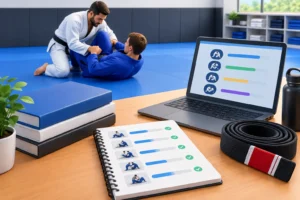
Expect a warm-up, basic movement instruction, technique practice, and partner drills matched to the student’s experience. New students may learn how to stand, move, grip, fall, and work from simple positions before they spend much time practicing full throws. That slower introduction is a sign of responsible coaching, not a lack of substance.
Parents should not judge a youth program only by how sweaty or exhausted their child is afterward. Better questions are whether the child felt respected, whether the coach knew their name, whether safety was clearly taught, and whether the student wants to return. Enjoyment and discipline work best together.
Starting judo at 4, 14, or 44 can be the beginning of a powerful long-term practice. The right first step is not finding the youngest possible age or waiting for perfect confidence. It is stepping onto the mat with qualified guidance, an open mind, and the willingness to improve one class at a time.



No comment yet, add your voice below!