
A child standing quietly at the edge of a soccer field, a gym mat, or a baseball diamond may not need more pressure to “pick a sport.” They need an environment where they can grow. When parents weigh kids martial arts or team sports, the better choice is rarely about which activity is universally best. It is about what will help that particular child build confidence, skills, healthy habits, and a sense of belonging.
Both paths can be excellent. Team sports teach cooperation and shared responsibility. Martial arts offer individual accountability, structured progress, and practical self-defense skills. The right decision comes from looking beyond the uniform, the schedule, and what other families are doing.
Kids Martial Arts or Team Sports: Start With Your Child
A child’s temperament often provides the clearest answer. Some kids light up in a fast-moving group environment. They enjoy passing the ball, celebrating a win with teammates, and working toward a shared goal. For them, soccer, basketball, baseball, or another team sport can create lasting friendships and teach them how to contribute to something bigger than themselves.
Other children do better with more personal direction. They may be hesitant in large groups, frustrated when they do not get much time with the ball, or uncomfortable when their performance is compared directly with teammates. Martial arts can be a strong fit because every student has a clear role in class and a personal path forward. They do not need to be the fastest, biggest, or most naturally coordinated child to make progress.
That does not mean martial arts are only for quiet kids, or that team sports are only for outgoing ones. An energetic child can learn focus and control on the mats. A reserved child can become more social through a team. The question is where your child is most likely to stay engaged long enough to develop real confidence.
What Team Sports Teach Well
Team sports give children regular practice in communication, cooperation, and adapting to others. A young athlete learns that showing up prepared matters because teammates depend on them. They experience the excitement of working together, whether that means making an assist, taking turns, or encouraging someone after a mistake.
They also learn that success is shared. A child can play well and still lose, or have a difficult game while the team finds a way to succeed. That perspective can be valuable, especially as children get older and begin managing more complex social dynamics.
There are trade-offs. In many youth leagues, participation can be limited by roster size, skill level, or a coach’s approach. A child may spend a large part of practice waiting in line or a game on the bench. That is not always harmful, but it can be discouraging for a beginner who needs frequent repetition and positive feedback to stay motivated.
Team sports schedules may also be seasonal and unpredictable. A child can enjoy a strong spring season, then go months without the same routine. For families trying to build consistent habits around movement, focus, and confidence, that gap matters.
What Martial Arts Build Beyond Fitness
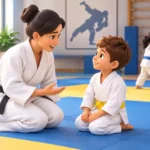
Youth martial arts are active, demanding, and fun, but their value reaches beyond exercise. In a well-run class, children practice listening, following directions, controlling their bodies, and responding calmly when something feels challenging. Those lessons happen repeatedly, not as a lecture before class.
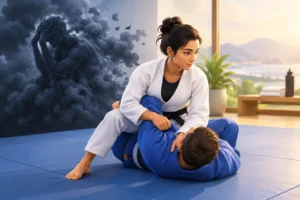
Brazilian Jiu-Jitsu and wrestling-based training, for example, teach kids how to solve problems under pressure. A child learns to stay composed, use technique instead of force, and keep trying when a position does not work the first time. Striking arts can build coordination, balance, conditioning, and awareness while teaching students that control and respect come before aggression.
Martial arts also provide visible markers of progress. Earning a stripe, learning a new movement, or advancing in rank gives children evidence that steady effort pays off. This can be especially meaningful for a child who does not yet see themselves as athletic. Progress is not reserved for the top scorer or fastest runner. It is built class by class.
The individual nature of martial arts does not mean children train alone. They work with partners, practice respect, support classmates, and learn how to be safe training partners themselves. A quality academy creates community without making a child’s confidence dependent on being selected for a starting lineup.
Confidence, Competition, and Pressure
Parents sometimes worry that martial arts will make a child aggressive. The opposite is usually true when instruction is structured and values-driven. Children learn that martial arts skills carry responsibility. They are taught when not to use force, how to respect boundaries, and how to walk away from avoidable conflict.
This can be helpful for children dealing with teasing or bullying. No program can guarantee that a child will never face a difficult social situation. But a child who understands posture, personal space, verbal boundaries, and basic self-protection often carries themselves differently. Confidence is not about looking for a fight. It is about knowing they have options.
Competition deserves a balanced look, too. Team sports can bring high emotional stakes through scores, standings, tryouts, and playing time. Martial arts may include tournaments, but competition is usually optional in a youth program. A child can train seriously, test their skills, and gain all the developmental benefits without competing.
For some kids, optional competition is exactly what they need. They enjoy a challenge but should not have to measure every practice by a scoreboard. For others, team competition is a source of motivation and joy. Neither preference is wrong. The key is noticing whether pressure is helping your child stretch or causing them to shut down.
Practical Questions for Busy Families
The best activity is one your family can sustain. Before committing, consider class times, commute, cost, equipment, and the level of parent involvement required. A sport that looks perfect on paper will not deliver much if it creates a weekly scheduling battle.
Martial arts often work well for families because classes run year-round and offer recurring training times. Missing one class does not usually mean falling behind an entire team or missing a major game. Consistency is easier to rebuild, which matters when school events, travel, or illness interrupt a routine.
It is also worth considering how instruction is delivered. Young children need coaches who can hold standards without humiliating them. They need clear expectations, age-appropriate challenges, and a culture where beginners are welcomed. Watch a class before enrolling. Are students engaged? Are instructors correcting behavior calmly? Do older or more experienced kids model respect?
At Imperial BJJ Lakewood, youth students train in a structured environment designed to challenge them while making them feel part of the team. The goal is not simply to keep kids busy after school. It is to help them become more disciplined, capable, and confident through quality coaching and consistent practice.
When Doing Both Makes Sense
Kids do not always have to choose martial arts or team sports permanently. Combining them can work well when the schedule and the child’s energy allow it. Martial arts can support field and court sports by improving balance, coordination, body awareness, conditioning, and composure. Team sports can give martial arts students another outlet for collaboration and game-based competition.
The risk is overscheduling. A child who moves from school to practice to homework every day may become tired, anxious, or disconnected from the activity they once enjoyed. Look for signs of healthy challenge: they may be tired after training, but they are proud of their effort and willing to return. If dread, frequent complaints, or constant exhaustion become the pattern, simplify the calendar.
For younger children, one consistent activity is often enough. Mastering the habit of showing up, listening, and trying again is more valuable than collecting multiple uniforms.
Choose the Place That Helps Them Keep Going
The first activity does not have to define your child’s future. A season of soccer may reveal that they love teamwork. A few weeks of martial arts may show that they thrive on personal progress. Give them enough time to move past the awkward beginner stage before deciding whether an activity is truly a fit.
Pay attention to what they say on the drive home. Do they talk about a new skill, a friend they made, or a challenge they want to try again? That is often the signal worth following. The right program gives your child more than an afternoon activity. It gives them a place to practice becoming resilient, respectful, and comfortable with who they are.



No comment yet, add your voice below!