
Choosing a martial arts school is not like choosing a treadmill. The right room, coach, and training partners can become part of your weekly structure for years. When comparing Lakewood martial arts gyms, look beyond a convenient schedule or a promotional offer. You are choosing the environment where you will build skill, confidence, fitness, and the discipline to keep showing up.
A great academy should feel serious without feeling unwelcoming. Beginners need clear instruction and patient guidance. Experienced students need technical depth, capable partners, and a curriculum that keeps them progressing. Families need a place where children are challenged, protected, and treated with respect. The best choice depends on your goals, but a few standards should never be negotiable.
Start With the Goal That Gets You Through the Door
People often arrive at martial arts for one reason and stay for another. You may want a demanding workout, practical self-defense skills, a competitive outlet, or a healthier routine that does not feel like another chore. Parents may be looking for a constructive activity that builds confidence and focus without relying on screens.
Be specific about what you want first. Brazilian Jiu-Jitsu is an excellent fit for people who enjoy problem-solving, positional control, and close-range self-defense. Muay Thai and fitness kickboxing can appeal to students who want striking technique, conditioning, and stress relief. Judo and wrestling develop balance, takedowns, body awareness, and the ability to control a standing exchange. Youth martial arts should combine athletic development with character-building, not simply keep kids busy for an hour.
You do not have to select one goal forever. Many students begin with fitness kickboxing and discover a passion for grappling. Others start in BJJ and add striking because they want to become more well-rounded. The advantage of a multi-discipline academy is that your training can grow with you instead of forcing you to start over somewhere else.
What Lakewood Martial Arts Gyms Should Offer
The quality of coaching matters more than flashy equipment. A clean facility and a heavy-bag lineup are useful, but they do not replace a coach who can explain a movement clearly, correct it safely, and adapt instruction for different experience levels.
Look for structured classes rather than a room where everyone is expected to figure it out alone. A sound program has a clear progression: fundamental positions and escapes for beginners, increasingly detailed techniques for intermediate students, and focused rounds or live training that let students test what they have learned. In striking classes, that means learning stance, defense, footwork, and controlled combinations before being pushed into hard sparring.
For Brazilian Jiu-Jitsu, lineage is also worth asking about. A recognized affiliation can signal that the academy follows a proven technical curriculum and remains connected to high-level instruction. At Imperial BJJ Lakewood, the official Demian Maia Jiu Jitsu Brasileiro affiliation reflects a commitment to technical, pressure-tested BJJ taught with attention to detail rather than shortcuts.
A good academy also makes room for different kinds of progress. Competition training may be available for athletes who want it, but it should not be the only path. A working parent training twice a week, a teen gaining confidence, and a competitor preparing for a tournament can all belong in the same academy when coaches understand how to meet students where they are.
Watch How Beginners Are Treated
Your first visit tells you a great deal. Notice whether someone greets you, explains the class format, and introduces you to the coach. Notice whether students help newer people learn the flow of the room. Martial arts can be humbling, especially on day one. A strong culture makes that humility productive instead of discouraging.
Beginner-friendly does not mean watered down. It means the coach gives you a manageable starting point, teaches safety expectations, and helps you train at an appropriate pace. You should expect to be challenged. You should not feel pressured to spar hard, roll aggressively, or prove yourself before you understand the basics.
Ask how the school handles complete beginners. Find out whether there are fundamentals classes, how instructors pair students during drills, and whether coaches provide hands-on feedback. A trial class is not only about seeing whether you enjoy the workout. It is your opportunity to see whether the academy has a system for helping new people succeed.
Evaluate Safety Without Mistaking It for Softness
Good martial arts training is demanding, but it should be intelligently demanding. The goal is to train consistently enough to improve, not to collect avoidable injuries that keep you off the mats or away from the gym.
Safety begins with coaching. Instructors should set expectations for tapping, controlled sparring, hygiene, equipment, and respect for training partners. They should monitor rounds instead of treating intensity as a badge of honor. Students need room to work hard, make mistakes, and learn how to manage pressure without being put in reckless situations.
The facility itself matters, too. Mats should be clean and well maintained. Class sizes should allow instructors to see what is happening. For children, supervision and age-appropriate instruction are especially important. A four-year-old does not need the same lesson, pace, or expectations as a 13-year-old.
There is a trade-off here: the most intense room is not always the best room. If your primary goal is competition, you may eventually want challenging rounds with skilled partners. But that intensity should sit on top of sound fundamentals and a culture of control. Long-term training beats a short burst of motivation followed by burnout or injury.
Consider the Community You Will Train With
Technique gets you started. Community often keeps you consistent when work is busy, motivation is low, or progress feels slow. Martial arts are individual in the sense that nobody can do the repetitions for you, yet you rely on training partners every class.
Look for an atmosphere where people train with purpose and treat one another well. Respect should extend across experience levels. Advanced students should remember what it felt like to be new. Beginners should understand that being coached is part of the process. Coaches should hold standards without creating an ego-driven room.
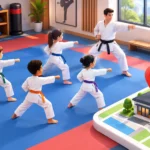
For families, community has an added value. Kids benefit from seeing older students demonstrate focus, resilience, and good sportsmanship. Parents benefit from a program that reinforces the values they are trying to teach at home: listening, accountability, perseverance, and respect.
Ask the Questions That Make Membership Clear
A good academy should be straightforward about membership, scheduling, and expectations. Before enrolling, ask what classes are available for your level, whether you can cross-train in other programs, and what gear you will eventually need. Find out how often most beginners train and what a realistic progression looks like.
You should also understand the trial process. A free trial is most useful when it gives you enough time to attend more than one class, meet different coaches, and decide whether the schedule works in real life. One class can be exciting. Several sessions show you whether the academy is a place you can commit to.
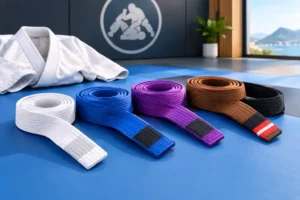
For parents, ask how instructors communicate with families, how belts or milestones are earned, and what behavior standards apply in class. For adults, ask whether the program supports both recreational training and competitive goals. Clear answers are a sign of an organized academy that respects your time.
Choose the Place You Can Return to Next Week
The perfect martial arts gym is not the one with the loudest claims. It is the one that gives you capable coaching, meaningful challenge, a safe training culture, and a reason to return after a difficult class. Visit, take the trial seriously, and pay attention to how you feel when you leave. The right academy will leave you tired, encouraged, and ready to earn your next step on the mat.



No comment yet, add your voice below!