
A Demian Maia affiliation is not a logo on the wall. The real Demian Maia lineage training advantages show up in the details: how a beginner learns to control position before chasing submissions, how an experienced student diagnoses a failed pass, and how a room develops confidence without relying on ego. For people who want Brazilian Jiu-Jitsu that remains effective as they grow, lineage gives training a clear standard and a proven direction.
Demian Maia built his reputation by applying high-level Brazilian Jiu-Jitsu against the best athletes in the world. His game was never based on flashy movement for its own sake. It was based on pressure, connection, positional control, patience, and the ability to make reliable fundamentals work under intense resistance. Training within that technical tradition gives students a meaningful advantage, whether their goal is self-defense, fitness, competition, or a stronger sense of discipline.
What Lineage Means on the Mats
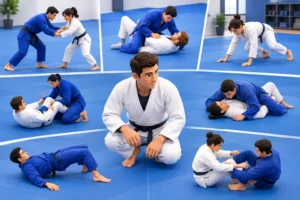
In Brazilian Jiu-Jitsu, lineage is the instructional connection between teachers and the source of a system. It does not mean every academy teaches identical classes or that students should copy one athlete’s exact style. It means the coaching is anchored in a recognizable technical philosophy, with standards for what works, why it works, and how it should be taught.
That matters because BJJ can feel overwhelming at first. There are hundreds of positions, grips, escapes, sweeps, passes, and submissions. Without a thoughtful progression, students can collect techniques without understanding how they connect. A strong lineage helps organize the learning process around the central problems of grappling: establish position, maintain control, create pressure, defend intelligently, and attack when the opportunity is earned.
For beginners, that structure replaces confusion with a plan. For advanced students, it creates a deeper language for refining timing, balance, and decision-making.
Demian Maia Lineage Training Advantages in Real Practice
The most valuable advantage is not simply learning a famous athlete’s favorite moves. It is learning principles that hold up when your partner is bigger, stronger, more athletic, or actively trying to stop you.
A position-first approach
The Demian Maia approach is closely associated with earning dominant positions and making them difficult to escape. Rather than treating a submission as the only measure of success, students learn to value the work that happens before it: closing distance safely, getting to a takedown or clinch, passing the guard, settling side control, taking the back, and applying pressure with control.
This is especially valuable for adults starting BJJ later in life. Athleticism can help, but it is not a long-term substitute for leverage and positioning. A position-first game gives smaller practitioners, busy professionals, and newer students a practical way to improve without trying to win every exchange through speed or strength.
Clear connections between standing and ground work
Many people imagine Jiu-Jitsu beginning after someone has already landed on the ground. In a complete grappling game, the work starts much earlier. Distance, posture, hand fighting, clinch control, balance, and takedown entries all affect what happens next.
A Maia-influenced curriculum places real value on connecting these phases. Students learn that a takedown is not an isolated highlight and that guard passing is not merely a scramble. Each position should lead toward the next controlled decision. This creates a more complete understanding of grappling and pairs naturally with Judo and wrestling training for students who want to become more comfortable standing up.
Pressure with purpose, not recklessness
Pressure is often misunderstood. It does not mean crushing a training partner, moving carelessly, or using body weight as a replacement for technique. Effective pressure means using posture, angles, frames, head position, and weight distribution to limit an opponent’s options while staying balanced yourself.
Learning this distinction makes training safer and more productive. You can challenge a partner without turning every round into a fight. You also learn to remain calm in uncomfortable positions, which is one of the most valuable skills Jiu-Jitsu develops. The student who can breathe, frame, recover position, and make a thoughtful choice under pressure will improve faster than the student who panics and explodes.
A system for solving problems
Good instruction does more than demonstrate a move. It explains the problem the move solves. If someone is framing against your shoulder in side control, what does that frame prevent? If your guard pass keeps failing, is the issue distance, posture, grip control, or timing? If an escape fails, did you create space in the wrong direction?
This problem-solving mindset is one of the lasting Demian Maia lineage training advantages. It helps students adapt when a technique does not work exactly as practiced. Live training is unpredictable. Partners have different body types, reactions, and skill levels. Principles give you options when the first plan breaks down.
Why This Matters for Beginners
New students do not need to arrive in shape or know how to fall, grapple, or perform complicated movements. They need an environment where the first lessons make sense and where they can train with people who respect the learning process.
A technical lineage supports that experience because it favors repeatable fundamentals over random intensity. Early classes can focus on posture, base, safe movement, escapes, and simple control. Students gain small, visible wins: staying calmer during a round, escaping mount more effectively, recognizing a guard pass, or finishing a sequence they have practiced with a cooperative partner.
Progress still takes consistency. There is no shortcut around the awkward first months of learning to move with another person. But a clear curriculum makes those months far less intimidating. You are not expected to be perfect. You are expected to show up, ask questions, train with respect, and improve one layer at a time.
Why Experienced Grapplers Value It
For experienced students, lineage can provide a useful filter. BJJ is full of new techniques, trends, and creative variations. Innovation is valuable, but not every new move deserves equal attention. A strong technical foundation helps you evaluate what fits your body, game, and goals.
A pressure-oriented, positional system can sharpen common gaps in an experienced grappler’s development. Maybe you are dangerous from the guard but struggle to secure top control. Maybe your submissions are effective in quick scrambles but disappear against disciplined defense. Maybe your wrestling entry is good, but you lose connection once you reach the legs. Technical coaching gives you a framework for finding and addressing those holes.
Competitors benefit as well, though competition is not required. The same habits that make a game reliable in a tournament – composure, positional awareness, disciplined pacing, and clean transitions – make everyday sparring more purposeful.
Lineage Is Valuable, but Coaching Culture Still Matters
Lineage is a powerful advantage, not a guarantee. The daily experience still depends on the coaches, training partners, class structure, and culture inside the academy. The best room combines high standards with humility. Students should be pushed to improve without being made to feel unwelcome for being new.
That balance matters for families, too. Children need instruction that builds confidence and discipline while keeping training age-appropriate and engaging. Teens need accountability, positive role models, and practical skills for handling pressure. Adults need a place where serious training can fit alongside work, family, and recovery.
At Imperial BJJ Lakewood, the Demian Maia Jiu Jitsu Brasileiro affiliation supports that kind of environment: world-class technical standards delivered in a community where beginners, families, and dedicated competitors can all train with purpose.
Making the Most of Your Training
The affiliation gives you direction, but your habits determine how much you gain from it. Arrive ready to learn rather than ready to prove something. Drill with attention, not autopilot. During live rounds, choose one position or principle to work on instead of trying to win every exchange.
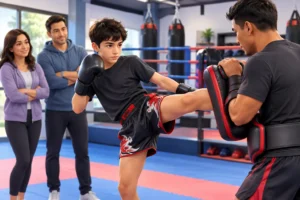
It also helps to train across disciplines with intention. Muay Thai and kickboxing can improve comfort with distance, movement, and composure under pressure. Judo and wrestling can strengthen takedowns and clinch awareness. Brazilian Jiu-Jitsu gives you the positional knowledge to manage what happens when the fight reaches the ground. The goal is not to become scattered across too many skills. It is to understand how each skill supports the others.
The right academy should make elite instruction feel accessible, not distant. Find a room where the techniques are explained clearly, the standards are real, and training partners want to see you improve. When you build your game on sound positions and consistent practice, confidence becomes something you have earned, one round at a time.




No comment yet, add your voice below!