
Most beginners do not quit martial arts because they are too out of shape or too old. They quit because they picked the wrong environment, the wrong class, or the wrong expectation. If you are searching for the best beginner martial arts classes, the real question is not which style looks coolest. It is which program will help you stay consistent long enough to actually improve.
That matters more than most people realize. A beginner does not need the hardest class in the city. A beginner needs clear coaching, safe structure, and a culture that pushes growth without making people feel like outsiders. The best class is the one that meets you where you are and still demands progress.
What makes the best beginner martial arts classes?
A true beginner-friendly class is not watered down. It is organized. There is a difference.
Good beginner programs teach fundamentals in a sequence that makes sense. You should know what you are learning, why it matters, and how to practice it safely. That applies whether you are stepping into Brazilian Jiu-Jitsu, Muay Thai, kickboxing, wrestling, or judo. Beginners improve fastest when instruction is structured instead of chaotic.
The coaching style matters just as much as the curriculum. In a strong academy, instructors correct details without overwhelming you. They know when to push and when to simplify. They also know that brand-new students often feel awkward, tense, and a little self-conscious in the first few classes. That is normal. A serious academy should be able to handle that without making beginners feel like they are slowing everyone else down.
Culture is the third piece. Some gyms talk about community but operate like cliques. Others carry high standards and still make room for new people. The best beginner martial arts classes usually come from schools that balance discipline with support. You want training partners who work with you, not through you.
Choosing the right beginner martial art for your goal
There is no universal best style for every person. There is only the best fit for your reasons for starting.
If you want practical self-defense
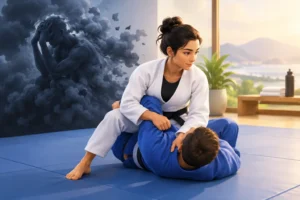
Brazilian Jiu-Jitsu is often a strong starting point because it teaches control, leverage, positional awareness, and how to handle close-range situations. For many beginners, especially those who do not feel naturally athletic, BJJ is a reassuring first step because it rewards technique over size and explosiveness. It can also build confidence quickly, since students begin learning useful problem-solving skills early.
That said, BJJ is grappling-heavy. If your idea of martial arts is striking pads and moving at a faster pace, it may not immediately match what you pictured. Some people love the technical depth right away. Others need a little time to adjust.
If you want fitness and stress relief
Fitness kickboxing is one of the most accessible entry points in martial arts. It gives beginners a hard workout, simple combinations to build coordination, and a clear sense of progress without the same learning curve that comes with live grappling. If your primary goal is to get in shape, feel energized, and build confidence through movement, this can be an excellent place to start.
The trade-off is that fitness-focused classes may emphasize conditioning more than deeper combat skill, depending on the program. That does not make them less valuable. It just means you should be honest about what you want.
If you want striking with technical depth
Muay Thai works well for beginners who want real striking instruction from day one. You learn punches, kicks, knees, elbows, footwork, timing, and composure under pressure. It is direct, demanding, and highly effective.
For some new students, Muay Thai feels empowering immediately. For others, it can feel physically intense at first. A strong beginner program should scale that intensity, teach mechanics carefully, and avoid throwing new people into situations they are not ready for.
If you want balance, takedowns, and body control
Judo and wrestling build a different kind of confidence. They teach posture, pressure, movement, and how to control another person through grips, positioning, and takedowns. These arts are especially useful for people who want to understand standing grappling instead of only ground work.
They can also be physically demanding in ways beginners do not expect. Learning how to fall safely, move with resistance, and stay relaxed during scrambles takes time. In the right room, though, that challenge becomes a huge source of growth.
Best beginner martial arts classes for adults
Adults often overthink the starting point. They worry they missed their window, that everyone else will be younger, fitter, or more advanced. The truth is that many of the strongest long-term students started later than they expected.
For adults, the best classes usually offer a blend of technical instruction, physical challenge, and clear progression. BJJ is a strong choice for adults who want self-defense, mental engagement, and sustainable skill development. Kickboxing is great for adults focused on fitness and stress management. Muay Thai suits people who want practical striking and disciplined conditioning. Grappling arts like judo and wrestling appeal to adults who enjoy pressure, pace, and learning how to control physical exchanges.
What matters most is whether the academy has an actual on-ramp for adults with no experience. If every class assumes prior knowledge, beginners get discouraged fast. If the school takes pride in teaching fundamentals, adults usually settle in faster than they expect.
Best beginner martial arts classes for kids and teens
For young students, the best beginner martial arts classes are rarely about fighting first. They are about attention, discipline, confidence, and learning how to respond under pressure.
A quality youth program teaches children how to listen, move with control, and respect their training partners. It also gives them a healthy way to build resilience. Kids gain a lot from martial arts when expectations are clear and coaches are consistent. They need structure, not chaos. They also need encouragement that feels earned.
Brazilian Jiu-Jitsu is especially popular for youth because it helps children develop body awareness, composure, and anti-bullying skills without relying on strength alone. Striking-based programs can also be excellent when they are age-appropriate and coached with discipline. For teens, a multi-discipline environment can be especially valuable because it keeps training interesting while developing a broader skill set.
Parents should look closely at class management. If the room feels disorganized, that will affect learning. If the coaches hold standards while still creating a positive atmosphere, that is usually a strong sign.
How to tell if a gym is actually beginner-friendly
Marketing language can make every school sound welcoming. The real test is what happens when a brand-new student walks through the door.
Pay attention to how the instructors greet people, how clearly they explain the class, and whether advanced students help newer ones without ego. Notice if beginners are taught fundamentals or just thrown into the mix. Watch how safety is handled. Good schools are not casual about safety, but they are also not paranoid. They create trust through professionalism.
You should also ask how progression works. A beginner should know what the first few weeks will look like. That level of clarity lowers anxiety and increases follow-through.
An academy with multiple disciplines under one roof can be a major advantage here. Some beginners start in one program and later branch out once they build confidence. That kind of path works well for people who want both variety and long-term development. In Lakewood, Imperial BJJ Lakewood stands out for exactly that reason, combining beginner-accessible instruction with high-level coaching across grappling and striking disciplines.
What beginners should expect in the first month
Your first month will probably feel humbling. That is not failure. That is training.
You may struggle to remember combinations, positions, or movement patterns. You may get tired faster than expected. You may feel stiff, awkward, or frustrated some days. None of that means you picked the wrong class. In fact, those feelings usually mean you are learning something real.
What should improve within the first month is not mastery but familiarity. You should start recognizing terms, understanding the rhythm of class, and feeling less hesitant about showing up. The best beginner martial arts classes create those early wins without pretending progress happens overnight.
If a school can help you get through the first month with confidence intact, it is probably the right place to keep growing.
The best choice is the one you will commit to
There is value in comparing styles, but beginners sometimes get stuck trying to find the perfect answer before they start. That search can turn into avoidance.
A better approach is to choose a reputable academy, try a class, and pay attention to how the training feels. Not whether it feels easy. Whether it feels purposeful. Whether the coaching is sharp. Whether the room has standards. Whether you can picture yourself coming back next week.
That is usually how people find the right fit. Not by guessing from the sidelines, but by stepping onto the mat and seeing which kind of challenge makes them want to return.
The right martial arts class should leave you tired, a little more confident, and ready to come back for the next round.




No comment yet, add your voice below!