
A first BJJ class can look intense from the doorway: people gripping uniforms, working from the ground, and moving through positions most newcomers have never seen. So, is BJJ safe for beginners? Yes, when it is taught in a structured academy with attentive coaching, respectful training partners, and a culture that puts control ahead of ego.
Brazilian Jiu-Jitsu is a contact sport, so no honest coach can promise zero risk. Minor bumps, sore muscles, and the occasional bruised finger can happen. But BJJ is also built around positional control, tapping before damage occurs, and learning to solve physical problems with technique instead of reckless force. For many adults and kids, that makes it a more approachable starting point than they expect.
Is BJJ Safe for Beginners When You Have No Experience?
Experience is not the requirement. Good instruction is.
A true beginner should not be expected to know how to fall, escape a hold, or recognize a submission right away. Those are skills an academy should teach progressively. Early classes should focus on basic movement, posture, balance, safe drilling, and the rules that protect everyone on the mat.
The first safety lesson is simple: tap early and tap clearly. A tap tells your partner to release a position or submission immediately. There is no prize for waiting until something hurts. In a healthy BJJ room, tapping is treated as good judgment, not failure.
Beginners also benefit from the fact that live training can be adjusted. You do not need to start with hard rounds against advanced athletes. A coach can pair you with calm, experienced partners, set positional rounds with clear goals, or have you drill at a measured pace until your movements become familiar. The right pace depends on your age, fitness level, injury history, and comfort with contact.
Why Brazilian Jiu-Jitsu Can Be a Controlled Sport
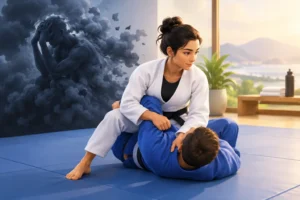
BJJ is often described as a problem-solving martial art. Practitioners use position, leverage, timing, and pressure to control an opponent. That does not make training effortless, but it does mean good practice has built-in ways to reduce unnecessary impact.
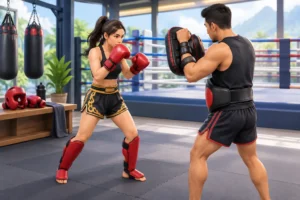
Unlike striking-only training, BJJ does not require beginners to take punches or kicks to participate. Unlike some high-impact sports, much of the work happens through controlled grips, movement, and ground positions rather than repeated collisions. Students learn to apply pressure with awareness, not simply crash into one another.
Still, safety depends on how the room trains. A technical class with clear boundaries is very different from an environment where people treat every round like a fight. The academy culture matters as much as the art itself.
At Imperial BJJ Lakewood, the expectation is disciplined training with respect for every partner. That standard matters whether someone is stepping onto the mat for the first time, returning to exercise after years away, or preparing for competition. Serious martial arts instruction should make room for all three without confusing intensity with carelessness.
The Risks Beginners Should Understand
Being realistic is part of training intelligently. The most common issues in BJJ are usually minor: muscle soreness, mat burn, small bruises, strained fingers, or stiffness after learning unfamiliar movements. Shoulders, knees, necks, ribs, and fingers can be more vulnerable when people move too fast, resist in awkward positions, or ignore a submission too long.
Skin infections are another concern in any close-contact sport. A clean facility, clean uniforms, showering after class, covering cuts, and staying home with a suspicious rash are not optional details. They are part of being a responsible teammate.
Concussions are less common in BJJ than in sports built around striking, but they can still occur through accidental collisions, takedowns, or falls. Beginners should learn breakfalls, avoid uncontrolled takedown exchanges, and tell a coach immediately if they feel dizzy, confused, nauseated, or unusually sensitive to light after contact.
The goal is not to be afraid of these possibilities. It is to recognize that safe training is active. You protect yourself by making good choices, and your academy protects you by making those choices clear and normal.
What Makes a Beginner BJJ Class Safer
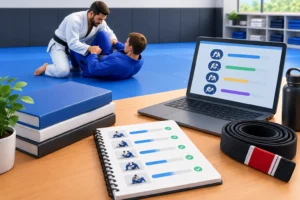
A safe beginner program has structure. Coaches explain the purpose of each drill, demonstrate it at a pace students can follow, and watch closely enough to correct dangerous habits before they become automatic.
Partner selection is equally important. A skilled training partner understands that being bigger, stronger, or more experienced creates responsibility. They do not use a new student’s first class to prove anything. They help the newcomer learn where to put their hands, how to move safely, and when to pause.
Look for an academy where coaches regularly reinforce a few nonnegotiable rules: tap early, release immediately when a partner taps, avoid sudden twisting pressure on joints, keep fingernails trimmed, and communicate before a round begins. If you have a sore knee, a previous shoulder injury, or you simply want to work lightly, say so. Mature training partners will adjust.
A beginner should also be allowed to ask questions. If you do not understand why a position feels uncomfortable, how hard to resist, or what a submission is meant to do, ask before continuing. The best academies welcome that conversation because clarity prevents injuries.
How to Make Your First Months of BJJ Safer
Your first months are not about winning rounds. They are about building awareness. Learn to breathe under pressure, stay calm when a position feels unfamiliar, and use technique before strength. The students who progress well are usually not the ones who train at maximum intensity every day. They are the ones who train consistently enough to learn.
Start with two or three classes per week if your schedule allows, then give your body time to adapt. BJJ uses your grip, hips, neck, core, and mobility in ways that regular gym workouts may not. Soreness is normal, sharp pain is not. If something feels wrong, stop and speak with your coach. If symptoms are severe, persistent, or involve your head, spine, or joint stability, consult a qualified medical professional.
Choose training partners thoughtfully. Training with someone larger is not automatically unsafe, but size differences require control. A good partner will match your pace and prioritize clean technique. As a beginner, it is reasonable to decline a hard round or ask to drill instead. That is not avoiding the work. It is learning to train for the long term.
Leave ego outside the academy. Trying to escape every position explosively is one of the fastest ways to get tired or hurt. BJJ rewards patience. If you are caught, tap. If you are unsure, slow down. If you need a round off, take it. Consistency beats one heroic session followed by three weeks on the couch.
Is BJJ Safe for Children and Teens?
BJJ can be an excellent activity for children and teens when classes are designed for their developmental stage. Youth instruction should not be a smaller version of an adult competition class. It should teach movement, coordination, body awareness, respect, confidence, and age-appropriate self-defense through supervised activities.
For younger students, coaches should group children thoughtfully, closely supervise partner work, and make safety rules easy to understand. The environment should be energetic but organized. Children need to learn that martial arts involve discipline: listening when a coach speaks, controlling their bodies, respecting boundaries, and taking care of teammates.
Parents should watch how a program handles behavior. Are coaches attentive? Do they correct roughness immediately? Are children encouraged without being pushed into situations beyond their readiness? A strong youth program builds confidence because children feel capable and safe, not because they are told to be fearless.
When You Should Wait or Modify Training
BJJ is adaptable, but there are times to pause or modify. Active skin infections, fever, unexplained illness, and open wounds are reasons to stay off the mat until you are cleared to return. Recent surgery, pregnancy, significant joint injuries, uncontrolled medical conditions, or a history of concussion may require guidance from your healthcare provider and a direct conversation with your coach.
Modification is common and does not mean you do not belong. A student with a bad knee may avoid certain takedowns. Someone rehabbing a shoulder may work on footwork, positional movement, or carefully chosen drills. Good training meets you where you are while helping you become more capable over time.
The best first step is to visit an academy that takes your goals and concerns seriously. You do not need to arrive fit, tough, or knowledgeable. You only need the willingness to learn, communicate, and give yourself time. With patient coaching and respectful partners, BJJ can become a challenging, rewarding practice that strengthens confidence both on and off the mat.



No comment yet, add your voice below!