
A clean double-leg means little if you cannot control the position after the takedown. Sharp boxing is not enough if you have no answer when someone closes distance. The future of hybrid martial arts training is built around that reality: students are no longer choosing between being a striker or a grappler. They are learning how ranges connect, how rules change strategy, and how to become more capable under pressure.
For beginners, this does not mean trying to learn everything at once. For experienced athletes, it does not mean collecting techniques from every discipline. Good hybrid training creates a clear system. It gives each art its proper place while helping students understand where one skill ends and the next begins.
Why Hybrid Training Is Moving Beyond “Mix It All Together”
Hybrid martial arts has existed for a long time. What is changing is the quality of instruction. The old approach was often simple: train a little striking, a little grappling, and hope it comes together during sparring. That can build toughness, but it can also produce gaps, confusion, and bad habits.
The stronger model starts with technical depth. Brazilian Jiu-Jitsu teaches positional control, submissions, escapes, and the patience to solve problems from difficult places. Wrestling and Judo develop takedowns, balance, clinch pressure, and the ability to decide where a confrontation takes place. Muay Thai and kickboxing build distance management, timing, defense, and confident striking.
Those skills should not be blended carelessly. A BJJ stance is not always a striking stance. A wrestling shot has different risks when knees and uppercuts are available. Pulling guard may make sense in a grappling competition, but it is rarely the first choice in a self-defense situation. Hybrid training becomes valuable when coaches explain those differences instead of pretending every technique works the same way everywhere.
The Future of Hybrid Martial Arts Training Is Connected
The next generation of martial artists will spend less time treating disciplines as separate rooms and more time learning the transitions between them. The question will not only be, “How do I throw this kick?” It will be, “What happens if it misses, gets checked, or brings my opponent into the clinch?”
A connected curriculum teaches practical chains. A student might use footwork and a jab to create a reaction, enter the clinch, off-balance an opponent, finish a takedown, pass the guard, and hold a dominant position. Every stage has its own technical details, but the athlete also understands the sequence.
That approach applies to sport competition, self-defense, and fitness training in different ways. A competitor may emphasize rule-specific tactics and high-level rounds. A new adult student may focus on awareness, calm decision-making, basic striking defense, and the ability to stand up safely. A child may work on athletic movement, boundaries, confidence, and respectful partner training. The principles connect, but the training goals should remain personal.
Depth Still Comes Before Speed
There is a temptation to rush into advanced combinations because hybrid training looks exciting. But the students who develop lasting skill usually build from dependable fundamentals. They learn to fall safely before practicing powerful throws. They learn posture, frames, and escapes before chasing submissions. They learn stance, guard, and controlled defense before hard sparring.
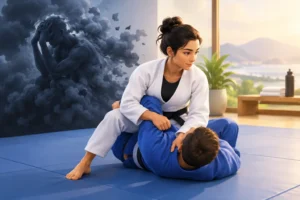
This is especially true for beginners. Confidence does not come from being thrown into chaos on the first day. It comes from repeated small wins: understanding how to move, training with a trusted partner, and realizing that difficult positions can be managed with technique.
At the same time, experienced students should not stop refining basics. A well-timed jab, a disciplined underhook, a reliable sprawl, or a technical stand-up remains valuable at every level. Hybrid athletes do not outgrow fundamentals. They find more ways to apply them.
Better Coaching Will Matter More Than More Content
Martial arts students have more access to information than ever. A phone can show thousands of techniques in minutes. The limitation is not content. It is context.
A video cannot reliably tell you whether your hips are out of position, whether you are leaving your chin exposed, or whether a technique fits your body type and experience level. It cannot adjust the intensity of a round when someone is returning from an injury or help a nervous beginner feel safe enough to keep showing up.
The future belongs to academies that combine proven curriculum with attentive coaching. That means organized classes, progressive skill development, and training partners who understand that hard work does not require reckless behavior. It also means coaches who can tell a student when to specialize and when cross-training will solve a real weakness.
For example, a BJJ student who struggles to get the fight to the ground may benefit from wrestling and Judo instruction. A striker who feels uncomfortable in close range may need clinch work and takedown defense. The answer depends on the person, their goals, and the environment in which they want to compete or protect themselves.
Technology Can Support Training, Not Replace It
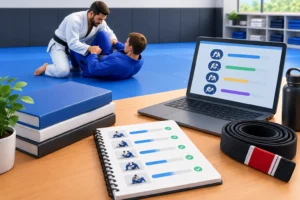
Video review, training logs, heart-rate data, and filmed sparring will continue to improve how athletes prepare. A competitor can study recurring patterns in rounds. A coach can help students measure consistency rather than relying on memory. A busy professional can see how sleep, recovery, and training volume affect progress.
Still, data has limits. The best martial arts lessons are felt: balance through a live takedown exchange, timing in a controlled sparring round, and the pressure of working an escape when a partner is resisting. Technology can reveal patterns, but it cannot replace the trust and feedback built on the mats.
Safer Intensity Creates Better Long-Term Athletes
Hard training has a place. Martial arts should challenge the body, test discipline, and teach people to stay composed when they are tired. But the strongest academies are moving away from the idea that every class must become a survival test.
Smart intensity is more demanding than random intensity. It requires partners to match experience levels, coaches to set clear rounds, and students to communicate. A new student does not need to absorb unnecessary damage to learn defense. A competitor does not need to train at maximum intensity every day to become prepared.
This matters for families as much as adult athletes. Parents want children to develop confidence without being placed in an intimidating environment. Youth hybrid training should emphasize coordination, control, listening, anti-bullying awareness, and respect. As children mature, technical training can become more complex, but the culture should always make safety and accountability nonnegotiable.
Community Is the Competitive Advantage
People often begin martial arts because they want fitness, self-defense, or a new challenge. They stay because training becomes part of who they are. The teammates who help them through their first difficult class, the coach who notices improvement, and the routine that brings order to a busy week all matter.
That is why the future of hybrid martial arts training is not only about combining styles. It is about building a training home where beginners can start without embarrassment and serious athletes can pursue high standards. A room full of different goals can work when everyone shares respect for the process.
At Imperial BJJ Lakewood, that kind of environment means students can develop grappling, striking, takedowns, and personal confidence in one disciplined community. The value is not simply having more classes on a schedule. It is having instruction that helps each class support the next.
What to Look for in a Hybrid Academy
If you are considering hybrid training, look beyond the list of disciplines. Ask whether the academy has a clear path for a complete beginner. Watch how coaches correct students. Notice whether advanced members train responsibly with newer people, and whether the class culture feels focused rather than performative.
You should also consider your reason for training. If you want fitness, find a program that will push you consistently without making every workout a technical overload. If self-defense is your priority, look for realistic instruction that addresses awareness, distance, escape, and control. If you want to compete, seek coaches who understand the rules and demands of your chosen sport.
The right place will challenge you without making you feel like you must prove yourself before you belong. Start with one class, ask honest questions, and give yourself enough time to learn the language of movement. The goal is not to become good at everything overnight. It is to become more prepared, more disciplined, and more confident with every round.




No comment yet, add your voice below!