
A child can love the idea of martial arts and still end up in the wrong class. Maybe the room is too chaotic, the instruction is too intense, or the program treats every child like a future competitor. When parents ask how to choose kids martial arts, the best answer is not to start with a style. Start with the experience your child needs to grow.
The right program should challenge your child without making them feel small. It should teach practical movement and self-control while giving them a place where effort, respect, and steady progress are recognized. A good academy does more than fill an afternoon. It helps children carry themselves differently at school, at home, and around their peers.
How to Choose Kids Martial Arts for Your Child
Before comparing Brazilian Jiu-Jitsu, karate, wrestling, judo, or striking classes, consider your child’s personality and your family’s goals. A high-energy child may need a structured outlet that teaches focus. A quiet child may benefit from a supportive setting where they can practice speaking up, taking space, and solving problems under pressure.
Some parents are primarily looking for confidence or anti-bullying skills. Others want an athletic activity that develops coordination, strength, and resilience. Competition can be a great goal for the right child, but it should not be the only measure of a strong youth program. Ask what success looks like for your child six months from now. Better listening? More confidence? Healthy friendships? Consistent effort? Those answers should guide your decision.
Age matters, too. A four-year-old needs a different learning environment than an eleven-year-old. Younger children learn through movement, games, repetition, and clear routines. Older children can handle more technical detail, responsibility, and live training. A quality academy separates classes thoughtfully rather than expecting every age group to learn the same way.
Look Beyond the Name of the Style
Every martial art can offer meaningful benefits when it is taught well. The quality of instruction, safety standards, and class culture matter more than the sign on the front door.
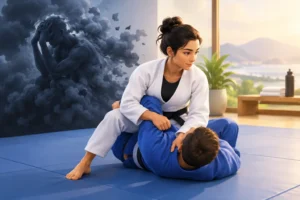
Brazilian Jiu-Jitsu is often a strong fit for children because it teaches control, balance, body awareness, and problem-solving at close range. Students learn how to manage resistance without relying on size or throwing wild punches. For families concerned about bullying, that emphasis on control can be especially valuable.
Judo and wrestling build balance, takedown skills, toughness, and comfort with physical contact. Striking arts such as Muay Thai or kickboxing can improve coordination, conditioning, distance management, and confidence. The trade-off is that younger children need especially careful coaching around contact and control.
A multi-discipline academy can be a good choice for a child who may eventually want to explore both grappling and striking. Still, variety only helps if the program has a clear curriculum. Children should not be rushed through random techniques simply to keep classes exciting. They need repetition, progression, and coaches who explain why a skill matters.
Watch the Coaches, Not Just the Class
A skilled competitor is not automatically a skilled youth coach. Teaching children requires patience, emotional awareness, firm boundaries, and the ability to make corrections without embarrassment. During a trial class, notice how the instructor responds when a child loses focus, gets frustrated, or makes a mistake.
The best coaches are clear and calm. They set expectations, correct behavior early, and keep the room organized without yelling or shaming students. They know when to push a child and when to give them a smaller, achievable next step.
Ask how instructors are trained to work with children and how the academy handles safety, behavior, and partner matching. You should hear specific answers, not vague assurances. A serious youth program has systems for supervising drills, teaching controlled contact, and making sure children train with appropriate partners.
Pay attention to whether coaches know students by name. That small detail often says a great deal about the culture. Children are more likely to stay committed when they feel seen, accountable, and welcome.
Evaluate Safety Without Choosing a Padded Playground
Martial arts involve challenge. Children may sweat, struggle, lose rounds, and need to try a movement many times before it works. Those moments are part of the value. The goal is not to remove all difficulty. It is to create a disciplined environment where difficulty is managed well.
Look for clean mats, organized equipment, age-appropriate drills, and clear rules for physical contact. Students should be taught how to fall, tap, stop, listen, and work with partners safely. Coaches should actively supervise, especially during sparring, rolling, takedowns, or any activity where children are moving quickly.
Also consider emotional safety. Is the program built around respect? Do older or more experienced students help newer children learn? Are mistakes treated as part of training rather than a reason to get laughed at? A child does not need constant praise, but they do need a setting where they can fail, reset, and improve.
Find a Culture Your Family Can Commit To
The first class may be exciting, but long-term progress comes from consistency. Choose a schedule and location that your family can realistically maintain. Two classes per week attended consistently will usually do more for confidence and skill than an ambitious schedule that falls apart after a month.
Observe how families interact before and after class. Does the academy feel like a transactional activity or a community where people encourage one another? The right environment should welcome beginners while still holding a meaningful standard. Children should understand that belts, promotions, and recognition are earned through attendance, attitude, and growth.
Be cautious of programs that promise instant confidence, guaranteed black belts, or rapid advancement without much effort. Martial arts work because they teach children that progress is built. The pride of earning a new skill or belt comes from knowing it required patience.
At the same time, do not mistake harshness for quality. A child can be held accountable without being intimidated. The strongest programs balance high standards with genuine encouragement.
Use the Trial Class to Ask Better Questions
A trial is not just a chance for your child to see whether martial arts look fun. It is your opportunity to evaluate whether the academy delivers what it promises. Let your child participate, then ask them what they noticed: Did they feel welcomed? Did they understand what the coach asked them to do? Would they feel comfortable returning?
Parents should ask a few practical questions as well. Find out how classes are divided by age and experience, how the curriculum progresses, and what happens if a child is nervous or needs extra support. Ask whether sparring or live training is required immediately, and how coaches introduce it safely.
Your child may not walk out of the first class looking completely confident. That is normal. New environments can feel intimidating, especially for children who are shy or uncertain. What matters is whether they felt respected, supported, and interested enough to try again.
For Lakewood and Denver-area families, Imperial BJJ Lakewood offers a 7-day free trial that gives children time to experience structured youth training rather than judging the program from a single class. A little time on the mats can reveal far more than a brochure ever could.
Choose Progress Over Perfection
The best martial arts program is not necessarily the one with the flashiest facility, the largest trophy case, or the most promises. It is the one where your child learns to show up, listen, work hard, and treat training partners with respect.
Give the process enough time. Children often need several classes to settle into the routine, learn names, and become comfortable with the physical side of training. If the coaching is thoughtful and the culture is right, martial arts can become one of the places where your child discovers that confidence is not something they are given. It is something they practice.




No comment yet, add your voice below!