
A clean punch can create the space needed to escape. A controlled takedown can stop a fight from becoming a chaotic exchange. That is the real question behind striking versus grappling: not which style looks tougher, but which skills serve your goals, body, and situation best.
For beginners, the answer is rarely one or the other. Striking and grappling develop different forms of awareness, conditioning, and confidence. Training both gives you more options, but starting with the discipline that keeps you engaged is what gets you through the door consistently.
What Striking Teaches You
Striking includes arts built around punches, kicks, knees, elbows, movement, and distance management. Boxing, Muay Thai, and kickboxing all fall into this category, although their rules and technical emphasis differ.
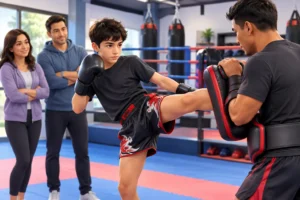
The first lesson in striking is range. You learn how close is too close, how to move without crossing your feet, and how to protect yourself while someone is trying to hit you. That awareness changes quickly for new students. Even basic pad work teaches you to stay composed, generate power with proper mechanics, and keep your hands in a responsible defensive position.
Fitness kickboxing is an excellent entry point for adults who want a demanding workout and practical fundamentals without being thrown into hard sparring on day one. Muay Thai adds a broader striking toolkit, including clinch work, knees, elbows, and low kicks. For students interested in competition, it also builds timing under pressure that is difficult to replicate with solo drills alone.
Striking can be especially useful in self-defense because it helps you manage an encounter before it turns into a grab or takedown. If someone is within arm’s reach, the ability to cover up, create distance, move toward an exit, and respond decisively matters.
Still, striking has limits. Real-world environments may be crowded, slippery, or confined. You may not have space to kick. You may be grabbed before you have a chance to create distance. And although sparring is valuable, good training emphasizes control, respect, and judgment – not trying to prove who can hit hardest.
What Grappling Teaches You
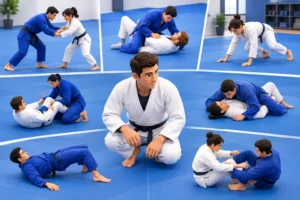
Grappling covers the skills used to control, off-balance, take down, pin, escape, and submit an opponent. Brazilian Jiu-Jitsu focuses heavily on positional control and submissions on the ground. Wrestling emphasizes takedowns, pressure, and control. Judo develops throws, grips, balance, and the ability to use an opponent’s movement against them.
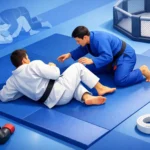
For many adults, grappling is the first time they experience what calm feels like under pressure. A larger training partner may pin you, take your balance, or put you in an uncomfortable position. With proper coaching, you learn not to panic. You frame, breathe, create space, recover position, and work methodically toward an escape.
That process builds confidence that carries well beyond the mat. You do not become fearless. You become more capable of thinking while uncomfortable.
Brazilian Jiu-Jitsu is particularly valuable for self-defense because it gives a smaller person tools for dealing with a close-range attack. It teaches students how to break falls, defend common positions, escape from underneath someone, and control another person without automatically relying on strikes. That distinction matters in situations where your priority is protecting yourself, restraining someone safely, or getting away without escalating harm.
Grappling is demanding in its own way. There is constant pressure, grip fighting, and full-body resistance. It can also feel unfamiliar at first because personal space disappears quickly. A welcoming academy culture and clear beginner instruction make a major difference here. You should be able to ask questions, train at an appropriate pace, and improve without feeling like you need prior experience to belong.
Striking Versus Grappling in a Real Self-Defense Situation
Self-defense is not a sporting match with a referee, padded floors, or agreed-upon rules. The best outcome is almost always to recognize trouble early, avoid it when possible, de-escalate when safe, and leave. Martial arts training supports that goal by improving awareness, composure, and physical ability.
Striking is strongest when you need to protect your space and disengage. A person who can move, cover their head, manage distance, and create an opening is better positioned to escape. Grappling becomes essential if someone grabs clothing, attempts a takedown, pins you against a wall, or puts you on the ground.
The ground is a place most people should want to leave quickly in a self-defense scenario. There could be hard concrete, broken glass, multiple attackers, or weapons. BJJ training does not teach students to stay on the ground unnecessarily. Done well, it teaches them how to survive there, regain control, stand safely, and get out.
This is why a simple “striking versus grappling” debate can miss the point. The skills overlap at close range. Muay Thai has clinch fighting. Wrestling and Judo teach takedowns and balance. BJJ develops control and escapes. The more you understand transitions between ranges, the less likely you are to freeze when an encounter changes.
Which Is Better for Fitness?
Both will challenge you, but they feel different.
Striking classes often provide immediate cardiovascular intensity. Rounds on pads and bags build endurance, coordination, speed, and explosive power. Many people enjoy the stress relief of hitting pads after a long workday, and the structure makes it easy to measure progress through sharper combinations, better footwork, and longer rounds.
Grappling develops functional strength, mobility, balance, grip endurance, and body awareness. Rolling or live positional training can be exhausting, but it also requires problem-solving. You are not simply working hard. You are reacting to a moving partner, recognizing patterns, and applying technique while tired.
The better choice depends on what will keep you training. Someone who loves rhythm, movement, and high-energy pad rounds may thrive in kickboxing or Muay Thai. Someone who enjoys strategy, leverage, and solving physical puzzles may become deeply invested in BJJ, wrestling, or Judo. There is no wrong starting point when the coaching is sound and the environment keeps you coming back.
Why Cross-Training Makes Martial Artists More Complete
A striker who has never grappled may be surprised by how quickly a skilled opponent can close distance and control them. A grappler who has never faced punches may underestimate the urgency of safely entering, clinching, or escaping against strikes.
Cross-training does not mean trying to become an expert in every discipline at once. It means building a useful foundation across the ranges where conflict occurs. Start with one primary program, establish consistent attendance, then add a complementary class when your schedule and recovery allow.
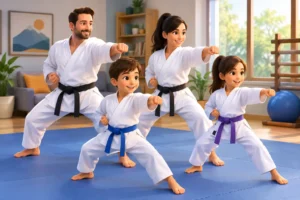
For example, a BJJ student can benefit from learning basic kickboxing footwork, defensive posture, and distance control. A Muay Thai student can benefit from takedown defense, clinch balance, and ground escapes. Youth students gain even more from this variety: they develop coordination, discipline, confidence, and respectful training habits without being pushed into an adult competitive environment.
At Imperial BJJ Lakewood, students can explore Brazilian Jiu-Jitsu, Muay Thai, fitness kickboxing, Judo, and wrestling in one supportive training community. That gives beginners room to find what they enjoy while helping experienced athletes build a broader game.
How to Choose Your First Class
Choose a class that aligns with the outcome you want most right now. If your priority is stress relief and a fast-paced workout, start with fitness kickboxing or Muay Thai. If you want confidence in close contact, practical control, and a technical long-term practice, Brazilian Jiu-Jitsu is a strong fit. If throws, takedowns, and athletic movement appeal to you, Judo or wrestling may be the right starting point.
Then pay attention to the academy, not just the art. Good coaching makes beginners feel challenged but not overwhelmed. Classes should have a clear structure, training partners should respect one another, and safety should be treated as part of the discipline. The right room will ask you to work hard while also giving you the support to improve.
Your first class does not need to settle the striking versus grappling question forever. It only needs to begin a practice that makes you stronger, more disciplined, and more confident each week. Try the style that calls to you, train with purpose, and stay open to the skills that will make you more prepared.


No comment yet, add your voice below!