
Your first martial arts class should feel challenging, not like a test you were supposed to study for. When people ask about bjj or kickboxing for beginners, they are usually looking for more than a workout. They want confidence, practical self-defense skills, a routine they can stick with, and a place where being new is not a disadvantage.
Both Brazilian Jiu-Jitsu and kickboxing can deliver that. The better choice depends on what kind of training feels motivating to you, how you prefer to solve problems under pressure, and what you want your body and mindset to gain from class.
BJJ or Kickboxing for Beginners: The Core Difference
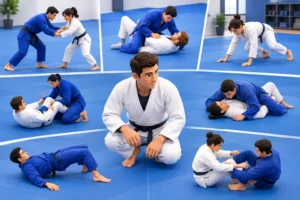
Brazilian Jiu-Jitsu is a grappling art. Training takes place at close range, where students learn how to control position, escape bad situations, apply submissions, and defend themselves without relying only on size or strength. A typical BJJ class includes technical instruction, drilling with a partner, and controlled live training called rolling.
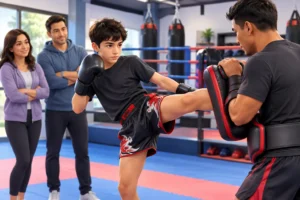
Kickboxing is a striking-based workout and martial art. You learn punches, kicks, footwork, defense, combinations, and how to move with purpose. Classes often involve bag work, pad rounds, conditioning, and partner drills. Depending on the program, there may also be controlled sparring as students develop the skills and comfort level for it.
Put simply, BJJ teaches you what to do when a confrontation becomes close and physical. Kickboxing teaches you how to manage distance, move, strike, and build conditioning while standing. Neither is automatically better. They ask different things from a beginner.
Choose BJJ If You Like Problem-Solving Under Pressure
BJJ is often a strong fit for people who want a technical challenge. Every position has options, counters, and details that make a major difference. You may spend an entire class working on how to escape side control, pass a guard, or maintain balance from the top. Progress is gradual, but it is easy to feel when a technique starts working.
It is also a compelling choice for beginners who worry that they are not athletic enough to start martial arts. You do not need to arrive in peak shape. BJJ rewards leverage, timing, posture, patience, and repetition. Strength helps, but a skilled training partner can often control a stronger person by using better mechanics.
For self-defense, BJJ offers valuable experience in the kind of close contact that many people find uncomfortable at first. You learn how to stay calm when someone is grabbing, holding, or pinning you. That does not mean every self-defense situation belongs on the ground. It means you develop the ability to protect yourself if the distance disappears.
The trade-off is that BJJ is physically close. You will train in contact with partners, spend time on the mats, and occasionally feel awkward while learning unfamiliar positions. A quality beginner program makes that manageable through clear instruction, respectful pairings, hygiene standards, and a culture where tapping is expected and respected.
Choose Kickboxing If You Want Movement and Fast-Paced Fitness
Kickboxing tends to appeal to beginners who want to move, sweat, and leave class feeling like they worked hard. The training can improve cardiovascular endurance, coordination, balance, mobility, and full-body strength. Hitting pads or a heavy bag is also a focused way to release stress after a demanding day.
The learning curve can feel more immediate in some ways. A beginner can learn a basic jab-cross, add footwork, and practice a useful combination in the first class. Over time, the details become deeper: how to keep your hands home, rotate through a punch, manage range, read an opponent, and defend without freezing.
Kickboxing can be a practical fit if your main goal is fitness with real martial arts structure. It gives workouts a purpose beyond counting reps. You are not simply throwing random punches for calories. You are building a stance, developing awareness, and learning how your body generates force safely.
The trade-off is that striking requires attention to control. Beginners sometimes tense their shoulders, overextend punches, or throw kicks with poor balance. Good coaching matters because it helps you build sound mechanics before speed and power. You should never feel pressured to spar before you are ready, and training partners should match your pace rather than try to prove something.
Consider Your Comfort With Contact
Many people assume BJJ is more intimidating because of the close contact. Others find striking more intimidating because getting hit, even lightly, sounds unpleasant. Your honest answer matters.
If you are comfortable working closely with a partner and enjoy chess-like problem-solving, BJJ may become the habit you look forward to all week. If you prefer personal space, rhythmic movement, and a high-energy training session, kickboxing may feel more natural.
Still, do not overthink your first impression. A person who expects to love kickboxing may discover they enjoy the strategy and community of BJJ. Someone who begins BJJ for self-defense may find that pad work is their favorite part of the week. The best academies create a structured environment where beginners can try both without being treated like outsiders.
What About Injury Risk?
All athletic training carries some risk, and martial arts are no exception. The goal is not to pretend otherwise. The goal is to train intelligently, with coaches who prioritize safety and partners who understand control.
In BJJ, common areas of concern include fingers, knees, shoulders, and necks. Tapping early, avoiding ego-driven rounds, and communicating about old injuries go a long way. In kickboxing, wrists, shins, ankles, and hips need attention. Proper wraps, gloves, warm-ups, and gradual increases in intensity help beginners stay consistent.
The larger risk for many new students is doing too much too soon. Two or three classes per week is enough to build momentum. Give your body time to adapt, especially if you are returning to exercise after a long break. Consistency will take you farther than trying to win your first month of training.
The Best Answer May Be Both
BJJ and kickboxing complement each other exceptionally well. Kickboxing develops striking, range management, footwork, and conditioning. BJJ develops clinch awareness, control, escapes, and composure on the ground. Together, they give you a broader understanding of combat sports and a more varied training week.
You do not need to begin both programs at once. Starting with one discipline can help you establish a routine and learn the culture of the academy. Once that routine feels stable, cross-training can keep your progress fresh and expose gaps you might not notice in only one style.
That is one advantage of training in a multi-discipline academy. At Imperial BJJ Lakewood, a beginner can build a foundation in Brazilian Jiu-Jitsu while having access to kickboxing, Muay Thai, wrestling, and Judo training as their interests grow. You do not have to choose a lifelong identity before taking your first class.
How to Make Your First Class Easier
Arrive a few minutes early, wear comfortable athletic clothes if you have not been given a uniform, and let the coach know you are new. You do not need prior knowledge, special toughness, or a perfect fitness level. You only need to listen, move at a sustainable pace, and ask questions when something does not make sense.
A good first class should challenge you while leaving you clearer about what comes next. You should learn a few specific skills, meet training partners who are willing to help, and understand that everyone in the room started as a beginner.
The right choice is the one you will return to when the novelty wears off. Try the discipline that matches your goals, pay attention to the quality of coaching and community, and give yourself enough classes to move past the first-day nerves. Confidence is not something you wait to feel before training. It is something you earn, one respectful round at a time.



No comment yet, add your voice below!