
A kids martial arts discipline improvement example rarely begins with a child suddenly becoming perfectly focused. More often, it starts with a small moment: a child who used to rush through directions pauses to listen, ties their belt without being reminded, or responds calmly after losing a game. Those moments may look modest, but they are the building blocks of real discipline.
For parents, the goal is not to make children quieter or more compliant. Healthy discipline means helping a child develop self-control, respect for others, follow-through, and the resilience to try again when something feels difficult. A well-run martial arts program gives those qualities a place to be practiced every week, not just discussed after a tough day at home or school.
A Kids Martial Arts Discipline Improvement Example in Action
Consider an 8-year-old named Mateo. He is energetic, bright, and athletic, but transitions are difficult for him. At home, getting ready for school turns into a series of reminders. In class, he occasionally calls out answers and gets frustrated when his work is not immediately easy. His parents are not looking for punishment. They want him to build habits that will help him feel more capable.
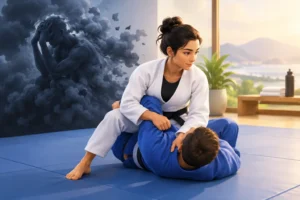
During his first few youth martial arts classes, Mateo has a hard time standing still in line. He watches other students instead of the coach, starts a drill before the instructions are finished, and becomes upset when a partner performs a movement better than he does. None of this makes him a bad student. It simply shows where he needs guidance.
The coach responds with clear, consistent expectations. Mateo learns that class begins with lining up, greeting the instructors, and listening when a demonstration starts. He is shown how to ask for help, how to work safely with a partner, and how to reset after a mistake. When he follows the process, he receives specific praise: “You waited for the full instruction before you moved. That is focus.”
After several weeks, the changes are not dramatic every day. He still has high-energy moments. But Mateo starts raising his hand before speaking during warm-ups. He remembers to bring his uniform. When a drill is challenging, he takes a breath and asks to see it again instead of walking away. At home, his parents notice that he begins packing his school bag the night before because he has grown used to preparing for training.
That is discipline improvement. It is not fear of consequences. It is a child learning that their choices affect their progress, their teammates, and their confidence.
Why Martial Arts Builds Discipline Differently
Children often hear broad instructions such as “pay attention” or “be respectful.” Those directions matter, but they can be hard to understand without a practical setting. Martial arts turns abstract values into repeatable actions.
Respect becomes looking a coach in the eye, greeting a partner, and using controlled movements. Focus becomes watching a technique closely enough to remember the first step before attempting it. Accountability becomes arriving prepared and practicing a skill even when it is not a favorite. Perseverance becomes returning to the mat after a failed attempt.
Brazilian Jiu-Jitsu, Judo, wrestling, Muay Thai, and kickboxing drills all require a child to manage their body and emotions in real time. A child cannot force their way through every problem. They need to listen, adjust, and remain aware of another person. That creates valuable feedback: when they rush, they lose position; when they stay calm and use technique, they improve.
The structure is equally important. Consistent routines help children know what is expected. They arrive, prepare, warm up, learn, practice with partners, and finish class with respect. Over time, that rhythm can make discipline feel less like a correction and more like part of who they are.
The Habits Parents Often Notice First
Every child develops at a different pace, and martial arts is not a shortcut for every behavior challenge. Still, parents commonly notice progress in a few practical areas before they see a major change in confidence or athletic ability.
Children may start following multi-step directions with fewer reminders because they regularly practice listening to a coach. They may handle losing more calmly because training teaches them that being corrected is part of learning, not a personal failure. They may also become more aware of personal space and respectful communication through partner drills.
At home, this can show up as smoother routines around getting dressed, finishing a chore, or preparing for the next day. At school, a teacher may notice a child waiting their turn, staying with a difficult assignment longer, or reacting more thoughtfully to a disagreement.
These improvements are most likely when parents avoid treating martial arts as a threat. Saying, “You need martial arts because you are out of control,” can make a child feel labeled before they begin. A stronger message is, “This is a place where you can get stronger, learn new skills, and practice being responsible.”
What Makes a Youth Program Support Discipline
Not every activity teaches discipline in the same way. The quality of instruction, class structure, and culture matter as much as the martial art itself. A productive youth program should be challenging, but it should also be age-appropriate and encouraging.
Look for instructors who give children clear expectations and explain the purpose behind them. Young students respond better when they understand that lining up safely protects training partners or that practicing a movement carefully helps them improve. Good coaches correct behavior firmly without humiliating a child in front of the group.
A strong program also balances individual responsibility with belonging. Children need to know that effort matters, but they also need to feel that they are part of a team. Training with respectful partners teaches them that discipline is not only about personal achievement. It is about helping create a safe, focused room where everyone can learn.
At Imperial BJJ Lakewood, youth students train in an environment built around technical instruction, consistent standards, and supportive coaching. For families seeking more than an after-school activity, that combination gives children a meaningful place to build confidence alongside accountability.
How Parents Can Reinforce the Lesson Outside Class
The best results happen when the expectations in training and at home support one another. That does not mean turning the kitchen table into a dojo. It means noticing and naming the same behaviors your child practices in class.
If your child completes a task after one reminder, connect it to focus. If they calmly redo a homework problem, recognize their perseverance. If they disagree with a sibling but use respectful words, point out the self-control involved. Specific feedback is more useful than a general “good job” because it helps children identify what they did right.
Keep expectations realistic. A 5-year-old may learn to line up, take turns, and use a respectful voice, while a 12-year-old may be ready to manage training gear, set personal goals, and mentor a newer student. Discipline is not one skill. It grows as a child gains maturity and responsibility.
It also helps to protect consistency. Children do not need to train every day to benefit, but regular attendance matters. Missing occasional classes is normal. Constantly stopping and restarting makes it harder for children to experience the satisfaction that comes from gradual progress. The same is true of behavior at home: calm, predictable follow-through is more effective than a different rule every week.
When Progress Feels Slow
Some children settle into structure quickly. Others test boundaries for a while, especially if they are shy, highly energetic, or adjusting to a new environment. Slow progress does not mean the program is failing.
A child may first become more aware of their behavior before they can consistently change it. They might say, “I know I was supposed to listen,” after a difficult class. That awareness is a meaningful first step. With coaching, repetition, and patience, the pause between impulse and action begins to grow.
Talk with instructors when you have a specific concern, such as trouble with frustration, confidence, or following directions. The goal should be partnership, not asking a coach to solve everything. Martial arts instructors can reinforce the skills children practice on the mat, while parents provide the daily consistency that turns those skills into lasting habits.
The most valuable lesson is not that children should be perfect. It is that they can take responsibility for the next choice: listen once more, try one more repetition, show respect after a setback, and return ready to grow.




No comment yet, add your voice below!