
Confidence is not usually missing because someone needs a louder voice or a better pep talk. More often, it is missing because they have not had enough real evidence that they can handle pressure, learn hard things, and keep going after a setback. That is exactly how to build confidence through martial arts: earn it through consistent action.
A martial arts class gives adults, teens, and children a place to face manageable challenges with coaching, structure, and people who expect them to improve. You do not need to arrive confident. You need to arrive willing to practice.
How to Build Confidence Through Martial Arts, One Class at a Time
The confidence that lasts is not based on feeling unbeatable. It is based on knowing you can stay composed when something is difficult, unfamiliar, or uncomfortable. Martial arts training creates repeated opportunities to prove that to yourself.
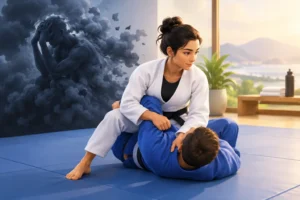
On your first day, simply learning how to stand, move, fall safely, or hold pads can feel awkward. In Brazilian Jiu-Jitsu, a new student may struggle to remember positions while working from underneath a training partner. In Muay Thai or kickboxing, coordinating footwork, defense, and strikes can take time. That early discomfort is not a sign that you are failing. It is where confidence starts.
Each class adds a small piece of proof: you remembered a technique, stayed calm during a round, asked a question instead of pretending to understand, or came back after a frustrating session. Those wins are not always dramatic, but they are reliable. Over time, your internal story shifts from “I cannot do this” to “I do not know this yet, but I know how to work at it.”
Skill Comes Before Self-Belief
People often treat confidence as a personality trait. In training, it is more practical than that. Confidence grows when ability grows.
A good martial arts program teaches skills in layers. First, you learn a movement slowly. Then you repeat it with a cooperative partner. Later, you use it against realistic resistance. That progression matters because it gives you a clear reason to trust yourself. You are not relying on wishful thinking. You have put in the repetitions.
Brazilian Jiu-Jitsu is especially effective for building this kind of calm confidence. A smaller or less athletic student can learn to use positioning, leverage, timing, and control rather than relying on strength alone. Judo and wrestling develop balance, body awareness, and the ability to recover after being off-balanced. Striking arts build composure, coordination, and the discipline to protect yourself while making decisions quickly.
No single discipline is automatically best for everyone. Someone who wants a technical problem-solving outlet may connect with BJJ. Someone seeking a high-energy fitness challenge may prefer kickboxing or Muay Thai. Cross-training can be valuable because it exposes you to different forms of pressure. The best choice is the one you will attend consistently and take seriously.
Learn to Be a Beginner Without Shrinking
One of the most valuable lessons in martial arts is learning that being new is not embarrassing. It is temporary.
Many adults avoid activities where they might look inexperienced. They may stay in a familiar workout routine, skip social opportunities, or avoid a promotion because they do not want to feel unprepared. Martial arts gently challenges that instinct. Everyone begins by asking basic questions, mixing up directions, and getting caught in techniques they did not see coming.
The right academy makes that process manageable. Coaches set clear expectations, experienced students train responsibly, and beginners are encouraged to focus on safety and learning rather than trying to prove themselves. Respect is not reserved for the most athletic person in the room. It is shown by listening, practicing with control, and returning ready to improve.
That habit carries beyond the mats. A student who can walk into class as a beginner can also speak up in a meeting, start a difficult conversation, or pursue a goal without needing certainty first.
Use Controlled Pressure to Build Composure
Confidence is tested under pressure. Martial arts provides pressure in a controlled setting, where mistakes become feedback instead of disaster.
During live sparring, rolling, or positional training, your plan will not always work. You may lose position, take a clean shot on the gloves, or get submitted by a technique you have seen many times. The lesson is not that you are weak. The lesson is to breathe, reset, and make a better decision on the next exchange.
This is different from trying to “win” every round. Training partners are not there to be conquered. They are there to help create a safe, realistic challenge. A productive round may mean defending one position longer than last week, escaping once, keeping your hands up, or staying relaxed when you feel tired.
For people interested in self-defense, this composure is often more useful than memorizing a long list of moves. Stress can make people freeze or rush. Regular training helps you recognize pressure, manage your breathing, and respond with more control. Martial arts cannot guarantee safety in every situation, and responsible self-defense always includes awareness and avoiding unnecessary conflict. Still, the ability to remain calm is a powerful asset.
Build Confidence With Consistency, Not Intensity Alone
A hard class can make you feel accomplished, but confidence is built by showing up over months, not by exhausting yourself once. Two or three focused sessions each week will usually do more than an aggressive schedule that leads to burnout.
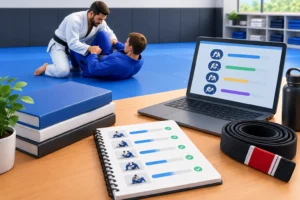
Set a goal that you can measure by behavior. Commit to attending a certain number of classes this month. Keep a short training note after class. Ask your coach for one area to improve. These practices turn vague motivation into a process.
It also helps to track progress beyond belts, medals, or visible fitness changes. Notice when you recover faster after a tough round, when a technique begins to make sense, or when you introduce yourself to a new training partner without hesitation. Competitive goals can be meaningful, but they are not required for personal growth. A parent, office professional, teenager, and aspiring competitor can all build confidence through the same discipline of regular training.
There will be weeks when progress feels slow. Injuries, work demands, school schedules, and family responsibilities can interrupt momentum. Adjusting your pace is not quitting. Return when you can, train intelligently, and let consistency be flexible enough to survive real life.
Find a Team That Holds You to a Higher Standard
Confidence grows faster when you train in a community that notices your effort. A serious academy offers more than instruction. It gives you training partners who challenge you, coaches who correct you, and a culture that makes showing up easier.
For children, this environment can be especially formative. Youth martial arts classes teach young students to follow direction, take turns, handle frustration, and speak with respectful confidence. Anti-bullying skills are not just about physical techniques. They include posture, boundaries, emotional control, and the belief that a child has the right to seek help and stand up for themselves.
For adults, the community can become an antidote to isolation. Training alongside people from different backgrounds creates connection quickly because everyone is working through the same honest challenges. You learn who is dependable, who encourages new students, and who responds with humility after a difficult round. Those standards shape confidence because they remind you that strength and respect belong together.
At Imperial BJJ Lakewood, students can develop those habits across grappling and striking programs while training within a disciplined, welcoming team environment. The goal is not to create a room full of aggressive people. It is to help people become more capable, more accountable, and harder to discourage.
Let Confidence Show Up Off the Mat
The most meaningful changes often appear outside class. You may carry yourself differently in a crowded room. You may be more patient when a problem does not have an immediate answer. You may set a boundary without apologizing for it, or accept criticism without taking it personally.
That does not mean martial arts turns every student into an extrovert. Quiet people can be deeply confident. The change is often less about becoming louder and more about becoming steadier. You know your limits, you know that you can learn, and you no longer need to perform certainty for other people.
Start with one class and give yourself permission to be new. The first lesson may challenge your comfort zone, but the decision to return is where a stronger version of you begins to take shape.




No comment yet, add your voice below!