
A child who hesitates to speak up at school may stand taller after a few weeks on the mat. A child with endless energy may finally find a place where movement has purpose. That is why Arvada martial arts for kids is about far more than learning kicks, throws, or grappling techniques. The right program gives children a constructive place to practice focus, respect, courage, and self-control with coaches who expect their best while helping them feel they belong.
For parents, the real question is not whether martial arts can benefit a child. It is whether a specific academy has the structure, coaching, and culture to deliver those benefits safely. A quality youth program should challenge kids without treating every class like a boot camp, and it should welcome beginners without lowering its standards.
What Kids Gain From Consistent Training
Martial arts gives children immediate feedback. When they listen carefully, practice a technique, and stay composed, they improve. When they rush, quit early, or ignore instruction, they see the result and get another chance to try. That simple cycle teaches accountability in a way children can understand.
Confidence is one of the most visible changes parents notice. Real confidence is not loudness or pretending to be fearless. It comes from knowing, through repetition, that a child can learn difficult things. Earning a stripe, remembering a sequence, working with a new partner, or returning to class after a tough day all create evidence that effort matters.
The benefits also carry into life outside the academy. Children learn to make eye contact, follow directions, handle respectful correction, and work through frustration. Those skills can support better behavior at home, stronger participation in school, and healthier friendships. Results vary by child, of course. A naturally reserved child may become more comfortable participating, while an energetic child may develop better control. Neither change happens overnight, but consistent training creates a reliable framework for growth.
What Arvada Martial Arts for Kids Should Teach
A strong youth martial arts program balances physical development with character development. Children need age-appropriate instruction that lets them move, learn, and have fun, but the class should also have clear expectations. Kids thrive when they know when to line up, when to listen, how to work with a partner, and what respectful behavior looks like.
For younger students, classes should focus on coordination, balance, body awareness, and simple techniques. The goal is not to turn a five-year-old into a fighter. It is to help them develop control, confidence, and a positive relationship with physical activity.
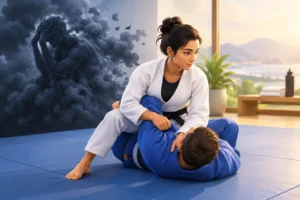
As children grow, they can handle more technical learning and greater responsibility. Brazilian Jiu-Jitsu is especially valuable because it emphasizes position, leverage, control, and problem-solving rather than relying only on size or strength. Kids learn how to stay calm in close-contact situations, work through a challenge step by step, and use technique intelligently.
Striking arts such as kickboxing or Muay Thai can also be excellent when taught with safety and age-appropriate supervision. They build coordination, conditioning, distance awareness, and disciplined movement. Wrestling and Judo-style training introduce balance, takedowns, and controlled grappling. A multi-discipline environment can give children a well-rounded athletic foundation, provided the program does not overwhelm them with too much too soon.
Self-Defense Should Build Judgment, Not Aggression
Parents often look for martial arts because they want their child to be safer and more confident around bullying. That is a valid concern, but responsible self-defense instruction begins with awareness, communication, and avoidance. Children should learn that the best outcome is getting away from danger, finding a trusted adult, and using physical skills only when necessary to protect themselves.
Good coaches do not teach children to start fights or prove toughness. They teach restraint. A child who understands boundaries, posture, distance, and calm decision-making is better prepared than a child who only knows how to throw a punch. The aim is confidence without aggression.
How to Choose the Right Academy
The first visit tells parents a great deal. Watch how coaches speak to children. Clear instruction and firm standards are good signs. Yelling, shaming, or allowing older and stronger students to dominate younger children are not. A serious academy can be demanding while still being encouraging.
Pay attention to class organization. Are students grouped by age, size, or experience when appropriate? Are drills supervised? Is there a clear warm-up, lesson, practice period, and finish? Youth classes should have energy, but they should not feel chaotic. Structure helps children feel safe enough to take healthy risks and learn.
Ask how the academy handles new students. A beginner should not be expected to know the rules immediately, and they should not be thrown into hard sparring on day one. The best programs introduce fundamentals gradually, pair children thoughtfully, and make sure every student understands how to train safely with a partner.
Coach experience matters too. Technical knowledge is essential, but teaching children requires patience, communication, and awareness of different learning styles. The coach who can explain a movement clearly, redirect behavior respectfully, and celebrate effort without giving empty praise will make a lasting difference.
Why Consistency Matters More Than Talent
Some children look athletic from their first class. Others need time to become comfortable with movement, close contact, or unfamiliar routines. Neither child should be labeled too early. Martial arts rewards consistency more reliably than natural ability.
Parents can help by treating training as a commitment rather than an occasional activity. That does not mean forcing a child through every bad mood. It means setting the expectation that progress comes from showing up, listening, and trying. Two regular classes a week usually create more meaningful development than a burst of enthusiasm followed by long breaks.
At home, ask better questions than, “Did you win?” Try asking what technique they practiced, who they partnered with, or what was hard that day. Those questions reinforce learning and remind children that martial arts is not just about being better than someone else. It is about becoming more capable than they were last week.
Finding the Right Fit for Your Child
No single style or class format is perfect for every child. A highly social child may love partner drills and team energy. A cautious child may need a patient introduction before they enjoy grappling. A child who already plays a field sport may benefit from the coordination and discipline of martial arts, while a child who dislikes traditional sports may finally find an activity that feels personal and motivating.
The right fit also depends on the family schedule and the academy community. Choose a place your child can attend consistently and where your family feels respected. At Imperial BJJ Lakewood, youth students train in a supportive environment built around technical instruction, discipline, and belonging, with a 7-day free trial available for families who want to see how training feels before making a commitment.
A first class does not need to prove everything. It only needs to give your child a safe place to move, learn, and take one brave step forward. With the right coaching and a little consistency, that step can become a habit they carry well beyond the mat.



No comment yet, add your voice below!