
A child who is being targeted does not always come home with a visible injury. Sometimes it looks like a stomachache before school, a sudden loss of interest in activities they once loved, or a quiet answer when you ask how their day went. A meaningful youth anti bullying transformation starts before a confrontation ever happens. It gives young people the posture, language, judgment, and support system to move through difficult social situations with confidence.
At a quality martial arts academy, anti-bullying training is not about teaching children to fight their classmates. It is about teaching them when to speak up, when to create space, when to get help, and how to stay composed under pressure. Those skills can change how a child carries themselves at school, on the playground, and in every unfamiliar room they enter.
What Youth Anti Bullying Transformation Really Means
The goal is not to turn a shy child into the loudest child in the room. Real growth looks more grounded than that. A student learns to stand tall without acting tough, make eye contact without escalating a situation, and use a clear voice without becoming aggressive.
Bullies often look for an easy reaction: fear, isolation, or an emotional outburst they can use to gain control. Children cannot control another person’s behavior, but they can learn not to feed that pattern. Calm confidence makes a difference because it communicates, “I know where my boundaries are, and I am not alone.”
That does not mean confidence is a magic shield. Bullying can happen to any child, including confident, athletic, and socially connected kids. The value of training is that it gives children tools for responding safely and helps them recognize that asking an adult for help is not weakness. It is good judgment.
The Skills That Carry Beyond the Mat
Martial arts gives children a place to practice under respectful, supervised pressure. They learn that control matters more than force and that technique works best when it is paired with awareness.
Body language and personal space
Young students practice balanced posture, purposeful movement, and awareness of distance. These details matter. A child who can stay upright, keep their hands visible, and step back with control is better prepared to set a boundary without panicking.
In Brazilian Jiu-Jitsu, wrestling, and Judo-based movement, students also learn what it feels like when someone grabs, pushes, or crowds them. Training removes some of the mystery from physical pressure. Instead of freezing, a child can focus on creating distance, staying safe, and finding a trusted adult.
Clear words and firm boundaries
Children need language they can actually use. Simple phrases are often stronger than a long explanation: “Stop.” “Do not touch me.” “I am leaving now.” The goal is a voice that is firm, audible, and controlled.
This is different from trading insults or trying to win a verbal argument. A student should not have to prove they are tougher. They need to communicate a boundary, move toward safety, and report what happened. Coaches can reinforce these habits through role-play and conversations that match a child’s age and maturity.
Emotional control under pressure
A martial arts class asks students to do hard things in a structured environment. They may struggle to learn a movement, lose a round, feel frustrated, or need to try again in front of others. Over time, they learn that uncomfortable feelings do not have to control their choices.
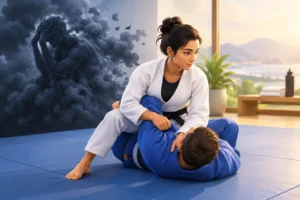
That lesson has real value at school. When a child can take a breath and think instead of reacting instantly, they are less likely to be pulled into the exact conflict a bully wants. Emotional control is not passive. It is the ability to choose a response rather than surrendering control of the moment.
Respect for others and self-respect
A strong academy does not reward reckless behavior. Students bow in, listen, train with partners of different sizes and experience levels, and learn to protect the people they train with. They see that strength without respect is not strength at all.
For children who have been bullied, that environment can be especially powerful. They are not treated as a problem to fix. They are welcomed as students with the ability to learn, contribute, and improve. Belonging gives confidence a place to grow.
Why Training Must Include Safety, Not Just Self-Defense
Parents sometimes ask whether martial arts will make their child more likely to fight. The answer depends on the culture of the program and the expectations set by instructors. A responsible youth program teaches that physical skills are a last resort, used only for immediate safety when a child cannot get away.
The first plan should be to avoid the situation when possible, use a clear verbal boundary, move toward adults or peers, and tell a trusted adult what happened. If a child is in immediate danger, basic self-defense skills can help them protect themselves long enough to escape. They should never be framed as permission to retaliate, punish, or continue a conflict after the threat has ended.
It also matters that parents stay involved. If bullying is repeated, threatening, discriminatory, or physical, document what happened and communicate with the school or organization responsible for the setting. Martial arts can build a child’s personal readiness, but adults must still do their job to address unsafe behavior.
How Consistent Training Builds Lasting Change
One confidence lesson can be encouraging. Consistent training creates a different result because children get repeated proof that effort changes what they can do.
At first, a student may hesitate to speak loudly, partner with someone new, or attempt a difficult drill. A few months later, they may lead warmups, encourage a teammate, or calmly reset after a mistake. Those changes are earned through attendance, coaching, and small wins that add up.
Belt progression can support that process when it is treated correctly. A new belt is not a trophy for being naturally fearless. It is recognition of learning, discipline, respect, and persistence. Children begin to see themselves as people who can work through challenges rather than avoid them.
The community matters just as much. Training alongside other kids gives students a healthier social reference point. They learn that teammates can compete hard, laugh afterward, and look out for one another. For a child who feels isolated at school, that can be a major shift.
Choosing the Right Anti-Bullying Martial Arts Program
Not every youth class has the same priorities. Look for instructors who can explain their approach to conflict clearly and who make safety, respect, and supervision visible in every class. The room should feel organized and welcoming, not chaotic or intimidating.
Ask how coaches group students by age and experience, how they correct unsafe behavior, and how they teach children to use physical skills responsibly. Watch whether beginners receive patient instruction and whether advanced students are expected to be good partners. A child needs challenge, but they also need to feel secure enough to learn.
For families in Lakewood and the Denver metro area, Imperial BJJ Lakewood provides a structured setting where children can develop Brazilian Jiu-Jitsu skills, athletic coordination, discipline, and confidence within a supportive team culture. A trial class can be a useful first step, especially for a child who is nervous about starting. There is no need for them to arrive confident. The right coaching environment helps them build it.
Helping Your Child Carry Training Into Daily Life
The most effective support happens in the small conversations after class and after school. Ask what they practiced, what felt difficult, and what respectful confidence looks like in a real situation. Let them know they will not be punished for telling you about a problem, even if they are embarrassed or unsure how they handled it.
Practice one or two simple responses at home, then keep them realistic. Children do not need a speech. They need permission to be direct, leave, find help, and keep telling adults until the situation is addressed.
A child does not need to become someone else to feel safe. With disciplined training, trustworthy coaching, and adults who listen, they can learn to take up their rightful space with calm, capable confidence.



No comment yet, add your voice below!