
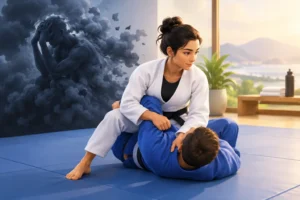
A teenager walks into class after a long school day carrying more than a backpack. They may be carrying pressure to fit in, frustration from sitting still all day, anxiety about social situations, or the feeling that they are falling behind. So, do teens benefit from martial arts training? For many, the answer is yes – not because martial arts magically solve adolescence, but because consistent training gives teens a place to work hard, be coached, and see real progress.
The best programs do more than teach punches, takedowns, or submissions. They create structure, challenge students safely, and build a community where effort earns respect. That combination can be especially valuable during the years when a teen’s confidence, identity, and habits are still taking shape.
How Martial Arts Training Benefits Teens
Martial arts give teenagers a clear process: show up, learn a skill, make mistakes, adjust, and try again. Progress is visible over time. A student who initially struggles to remember a sequence, escape a bad position, or finish a round of pad work eventually sees that repetition changes what they can do.
That lesson carries weight outside the academy. Schoolwork, sports, jobs, and relationships rarely improve overnight. Teens who learn to stay composed while facing a difficult training partner or a demanding drill gain experience with productive discomfort. They begin to understand that being challenged does not mean they are failing.
Confidence built through evidence
Healthy confidence is not loudness or pretending to know everything. It is the belief that you can respond when a situation becomes difficult. Martial arts build that belief through evidence: a teen learns a technique, practices it under increasing resistance, and discovers they can use it.
Brazilian Jiu-Jitsu can be particularly helpful for teens who do not see themselves as naturally athletic or physically dominant. It teaches leverage, timing, positioning, and patience. A smaller student can learn to solve problems without relying only on size or strength. Striking arts such as Muay Thai and kickboxing develop another kind of confidence through movement, coordination, conditioning, and controlled power.
The key word is controlled. Good coaching does not reward reckless behavior or tell students they need to prove themselves. It teaches them to train with purpose, protect their partners, and stay calm under pressure.
A constructive outlet for stress and energy
Teenagers spend much of their day being told where to sit, what to complete, and when to move on. Martial arts class provides a productive physical outlet with immediate focus. Drilling, sparring, wrestling, and pad work demand attention. There is little room to scroll, overthink, or dwell on the day’s frustrations.
Regular training can also improve overall fitness. Teens develop coordination, mobility, balance, muscular endurance, and cardiovascular capacity while learning an actual skill. That tends to feel more meaningful than simply being told to exercise. They are not just doing burpees. They are preparing their body to move better in Jiu-Jitsu, hit pads with sound technique, or wrestle with stronger posture.
Of course, martial arts are not a replacement for medical or mental health care when a teen needs it. But as part of a healthy routine, training can offer a valuable release and a reliable source of momentum.
Focus, discipline, and accountability
Martial arts demand presence. If a teen loses focus while learning a throw, defending a takedown, or working with a partner, the result is immediate: the technique falls apart. That feedback is direct, but it does not have to be harsh. In a well-run class, instructors correct mistakes, explain the reason behind the correction, and expect students to apply it.
Over time, teens learn small but meaningful habits. Arrive on time. Keep their gear organized. Listen before acting. Respect the drill. Help reset the room. Take responsibility when they make an error. Those habits are not flashy, yet they are part of the discipline parents often hope their teens will develop.
The benefit depends on consistency. Attending once in a while may be fun, but it is regular participation that builds fitness, skill, and trust in the process. Two or three classes each week is often enough for a beginner to develop a routine without making training feel like another overwhelming obligation.
Do Teens Benefit From Martial Arts Training Socially?
They can, especially when the academy culture is right. Teens need peers, but they also need environments where social standing is not based only on clothes, followers, or who talks the loudest. On the mat, a student earns trust by training safely, showing respect, and continuing to improve.
Martial arts classes bring together teens with different schools, backgrounds, and athletic experience. That can be a relief for a student who feels boxed into one identity at school. The beginner who is quiet in class may become a dependable training partner. The experienced athlete may learn humility when technique exposes a gap in their game.
A strong academy also makes room for mentorship. Teens learn from adult instructors and more experienced students, while eventually helping newer classmates understand the basics. Being useful to someone else is a powerful form of belonging.
This does not mean every teen will become instantly outgoing. Some may prefer the skill-building and physical challenge to the social side. That is fine. The goal is not to force a personality change. It is to offer a respectful team environment where they can participate at their own pace.
Self-Defense Without Fear or False Confidence
Parents often ask about self-defense, and it is a fair question. Martial arts can help teens develop awareness, body control, boundary-setting, and the ability to create space if someone becomes physical. Grappling training can teach students how to manage close contact and get back to their feet. Striking training can reinforce distance, footwork, and defensive movement.
Still, responsible self-defense instruction starts with avoidance. The best outcome is leaving a dangerous situation early, getting help, and refusing to let ego turn a conflict into a fight. A quality program should never tell a teenager that a few months of classes make them invincible.
Training does offer something more durable than false confidence: composure. Teens who have practiced under controlled pressure are often better prepared to keep their heads when emotions are high. That can help them make smarter choices in and outside the academy.
What Parents Should Look for in a Teen Program
Not all martial arts programs are equally suited to teenagers. The style matters less than the coaching, safety standards, and culture. A class should have clear supervision, age-appropriate instruction, and partners matched thoughtfully by size, experience, and maturity when possible.
Look for an academy that treats discipline as a form of respect, not humiliation. Teens should be challenged, but they should not be belittled for being new, nervous, or uncoordinated. Coaches should teach technical details, monitor sparring closely, and make it clear that tapping, asking questions, and taking a break when needed are signs of good judgment.
It also helps to choose a program with a path forward. Some teens want a recreational outlet. Others become serious competitors. A good academy can support both without making competition the only definition of success. Cross-training in grappling and striking may appeal to a teen who wants variety, while a focused Jiu-Jitsu program may be the better fit for someone who loves problem-solving and close-range technique.
At Imperial BJJ Lakewood, teens can train in a disciplined, welcoming environment alongside a community that values technical growth, accountability, and respect. A trial class is often the simplest way to see whether the coaching style and class culture fit your teen.
The most meaningful change may not show up as a medal or a new belt right away. It may look like a teen standing a little taller, returning to class after a difficult round, or realizing they have found a place where hard work is noticed. That is a foundation worth building.




No comment yet, add your voice below!