
The match can feel fast, loud, and unfamiliar the moment the referee brings you to the center. Good BJJ competition preparation makes that moment smaller. You have felt hard grips, managed bad positions, heard coaching over noise, and followed a plan when your heart rate rises.
Competition is not a test of whether you are tough enough to train. It is a chance to measure your current game under pressure, identify what needs work, and return to the academy with clearer direction. Whether this is your first local tournament or your next serious bracket, the goal is not to become a different athlete in a few weeks. It is to show up healthy, prepared, and ready to use the jiu-jitsu you can trust.
Start BJJ Competition Preparation With a Clear Game
A competition camp works best when it has a narrow focus. Trying to fix every weakness at once usually leads to scattered training and more hesitation on match day. Start by identifying the positions you reach most often in live rounds. From there, build a simple path you can repeat.
For many newer competitors, that path may be as direct as getting a reliable grip, initiating one takedown or guard pull, reaching a preferred guard, sweeping or standing up, passing, and stabilizing top position. An experienced competitor may have more options, but the same principle applies: know your first attack, your response when it fails, and your safest route back to a strong position.
Your A-game should not depend on a highlight-reel submission. A clean takedown, pressure pass, mount, and controlled finish is a strong plan. So is using a guard you understand well enough to attack without giving away easy points. Choose techniques that match your body type, experience, ruleset, and current skill level.
Build Answers for the Positions You Dislike
You do not need to love every position before competing, but you do need a response. If getting flattened in half guard drains you, practice recovering an underhook and getting back to your side. If you tend to panic when someone passes, train a clear sequence for framing, recovering guard, and preventing the next attack.
The goal is not perfection. It is reducing the time you spend frozen. A competitor who can calmly survive a difficult exchange often creates the next opportunity.
Train With Purpose, Not Just More Volume
Hard rounds matter, but a good camp is more than adding random intensity. You need technical reps, position-specific sparring, conditioning, and recovery working together. If every session becomes an all-out war, your body and decision-making will pay for it.
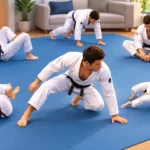
During the earlier part of your preparation, spend extra time drilling the entries and reactions in your game plan. Add positional rounds that begin where you expect the match to become difficult: standing with grips established, inside someone’s closed guard, defending a body lock, or protecting a lead late in a round. These rounds create useful urgency without requiring every roll to be a tournament simulation.
As the event gets closer, include rounds that reflect competition pacing. Start on time, reset quickly, and work from realistic tournament positions. Ask training partners to give you honest resistance rather than letting you complete your favorite sequence. You are looking for timing, composure, and decision-making under fatigue.
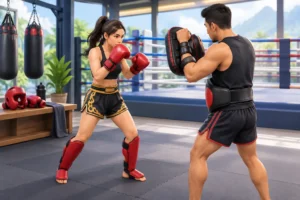
Cross-training can support your camp when it serves the goal. Wrestling and judo improve your comfort on the feet. Strength work can build durability and power. Muay Thai or kickboxing may help overall conditioning, but they should not leave you too sore to complete essential grappling sessions. It depends on your experience, schedule, and recovery capacity. More training is only better when you can absorb it.
Learn the Rules Before Match Day
A surprising number of competitors give away points, advantages, or position because they do not fully understand the tournament rules. Rules vary by organization, division, age group, belt level, and gi or no-gi format. Review the event’s scoring, legal techniques, uniform requirements, weigh-in process, and overtime procedures well before tournament week.
Know when points begin to count and how long control must be established. Understand what happens if you step out of bounds. If heel hooks, reaping, slams, neck cranks, or certain takedowns are restricted in your division, make that part of your training conversation.
Ask your coach to watch a few rounds with the specific ruleset in mind. A sequence that is effective in the academy may need adjustment if it risks a penalty or exposes you to a fast score. Strategic awareness is part of technical skill.
Make Weight Without Sacrificing Your Performance
Your weight class should support your performance, not turn tournament week into a survival exercise. A severe last-minute cut can leave you dehydrated, exhausted, and unable to think clearly. That is a poor trade for a few pounds.
If you plan to compete at a lower weight, give yourself enough time to make gradual, manageable changes through consistent nutrition and training. Confirm whether the event uses same-day weigh-ins, whether you weigh in with your gi, and whether you compete immediately afterward. Those details change the decision completely.
For a first tournament, competing near your normal healthy weight is often the smarter choice. You will have enough new variables to manage without adding an aggressive cut. Speak directly with your coach and, when appropriate, a qualified health professional if weight management is a concern. No medal is worth risking your health.
Taper So You Arrive Sharp
The final week is where disciplined athletes often make an avoidable mistake: they try to cram in one more brutal session. Fitness does not meaningfully improve in the last few days, but fatigue and minor injuries can.
Keep moving, drill your strongest sequences, and get enough live work to feel alert. Then reduce the total volume so your body can recover. The exact taper depends on your age, training history, and how demanding your camp has been, but you should enter competition week feeling eager to compete rather than worn down from proving how hard you trained.
Sleep deserves the same respect as sparring. Prioritize a consistent bedtime, hydrate normally, and eat familiar foods that sit well with you. Avoid experimenting with a new supplement, extreme diet, or pre-workout routine just because tournament nerves make you restless.
Prepare Your Mind for the First Exchange
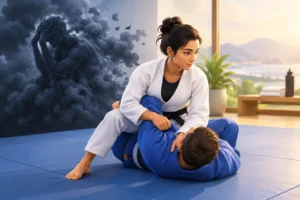
Nerves are not a sign that you are unprepared. They are your body recognizing that the moment matters. The aim is not to feel nothing. The aim is to direct that energy into your first action.
Before the event, rehearse a few simple cues. You might remind yourself to breathe, establish grips, keep your posture, or win the next exchange. Keep those cues practical. Vague statements like “be aggressive” are less useful than a specific instruction you can follow when adrenaline hits.
Visualization can help when it is honest. Picture the walk to the mat, the referee’s commands, the opening hand fight, and the possibility that your first attack does not work. Then picture yourself resetting your posture and continuing. Confidence is not believing nothing will go wrong. It is knowing you have practiced what to do when it does.
At Imperial BJJ Lakewood, competitors benefit most when they communicate early with their coaches. Let them know the event date, division, ruleset, and your concerns. Clear coaching before the tournament leads to clearer direction at the edge of the mat.
Handle Tournament Day Like a Professional
Pack your bag the night before. Bring the required gi or no-gi gear, belt, identification, water, simple food you know agrees with you, and a change of clothes. Check the venue address, parking situation, start time, and bracket updates. Rushing creates stress you do not need.
Arrive with enough time to weigh in, settle down, and warm up gradually. Your warm-up should raise your temperature and prepare the movements you expect to use, not drain your energy through endless hard rolls. Move your hips, shoulders, and neck, hand fight lightly, drill a few entries, and build intensity as your match gets closer.
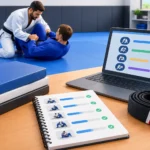
After a win, stay calm. After a loss, stay respectful. Both outcomes offer information. Write down what happened while the details are fresh: where you scored, where you stalled, what surprised you, and what you want to practice next. That reflection turns a single tournament into better training for months.
The best preparation does not guarantee a gold medal. It gives you something more durable: the ability to step onto the mat with discipline, represent your team well, and meet the result with the confidence to keep growing.

No comment yet, add your voice below!