
A child who says, “Stop, I don’t like that,” and then asks a trusted adult for help is not being rude. They are practicing a life skill. To teach children boundary setting, parents need to give them more than a rule about being polite. Children need words, repetition, and the confidence to use those words when a situation feels uncomfortable.
Boundaries help children understand that their body, feelings, belongings, and personal space matter. Just as importantly, they teach children that other people have boundaries too. That balance builds respect without teaching a child to stay quiet, tolerate rough behavior, or handle difficult situations alone.
What Boundary Setting Means for Children
A boundary is a clear limit that protects a child’s safety, comfort, or sense of respect. For young children, that may mean saying they do not want a hug, asking a sibling to stop grabbing a toy, or stepping away from overly rough play. For older children, it can include handling teasing, group pressure, unwanted messages, or friends who do not respect a no.
The goal is not to raise a child who argues with every instruction or refuses every request. Healthy boundaries work alongside responsibility. A child can be expected to clean up, follow school rules, and listen to a coach while also knowing they can speak up if someone touches them, threatens them, embarrasses them, or makes them feel unsafe.
That distinction matters. Children often hear adults praise compliance, but compliance is not the same as respect. Respect includes listening to appropriate authority, treating others well, and recognizing when something crosses a line.
Teach Children Boundary Setting With Simple Words
Children are far more likely to use a boundary when they have practiced the exact language ahead of time. In a stressful moment, a long explanation is hard to remember. Short, direct phrases are easier to access and harder to misunderstand.
Start with language that fits your child’s age and personality. A preschooler may use, “No thank you,” “Stop,” or “My turn.” An elementary-age child can add, “Please give me space,” “I said no,” or “That game is too rough for me.” A teenager may need stronger language, such as, “I’m not comfortable with that,” “Do not message me like that,” or “I’m leaving now.”
Practice tone as well as words. A boundary does not need to be shouted to be valid, though a child should know it is okay to use a loud voice if they need immediate help. Teach a firm stance, eye contact when it feels safe, and a clear voice. Then teach the next step: if the person does not stop, move away and find a trusted adult.
Avoid asking children to soften every boundary with an apology. Saying sorry before refusing a hug or declining rough play can suggest they have done something wrong. Courtesy is valuable, but a child does not need permission to protect their own space.
Make Consent Part of Everyday Family Life
The strongest lessons happen in ordinary moments, not only in serious conversations. Ask before tickling. Let your child choose whether they hug relatives, offer a high five, wave, or simply say hello. Respect their answer when possible.
This does not mean children control every decision in the home. Parents still make decisions about health, school, bedtime, and safety. It means children learn the difference between a preference that can be honored and a safety rule that must be followed. You might say, “You do not have to hug Uncle Ben, but you do need to greet him respectfully,” or, “You may not want to leave the park, but it is time to go because it is getting dark.”
When adults honor reasonable boundaries, children learn that speaking up works. When adults dismiss them with phrases like “Don’t be dramatic” or “Just deal with it,” children may learn to doubt their own discomfort. Listen first, then help them name what happened and decide what to do next.
Teach Respect for Other People’s Boundaries Too
Boundary setting is not only about defending personal space. It also asks children to accept another person’s no without pouting, teasing, bargaining, or retaliating. That is a powerful lesson for friendships, sports, school, and future relationships.
Use sibling conflicts as practice. If one child says they are done playing, help the other respond with something simple: “Okay,” “Maybe later,” or “What else can I do?” If a child wants to keep wrestling or tickling after the other child says stop, pause the activity immediately. Explain that physical play is only fun when everyone agrees to it.
Children also need to understand that a boundary can change. A friend might enjoy a game one day and not want to play it the next. Someone who agreed to a hug before may prefer space today. Respect does not require a child to understand or approve of another person’s limit. It requires them to stop when asked.
Use Role-Play Before a Problem Happens
Role-play makes a difficult skill feel familiar. Keep it brief and specific rather than turning it into a lecture. Ask your child what they could say if a classmate keeps poking them, a friend wants them to break a rule, or someone is being too rough during play.
Let your child try several responses. If the first response does not work, practice the next one: repeat the boundary, create distance, and tell an adult. This sequence helps children understand that speaking up is not always the final step. They are never responsible for making another child behave appropriately.
For younger children, role-play can look like stuffed animals taking turns or a parent pretending to grab a toy. For older children, include social situations that feel realistic, such as a group chat, a sleepover, a locker room, or pressure to join in teasing. The point is not to frighten them. It is to make help-seeking feel normal and prepared.
Martial Arts Can Reinforce Boundaries With Discipline
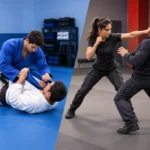
A quality youth martial arts program gives children repeated, supervised opportunities to practice space, control, and respect. In Brazilian Jiu-Jitsu, wrestling, judo, and striking arts, students learn that training has rules: listen to the coach, use controlled technique, tap when necessary, and release immediately when a partner taps or says stop.
That structure is valuable because it makes boundaries physical and practical. A child learns to recognize pressure, stay calm, use technique instead of panic, and respect a training partner. They also learn that strength without control is not discipline.
Parents should still choose programs carefully. Good coaching emphasizes safety, age-appropriate instruction, and partner respect over aggression or intimidation. Competition can be a positive goal for some children, but it should never replace the core lesson that martial arts is built on self-control and responsibility.
At Imperial BJJ Lakewood, youth training is designed to support that kind of growth: confident children who can stand up for themselves, follow direction, and treat teammates with respect.
Know When to Step In
A child may know the right words and still freeze, laugh nervously, or go along with something they dislike. That is not failure. Stress responses are real, and children need adults who will take concerns seriously without demanding a perfect response.
Pay attention if your child suddenly avoids an activity, seems unusually anxious around a particular person, has frequent unexplained conflicts, or repeatedly says someone will not leave them alone. Ask calm, open questions: “What happened?” “How did that make you feel?” and “What would help you feel safer?” Avoid pushing for details they are not ready to share, but make it clear they can always come to you.
When there is a safety concern, adults must take responsibility. Contact the school, program leader, or appropriate authority, document what occurred, and create a clear plan. Teaching a child boundaries should never become an excuse for adults to expect children to solve serious problems by themselves.
A boundary is not a magic sentence that makes every difficult person stop. It is a message your child deserves to believe: your voice matters, your safety matters, and there are adults who will stand beside you when you use it.



No comment yet, add your voice below!