
A confrontation goes to the ground faster than most people expect. A shove turns into a clinch, balance disappears, and the person who can stay calm under pressure has a major advantage. That is why the BJJ versus Krav Maga question is not really about which style looks tougher. It is about what you want your training to prepare you to do.
Brazilian Jiu-Jitsu and Krav Maga both attract people who want confidence, practical self-defense skills, and a better level of fitness. Their methods are very different. One develops control through live grappling and technical problem-solving. The other emphasizes fast responses, awareness, and getting away from danger. Neither is a magic answer for every situation.
BJJ Versus Krav Maga: The Core Difference
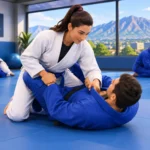
Brazilian Jiu-Jitsu is a grappling art built around controlling an opponent without relying on size or striking power. Students learn how to manage distance, secure takedowns, escape bad positions, control someone on the ground, and apply submissions when necessary. Training usually includes drilling techniques, positional rounds, and live sparring called rolling.
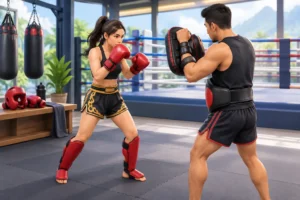
Krav Maga is a self-defense system designed around survival in violent encounters. It commonly teaches situational awareness, verbal boundaries, aggressive counterattacks, defenses against common attacks, and the priority of creating an opportunity to escape. Programs may include striking, escapes from grabs, ground-defense movements, and weapon-threat scenarios.
The difference is easiest to see in their central question. BJJ asks, “How do I control this resisting person?” Krav Maga asks, “How do I disrupt the threat and get to safety?” Both questions matter. Your circumstances determine which one deserves more of your training time.
What Brazilian Jiu-Jitsu Builds
BJJ is unusually honest because it is tested against resistance on a regular basis. You cannot simply memorize an escape or submission and assume it works. During live rounds, a training partner is actively trying to pass your guard, pin you, take your back, or submit you. That pressure exposes holes in timing, positioning, and decision-making, then gives you a controlled place to improve them.
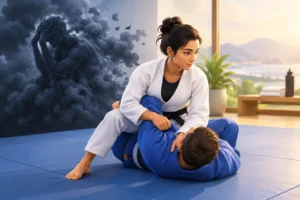
For many adults, this is BJJ’s greatest strength. It teaches you how to remain composed when someone is close, heavy, and difficult to move. Instead of panicking when pinned, you learn frames, hip movement, posture, breathing, and incremental escapes. Instead of trying to overpower someone, you learn leverage and control.
BJJ is especially useful when a situation becomes a clinch or ground fight and leaving immediately is not possible. It can help a smaller person create space, stand up safely, restrain someone without excessive damage, or defend against a larger untrained opponent. That does not mean BJJ guarantees an outcome. It means it gives you a repeatable process for a range of common physical problems.
There are trade-offs. Pure BJJ does not spend as much time on striking, verbal de-escalation, weapons, or managing multiple attackers. A strong academy should acknowledge that reality rather than pretend every conflict is a one-on-one match on a clean mat. Cross-training in striking, wrestling, and realistic self-protection habits can make a BJJ foundation more complete.
What Krav Maga Builds
Krav Maga appeals to people who want a direct self-defense framework. A quality program can build awareness, assertiveness, urgency, and the habit of moving toward safety instead of staying engaged. It often addresses situations traditional combat sports may not prioritize, such as a surprise grab, an attempted choke against a wall, or recognizing when an environment is becoming unsafe.
Its best lessons may happen before a fight begins. Keeping distance, noticing exits, using your voice, avoiding isolated situations, and leaving early are all legitimate self-defense skills. In a real-world encounter, prevention and escape are usually better outcomes than winning an exchange.
Krav Maga also introduces striking earlier and more directly than most beginner BJJ programs. For someone whose main concern is creating immediate space to run, learning how to cover, strike, and move can feel highly relevant.
The challenge is quality control. Krav Maga schools vary widely in how much resistance and pressure-testing they use. Techniques practiced only with a cooperative partner can feel convincing until speed, adrenaline, fatigue, and resistance enter the picture. If you are considering Krav Maga, ask whether students spar safely, train against realistic resistance, and practice making decisions under pressure. A good system should test its claims without turning every class into a brawl.
Which Is Better for Self-Defense?
The honest answer is that self-defense depends on the threat, environment, your physical abilities, and your training consistency. If your goal is to develop a proven ability to handle a resisting person at close range, BJJ has a clear advantage. The frequency of live training builds timing and calm that are hard to gain from compliant drills alone.
If your goal is broader personal-protection awareness with an emphasis on disengaging quickly, Krav Maga may offer useful concepts that BJJ does not center. Still, the value of those concepts rises sharply when they are paired with skills you have pressure-tested.
For many people, the strongest approach is not treating this as an either-or decision. Build a reliable grappling base, learn striking from qualified coaches, and adopt the awareness and avoidance mindset often associated with self-defense systems. At Imperial BJJ Lakewood, students can develop that well-rounded base under one roof through Brazilian Jiu-Jitsu, Muay Thai, kickboxing, wrestling, and judo training.
Fitness, Confidence, and Training Culture
Both styles can challenge your conditioning, but they feel different. BJJ develops grip strength, core control, mobility, endurance, and problem-solving while tired. A hard round can feel like physical chess played at sprint speed. Progress is measurable: you escape a position that once trapped you, maintain control against a stronger partner, or solve a sequence with better timing.
Krav Maga classes often emphasize striking conditioning, explosive movement, reaction drills, and high-energy scenarios. This can be appealing to people who want a fast-paced workout along with self-defense instruction. The fitness benefit is real, though it depends heavily on the school’s curriculum and class format.
Confidence also develops differently. Krav Maga may give beginners a quick sense of direction because it provides immediate responses to recognizable threats. BJJ confidence grows more gradually, often through humbling experiences. You learn that strength alone is not enough, then gain confidence because you have repeatedly worked through discomfort with training partners who are trying to stop you.
That humility is a feature, not a flaw. Real confidence is not the belief that you can beat everyone. It is the ability to stay aware, make better choices, and remain composed when things become difficult.
How to Choose the Right First Class
Choose BJJ if you want a technical, long-term martial art with regular live resistance, a strong grappling foundation, and a community that supports steady growth. It is an excellent choice for beginners who want fitness and self-defense without needing to become an aggressive striker on day one.
Choose Krav Maga if your first priority is threat awareness, basic striking, and escape-focused scenarios. Before committing, watch a class and pay attention to how instructors handle safety, resistance, and the limits of each technique.
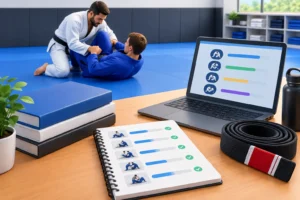
If you feel torn between the two, start where you are most likely to train consistently. The best program is not the one with the boldest promises. It is the one with skilled coaching, a respectful culture, realistic training, and a schedule you can maintain.
Your first class should leave you challenged but supported. Find a room where beginners are taught with patience, training partners respect control, and every round gives you a practical reason to come back stronger.


No comment yet, add your voice below!