
A child who learns to stay calm while a training partner applies pressure is learning far more than a technique. They are practicing composure, respect, problem-solving, and the ability to keep going when something feels difficult. That is why parents searching for the best youth combat sports programs should look beyond trophies, belt colors, and high-energy classes. The right program builds capable kids without sacrificing safety, structure, or enjoyment.
For families in Lakewood and across the Denver metro area, the strongest choice is usually not one single style. It is a well-coached program with age-appropriate instruction, clear standards, and a culture where every child is known, challenged, and supported.
What the Best Youth Combat Sports Programs Have in Common
Great youth instruction is not adult training made smaller. Children need coaches who understand how they learn, how they respond to pressure, and how to make accountability feel constructive rather than intimidating. A quality academy creates a consistent class structure so students know what is expected when they step onto the mats.
Classes should begin with organized movement and skill development, then progress into controlled partner work. Younger children may practice balance, coordination, listening, and simple escapes through games and drills. Older students can handle more technical sequences, situational sparring, and goals that demand focus over time. The curriculum should advance as the child advances.
Safety is central, but safety does not mean removing all challenge. It means teaching children how to train with control, recognize boundaries, tap when necessary, and respect a partner’s physical limits. Coaches should actively supervise partner drills, match students thoughtfully, and address reckless behavior immediately. A child can work hard, compete, and gain confidence without being thrown into situations they are not prepared for.
Just as important is the atmosphere. The best academies are serious about standards while remaining welcoming to the child who is shy, new, uncoordinated, or unsure on day one. Kids should leave class feeling they earned something, not worried they failed to fit in.
Which Combat Sport Is Right for Your Child?
There is no universal answer because each child has different needs. Some children thrive when they can move fast and hit pads. Others become engaged when they are solving a physical puzzle on the ground. The best fit depends on temperament, age, goals, and the quality of coaching available.
Brazilian Jiu-Jitsu: Confidence Through Control
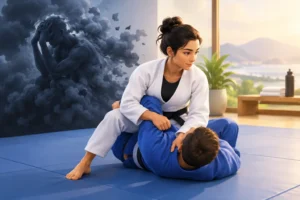
Brazilian Jiu-Jitsu teaches children how to manage distance, balance, and position through grappling. It is especially valuable for parents who want practical anti-bullying skills, because students learn to defend themselves, escape holds, and control a situation without immediately relying on strikes.
BJJ also rewards patience. A child cannot force every solution through strength, so they learn to think ahead and use leverage. That can be a powerful lesson for kids who are naturally impulsive, as well as those who need proof that size is not the only factor in a difficult situation.
The trade-off is that BJJ requires close-contact training. A good youth program makes this feel normal and safe by teaching personal boundaries, hygiene, partner respect, and controlled movement from the start.
Judo and Wrestling: Balance, Movement, and Toughness
Judo and wrestling develop body awareness in a different way. Students learn how to control grips, change levels, break balance, take someone down, and fall safely. These skills can improve coordination and athleticism for children who also play football, soccer, lacrosse, or other field sports.
Wrestling often moves at a fast pace and can appeal to kids who enjoy direct competition. Judo adds throws and emphasizes safe falling, which can be useful both on and off the mats. Both styles teach a child to keep working after a failed attempt instead of freezing or quitting.
Because takedowns require careful coaching, ask how the academy introduces them. Beginners should learn movement patterns and breakfalls before live throwing or high-intensity rounds. Progression matters more than rushing toward advanced techniques.
Muay Thai and Kickboxing: Focus and Athletic Energy
For the child who has endless energy or loves striking a heavy bag, youth Muay Thai or kickboxing can be an excellent outlet. Pad work builds coordination, rhythm, balance, and cardiovascular fitness. It also creates a clear connection between focus and results: good form, proper distance, and listening to coaching make every combination sharper.
Parents sometimes worry that striking programs encourage fighting. The opposite should be true in a well-run academy. Children must learn that martial arts training is not permission to hit classmates, siblings, or strangers. Coaches should make discipline, restraint, and controlled contact non-negotiable parts of the program.
Look for classes that emphasize drills, pads, defensive movement, and technical control. Hard sparring is not a requirement for a child to gain the benefits of striking arts. For many young students, it is not appropriate at all.
Questions Parents Should Ask Before Enrolling
A trial class tells you more than a polished website ever can. Watch how coaches speak to children when they make mistakes. Notice whether experienced students help newer kids or ignore them. Pay attention to transitions between activities, because organized transitions are often a sign of organized coaching.
Ask how the school separates age groups and experience levels. A four-year-old and a twelve-year-old may both be called “kids,” but their attention spans, physical development, and social needs are very different. A strong program has a clear plan for each stage.
You should also ask what progress looks like. Belts, stripes, medals, and competition results can be meaningful, but they should not be the only measures. Look for improvements in effort, listening, resilience, technical understanding, and the ability to train respectfully with others.
Finally, ask how the academy handles behavior. Kids need standards. They also need coaches who can correct behavior without shaming them. The healthiest environments use martial arts values – respect, responsibility, honesty, and perseverance – consistently, not only when it is convenient.
Competition Is Optional, Growth Is Not
Competition can be a positive experience for some children. It gives motivated students a goal, teaches them how to prepare under pressure, and lets them test their skills in a structured setting. It can also reveal valuable lessons about handling both wins and losses with maturity.
Still, a competition team is not automatically the right path for every family. A child may train for fitness, self-defense, friendships, confidence, or the satisfaction of earning a new skill. Those are legitimate reasons to train. Parents should choose a program where recreational students receive the same attention and respect as aspiring competitors.
The right academy can support both paths. At Imperial BJJ Lakewood, students can build a foundation in Brazilian Jiu-Jitsu while benefiting from a broader training environment that includes grappling and striking disciplines. That variety can help children find the area of training that motivates them most, rather than forcing every student into the same mold.
The Real Test Is What Changes Outside Class
A youth martial arts program earns its value when its lessons travel home, to school, and into other activities. You may notice your child standing a little taller, following directions with less resistance, or recovering more quickly after a setback. They may become more aware of personal space, more willing to introduce themselves to new people, or more comfortable speaking up when something is wrong.
These changes are rarely instant. Confidence is built through repetition: showing up, tying the belt, practicing a movement that did not work last week, and returning after a tough round. The best programs make room for that process.
Choose a place where your child can be a beginner without being overlooked, work hard without being pushed beyond good judgment, and feel part of a team while developing their own strength. A good first class should leave them with more than excitement. It should give them a reason to come back and become a little more capable each time.




1 Comment
[…] younger teens, a dedicated youth class is often the best fit. It provides instruction at an appropriate pace and puts students with peers […]